

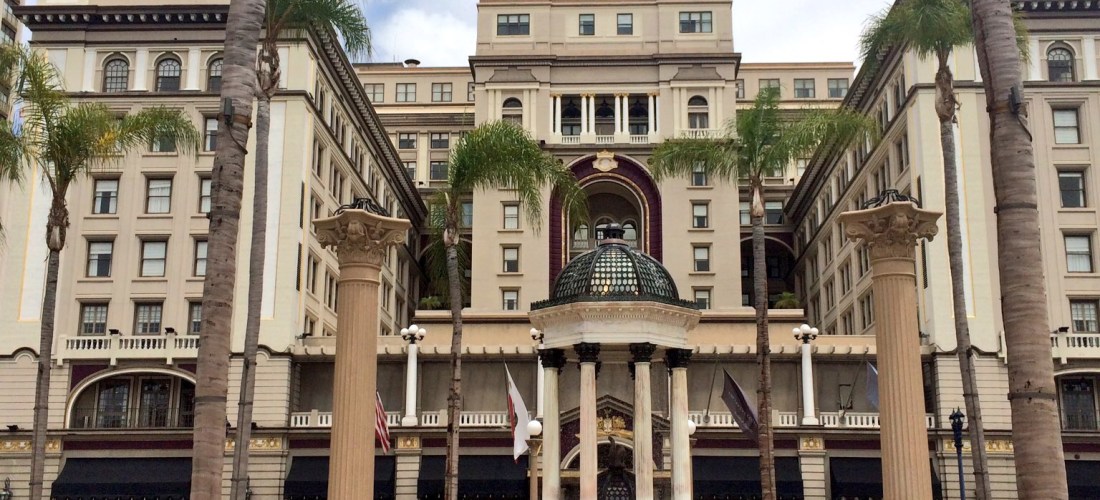
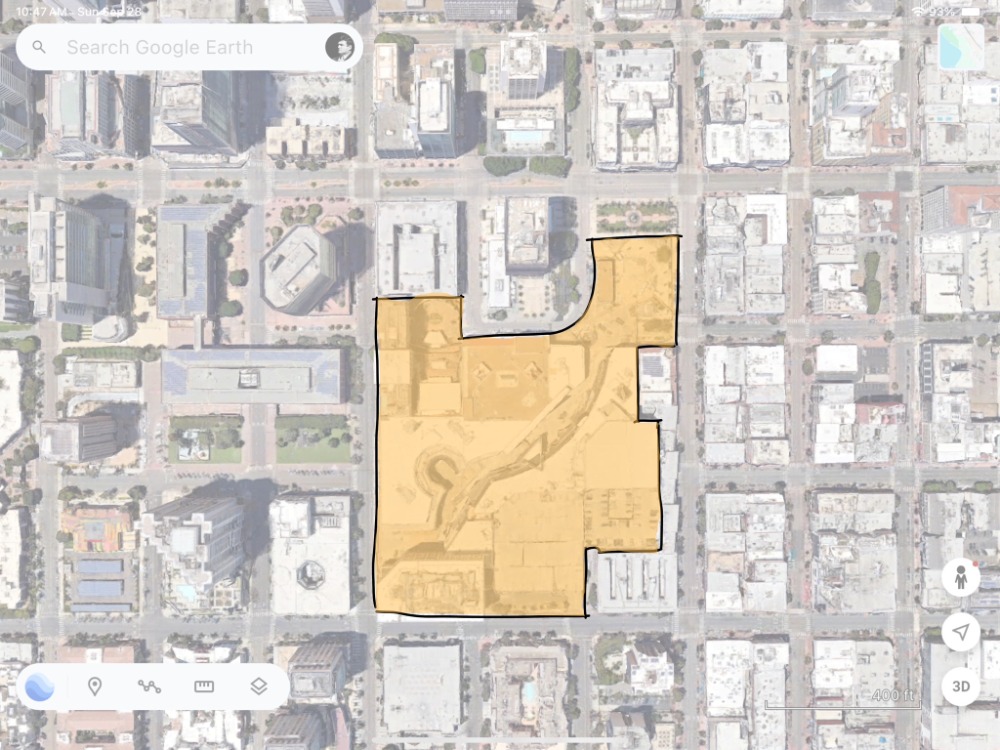
San Diego Architecture Foundation’s annual Orchids and Onions event awarded Downtown San Diego’s vacant Horton Plaza (HP) Shopping Center an Onion last fall. HP is out-of-date and unworkable, obviously. And this is true any half-vacant shopping center or 1960s office strip center throughout the nation. HP was built specifically to be an open-air, enclosed mall and it was very successful from 1980 to about 2010.
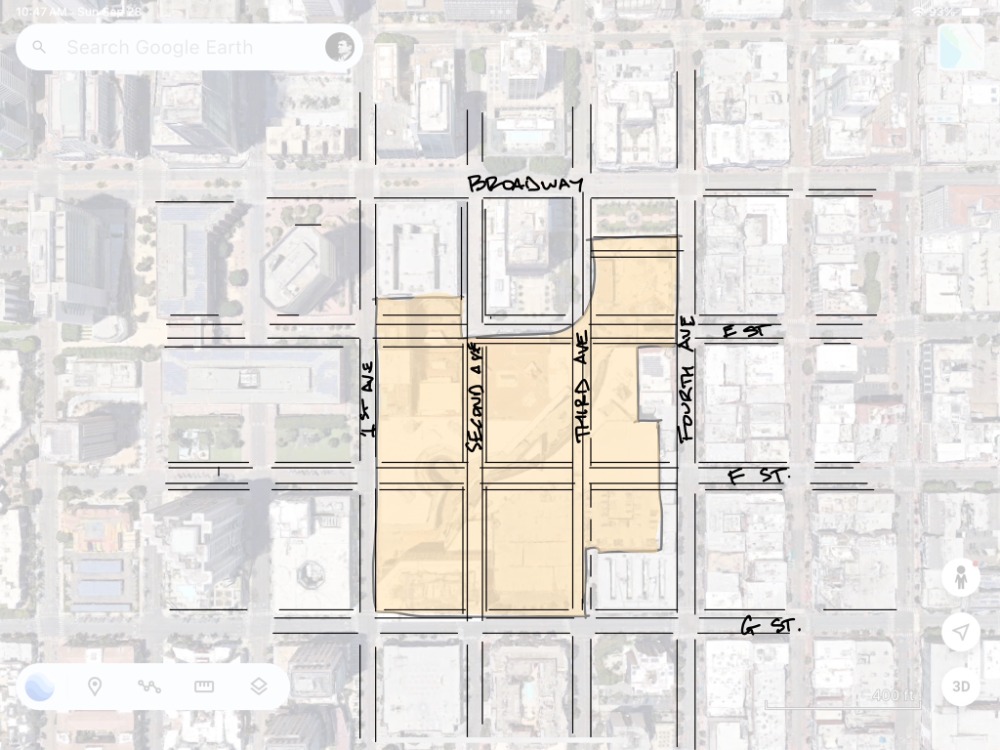
The demand for suburbia is over at this time (don’t worry, it’ll come around again in 10 years or so). While HP is not the only vacant mall trying to reinvent itself in San Diego (see slide 5 below), it is our region’s most urban/downtown one and has the same issues as any suburban retrofit project. The best mall re-invention solutions are to reestablish connections to streets/blocks currently closed and add housing. Simple, right?!? Well, it’s not as those two interventions involves the local municipality (streets/utilities/regulations), new development partners (multi-family), different lending models, and policy/regulatory updates, and building code conflicts.
It is not impossible, as Belmar in Lakeland, CO, is hands down the best retrofit and Horton will have to do the same mixed-use, connected redevelopment to be successful again.
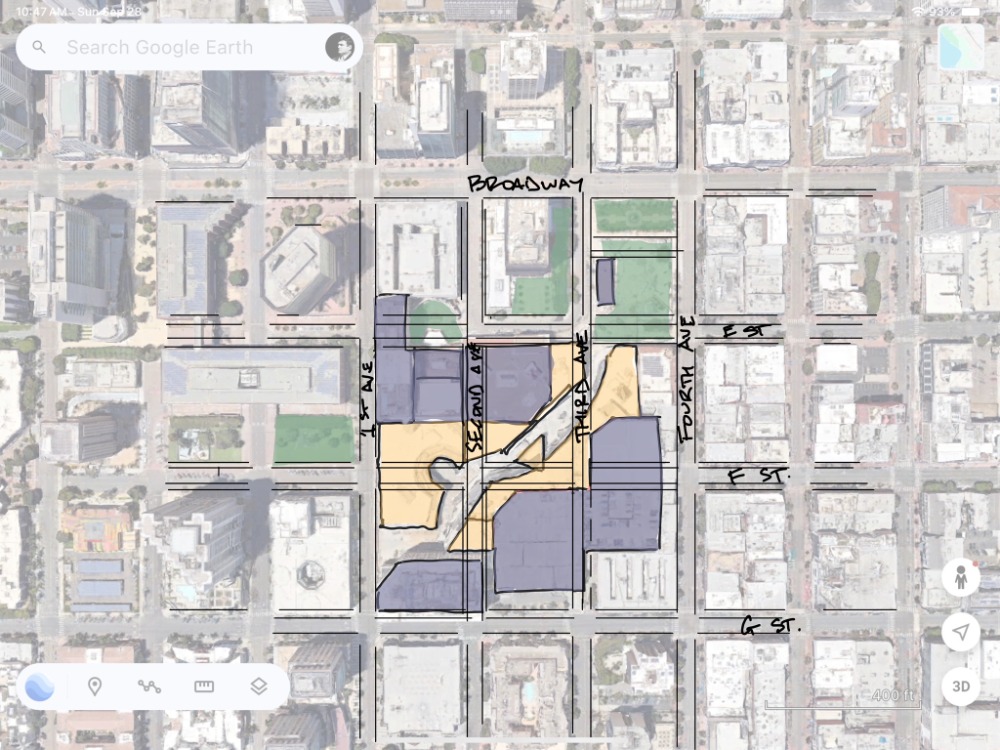
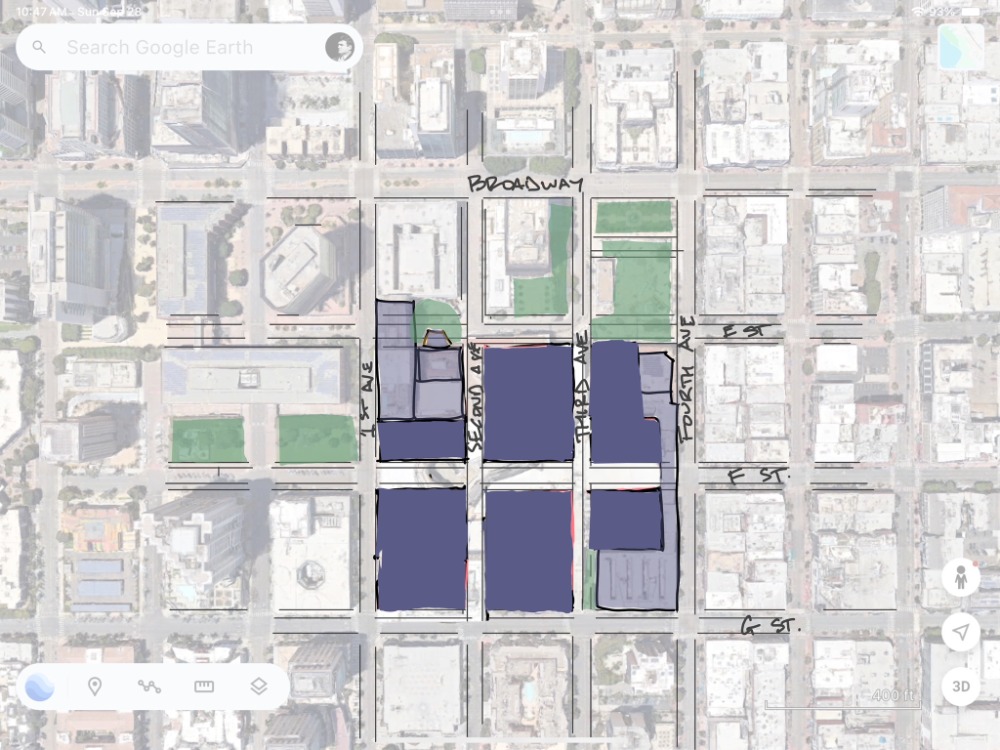
45-years ago, HP was the first return to downtown urbanism. But it was a baby-step, still suburban, and built for one private shopping center model at one point in time, and it worked for 30+ years. So, to retrofit, first, the city’s downtown code enables mixed-use. However, reconnecting closed streets are not on the city’s Capital Improvement Plan, so that process will need to be initiated by its public works program and approved by city council (Development Impact Fees pay for these improvements). Next, there are several existing, easier-to-retrofit, rational buildings to be re-used. The hotel on E and 2nd works great, as is the new office on G and 2nd, plus a couple of the parking garages. But the irrational shaped shops (slide 3 below) lining the walkway aren’t worth the effort and do the most damage to the long-term urban pattern. In my opinion, HP should demolish the irrational buildings, make full city blocks (slide 5) to reopen the public streets/blocks. This pattern will last the next hundreds of years rather than 30 – 45 years.
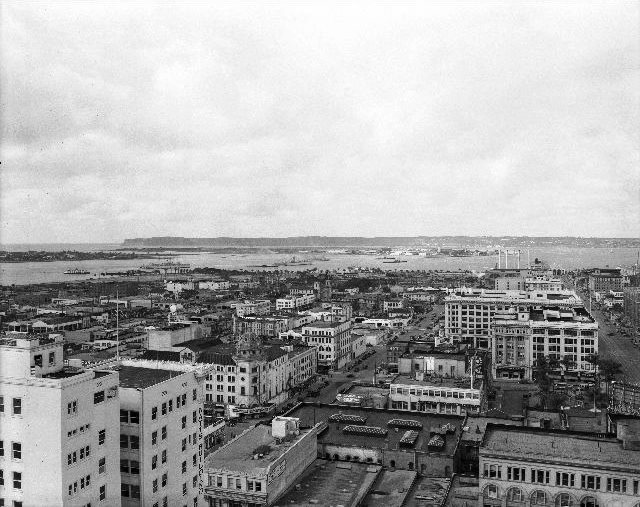
It’s not an easily adaptable building because it’s a fortified mall. And I recommend we be as ruthless with it today as they were to what was there before it (historic picture below), which was adaptable urban streets and blocks. It’s a 1980, stand-alone, single-use district within downtown. Next would be to retrofit the 1950/60s building along B Street with a completely different set of tools to transform just offices to offices/hotels/housing. And then transform seaport village, those low-rise, suburban townhomes around Pantoja Park.
The city is never built-out… especially when its full of single-use buildings and districts.
How to fix…
 Howard Blackson