The Mid-21st Century Economic Development Model

Economics, Innovation Districts, Urban Design, Urban Planning

My treasured colleague and mentor, Bill Fulton, is creating our brave new post-pandemic world’s econ dev model that is a dramatic shift in how we are socializing into the mid-21st century. You can find his writings about his approach on his Substack page. He’s clearly identified and defined the patterns within the urban core/center and general urban areas and I’ve merely added the rural component to complete the ‘transect’ of econ dev place types.

Our state-by-state policy shift towards mixed-use, walkable urbanism is finally complete. Every city across the nation has general or comprehensive plan policy that allows for urban infill development. But this process has taken 30 years and the promised transit to support this new urbanism hasn’t been funded, and now we are in a new socializing era. We didn’t plan for the unintended consequences of a global pandemic… that low-density, auto-oriented, suburban homes would become mixed-use, live-work buildings.

We didn’t plan for urban downtowns to have less work and less shopping after building more housing. We didn’t plan for the cultural backlash of electing a black President and burn down our federal government and defunded our education and the transit infrastructure rather than our police and military state. Oh well… “you get the government we deserve,” said, Andres Duany once.

So here we are again in need of reforming our new urbanist, after-suburban sprawl, 20th century urbanist policies and regulations to be to meet today’s social demands. This zoning reform transitions from noxious industries co-location needs to regulating obnoxious neighbors sharing amenitized downtowns and sub-regional urban centers.

The following are a regional and citywide policy and econ dev framework for lot and block scaled zoning/regulatory reform:

Regional and Sub-Regional Urban Hotel (Transect Zones T6, T5, and T4-Neighborhood Centers)
Offers amenitized live, work, and play facilities for hyper-locals (new infill housing), locals (suburban commuters), and visitors (hotel business/pleasure). Dollars are flowing in from these types of citizen consumers.

Private Buildings and Spaces Functions
– Retail – Dining and Entertainment, and Shopping
– Daily Needs Services – Gym, spa, sundries, bodega, rentals
– Office Facilities
– Hotels (Long-Stay)
Conferencing Facilities
– Hotels (Short-Stay)
Pools, spas, gyms
– Homes – mix of uses (working and living)
– Paseos – Access between spaces and buildings
– Belvederes – Roof decks and garden terraces
– Parking Areas – Access to spaces and buildings

Public Buildings and Spaces Functions
– Conference Center
– Plazas/Squares – Destination civic space, active and contemplative
– Civic Services – Library, Post Office, City Hall, Pool

NGO Buildings and Spaces Functions
– Chamber of Commerce / Meeting Rooms and Facilities

Suburban Workshop (T4 General, and T3)
Offers live, work, and large-scale play facilities without amenities in existing suburban communities. These are static places with low-growth, and little change the appearance of the pods of housing or commercial or industrial. Auto-oriented but adding work from home and people wanting to walk around for exercise, post-pandemic.

Private Buildings and Spaces Functions
– Single-family Detached Homes
– Accessory Dwelling Units
– Yards

Public Buildings and Spaces Functions
– Ballfields

Regional Rural Substructure (T2)
A zoning conflict we’re addressing today are the regional infrastructure and utility issues bumping against either the suburbs or smaller, historic towns. Agriculture being the original regional utility/commerce.

Private Buildings and Spaces Functions
– Energy – Solar, wind, electrical (Efficiency Issues)
– Substations, powerlines (Wildfire Issues)
– Data Center Districts (The Next Big Deal to Deal with)
– Agriculture lands, Farmsteads, and Farm Worker Housing (Resort Districts)

Public Buildings and Spaces Functions
– Freeways, Highways, Corridors
– Federal and State Parks

Preserved and Pristine Nature is T1
My Taco Shop Theory…

Economics, San Diego, Urban Design, Urban Planning, walkability

I write, draw, and lament often about how great mixed-use, walkable, transit-supported urbanism is for our civilization. In my part of world, San Diego, one our most civilizing characteristics is the local taco shop(s). Taco shops are ours and we do them best, especially in comparison to LA, ‘Frisco, and Sacramento. And I have a theory… “the best taco shop is the second closest taco shop to your home.”

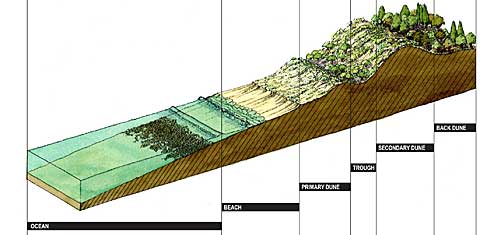
Another theory I subscribe to is the use of the ‘transect’ to design, plan, and build neighborhoods. The transect is an environmental research tool. It is a cut or path through part of the environment showing a range of different habitats. Biologists and ecologists use transects to study the many symbiotic elements that contribute to habitats where certain plants and animals thrive. The urban-to-nature transect outlines our human habitat in a similar fashion. See here: https://transect.org/index.html

natural transect
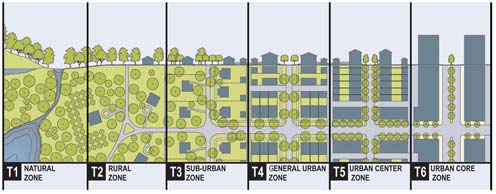
transect

And the Transect Zones (T-zone) range from the most urban, T6, to the most natural, T1. And there are 4 other place types in between. The Transect can be used at the regional scale. For example downtowns are a region’s most urban, thus T-6, and State/Federal parks, T1, are the most natural areas that need to be preserved. Agricultural reserve areas (T2), edge of town suburbia (T3), small town centers (T4), and the middle of towns/cities neighborhoods are mixed-use (T5). And the Transect is best applied at the neighborhood scale.

Each walkable neighborhood, approximately 120-acres, .25 mile distance from center to edge (approximately 1,250 linear feet), and these have at least 3 transect zones within it to provide a mix of uses, places, spaces, and people at different income/life levels. The neighborhood main street center is T5, the neighborhood general area with a few corner stores is T4, and the neighborhood edge is usually T3 that leads to natural corridor or the next neighborhood edge leading to another neighborhood and its main street center.

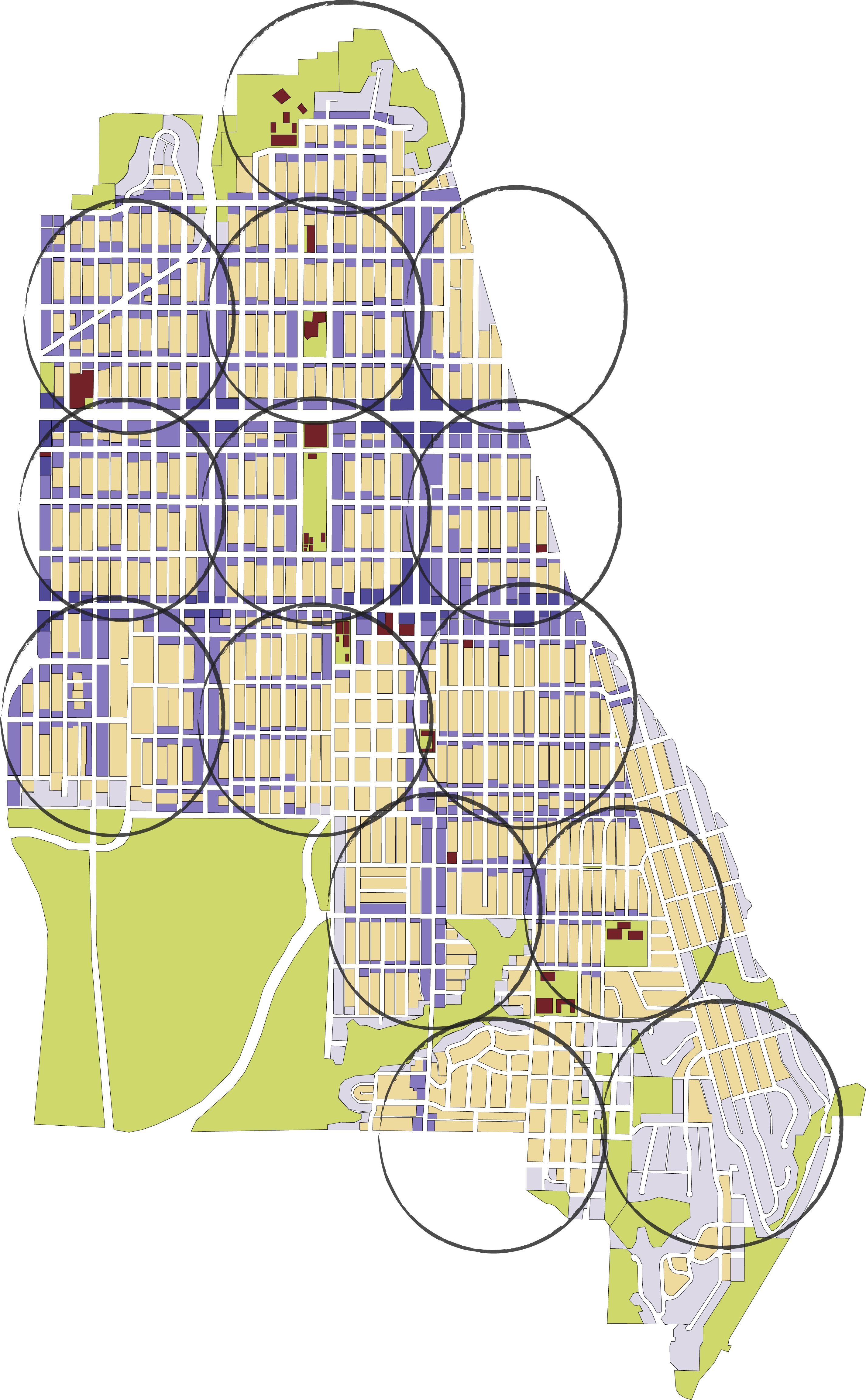
This my complete, walkable, mixed-use, transit-supported neighborhood with the 5-minute walk from the neighborhood center to edge outlined:

And here are where my local taco shop and trucks are located by Transect-Zone:

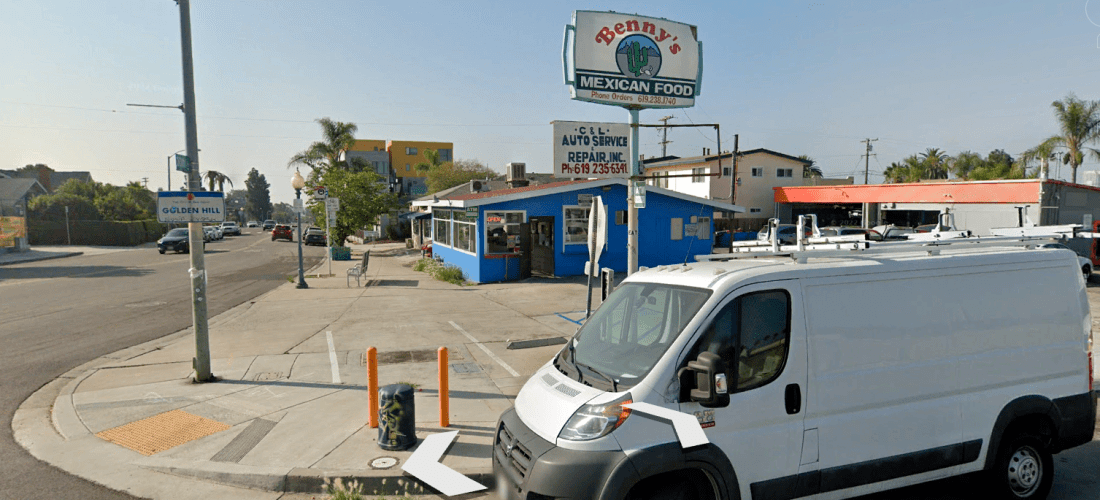
And here is the location of my next and favorite taco shop:

If I took the time, you’d see that my favorite taco shop is on the edge of the next neighborhood to my south. It’s center is located a neighborhood grocery store (Food Bowl, who make great tacos in their deli too). And our older streetcar neighborhoods in San Diego are expertly shaped with neighborhood centers located every 5 to 10-minute walks apart from each other and our #2 Bus stops. And, every neighborhood essentially has a great taco shop located in it. To the north, The Taco Shop is located another half-mile to the north, then another favorite taco shop, open 24-hours, Saguaro’s, is another half-mile from there.

Below is a transect map of the neighborhood’s in the North Park Community Planning Area. My neighborhood is to the furthest south (and half in Greater Golden Hill). The Taco shop is on the edge of the next north neighborhood (see the off-set Upas St intersection). And Saguaro’s is on the edge of the next neighborhood to the north, and so on. Notice they’re all located on 30th Street, the only north/south street connected South Park/Golden Hill to North Park and all of the tacos shops are located on it (and Fern St where it changes names).

One of San Diego’s best cultural elements are our taco shops. When I travel somewhere for more than a few days and return… my first meal home is usually from a taco shop because I need it. And we’re fortunate enough to have a taco shop in most of our urban neighborhoods. I’m thankful for my local, but I eat there too often and it’s staled to my tastes… and it’s too close. A 5-minute walk to/from my house to my local taco shop only burns a few calories compared to the amount of calories served up by my favorite burritos, rolled tacos, and flying saucers.

“Are we there yet?” No… But we’re close.

Economics

I shared this very good 2013 documentary with a potential client in Fresno, California. And he asked after watching it if I thought Fresno was better off today from the ideas and potential presented a decade ago? I know Fresno is better off today than it was 10+ years ago because of its public and private investments highlighted in the movie. And it was a real change to restart the building of urbanism in a decades long suburban culture.

Usually, this is when I self-righteously plow into the value of the New Urbanism and how 30 years ago we restarted and sustained this urban living revolution (with help from the sitcom, Friends). But it’s been 30 years, a full generation. And we should be fully building mixed-use, walkable, transit-supported urbanism at an industrial scale/speed by now, if measure by how long it took for the idea of suburbia to become reality. For example, Corbusier published the City of To-Morrow And Its Planning in 1929 and auto-oriented sprawl was in full bloom by 1959.

Calthorpe, Duany, and Katz all published their groundbreaking books on the New Urbanism in the early 1990s and here we are in 2023. Why aren’t we there yet? We’re most certainly moving in that direction, but too slowly.

That said, every city’s revitalization efforts suffered setbacks from the dramatic changes to how we work and commute due to the Covid shutdown. In California, we’re not building offices, retail is dead, and housing is king, because we’re building so little of it and we’re now working and shopping from home. I think that our Covid reset has to be overcome by all American cities, especially Fresno.

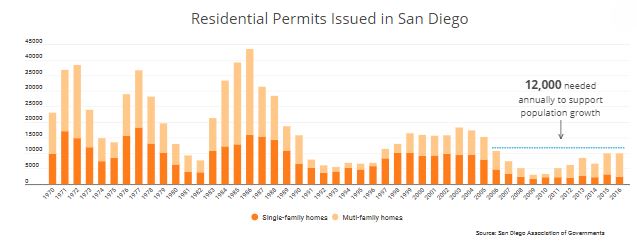
The overall development and construction industry in California appears to be in a static point between the pendulum swings of change, from suburban to urban building. And no major city in California is building enough housing to meet its market demands beyond the few thousand or so built a year on the fringes in master planned communities by the few big home building firms leftover from the 80s.

We have zero national or regional building/construction companies that build urban infill housing types at an industrial scale. We depend on 1,000 small-scale builders in every city to build enough housing to meet market demands, who are all learning and starting from scratch at the same time. Few are trained, prepared, or knows how to build urban infill housing at the scale of 2-3,000 homes annually.  Few city are able to build enough infill housing yet because:

– The Federal Government neither insures/subsidizes its loans/mortgages nor invests in our transit facilities.
– The State neither invests in transit services nor modifies building codes.
– The City neither invests in job training/education nor reforms its entitlement codes (they waive them).

All of these things were being done in the 1950/60’s as the Feds/State/Cities were in alignment to build suburban development at a massive scale. Feds changed its lending practices to subsidize single-family home mortgages. Fed and States built freeways and highways and their interchanges. States and cities built schools and colleges to educate ourselves. Cities created zoning to segregate work from home and enable master planned suburban development. America was a brave, new modern world post WW2. We were flush with cash and power and the world had changed dramatically by the mid-1940s.

Today, we’ve shoveled all of our post WW2 wealth over to the Saudi’s for cheap oil to fuel our autopian suburban landscape. And were breaking ourselves financially to maintain the out-of-date and cheap suburban infrastructure, which is a losing financial scheme. This is all explained much better by Chuck Marohn and Joe Minicozzi.

In short, we’re still not set up for building infill urbanism. And at this moment, California’s new urban infill development shift is being led by the State’s housing requirements and affordable housing incentives forcing city’s to waive their zoning (as opposed to reforming it). The Feds have started changing its policies too. But, these are just two of the six points the feds/state/cities need to be in alignment with in order to build infill housing at an industrial scale.

It’ll take time to get all three aligned, and we’ll get there as we’re well past the suburban experiment… which proved to be the greatest misallocation of resources in the history of civilization (stolen from James Howard Kunstler). Ultimately, when you tug on downtown Fresno you’ll find that it’s connected to the world (stolen from John Muir).

Balancing the Math!

Economics, Social Justice, Urban Design

In general terms, the equation* to figuring out what the market rate housing rents are is to find the average local wage, times it employment opportunities, divided by the number of housing units available (*this is not a real math equation, it is assembling the elements that determine how the market place sets rents). While this equation is too simple, the basic point is that the rents rise in economically hot housing market cities because our growing upper-class wages are booming while the number of units available are limited. Higher wages times higher employment in cities that constrain new housing development equates to hot economic markets and higher rents.

Wages have somewhat stagnating for the shrinking middle class since the Great Recession. And those who are able to are willing pay more and compete for access to the ‘good life’ in a city that has great amenities, such as arts, parks, rivers (Austin and Denver), nice weather, beaches, bays (Miami and San Diego), and those cities with a lot of jobs and amenities (Bay Area, Seattle, and Los Angeles). This amenity factor still fits with the simple equation above as those cities offering jobs and amenities are too few and far between. And those few safe, amenity and job rich places are unwilling to build enough housing to meet market demand. As people continue to look for places to spend their valuable time to inhabit, wealthy cities will have those neighborhoods that remain expensive for a variety of reasons, while a similar neighborhood in the same city, only a few miles away, will remain stagnant or declining economically and socially.

Cities have a spectrum of economic value, from high to low, in context. Every city has a limited number of housing units available in high economically valued and amenity-filled neighborhoods to be rented by those few high wage workers who are in high demand and making significantly higher wages (+$200k/year). While the majority of a city’s middle class workers (+$60k/year) live in middle to lower economically stable and amenity-less neighborhoods. These new higher wages jobs drive up the rent in those few end-of-the-economic-spectrum high-demand neighborhoods and spill over into the edges of the middle class neighborhoods driving up rents and creating scarcity of middle-income housing (if more is not being built).

The most socially just urban design solution is to enable and build more housing and jobs with amenities in more neighborhoods rather than allowing for higher wage earns compete for those few amenity-filled neighborhoods scattered throughout most cities currently experiencing job growth. Importantly, these wages, number of units, employment opportunities and the need for more housing production issues are only relevant for stagnant cities and towns across the United States Rust Belt and Midwest states. Which moves us into social equity and justice issues with displacement in these high growth cities and neighborhoods. Local people who are displaced from their long-standing homes is the unjust effect of gentrification as values increases. While increased investment in an area has positive outcomes, gentrification associated with displacement of long-term residents deny citizens the ability to benefit from new investments in housing, healthy food access, or transit infrastructure.

To physically improve economically stagnant neighborhoods, with value generated from economic development and raise incomes, some manageable level of gentrification, minus displacement, is needed to improve and rebuild schools, parks, and market-rate development opportunities. Adding to this conversation is how work and shopping is physically changing in our neighborhoods, making 1960’s economic development models obsolete and new ways of building our neighborhoods and economies are making a huge difference in adding housing in older, pre-auto dominated neighborhoods. The auto-dominated suburban sprawl areas are in need of different tools to retrofit them. Conversely, in growing economic value markets, some manageable level of economic stagnation is necessary to enable more people to participate in the local jobs and amenities, such as subsidized housing, rent controls, and taxes.

San Francisco is an expensive because it is affluent with a growing population and no land made easily available for development. Enabling and building more housing would stabilize or reduce rents as it adds supply to the inherent demand. New amenities, new design housing design models, and new neighborhood patterns are emerging. And with enough new housing to reduce prices and mollify its globally hot market rates for housing, the quality of the city’s urban design will make a difference in how San Francisco attracts new wage earners and retains its aging and long-standing citizens.

Understanding this need to update its codes and design expectations, Seattle, Portland, and Denver have stabilized rents by building more housing. Using new zoning tools to allow for more housing in existing neighborhoods, these cities successfully changed their conventional zoning to a more form-based code type in anticipation of their 21st century development needs for mixed-use, walkable new urbanism. Form-Based Codes, or Objective Design Standards, prioritize where a building fits in its neighborhood context over the singular building’s primary land use. These cities reversed their once decimated social and physical fabric of their downtowns and historic neighborhoods by connecting and enabling isolated and segregated pods of development into well-connected and economically stable neighborhoods. And striking that balance between stagnant and hot economic markets.