Leon Krier was Right

Leon Krier, philosophy, Urban Design

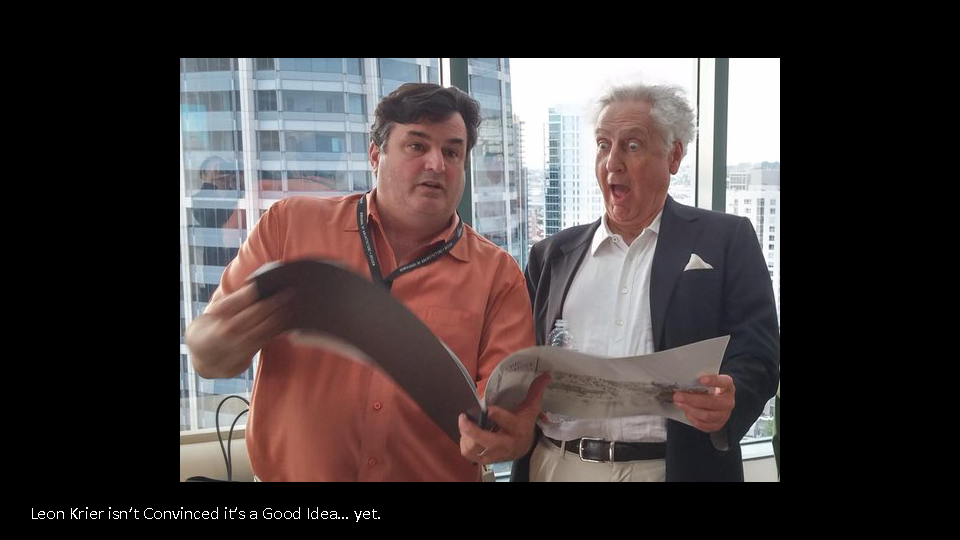
My most significant educational experience was sitting directly across from Leon on a 5-day charrette in Chico, California, 22 years ago. The intense time spent with him changed the trajectory of my professional life… because Leon Krier was right.

Ye shall know the truth, and the truth shall set you free.” – Jesus

Leon was a man of great character, who was the largest influencer of my education, as far as any single person could have affected it. Another iconic person (of whom I can never repay for their professional generosity and genius), Andres Duany, wrote this loving eulogy that correctly identifies the voracious and tenacious conviction of Krier’s work in contrast to Leon’s gracious, admirable, and courteous lifestyle. His life’s story is well documented. His uniquely lived experience of growing up in Post-WWII reconstruction Luxembourg, combined with his informal education (he learned from mentors and teaching at London’s Architects Association) as processed through his complex character (see Duany’s description above) shaped his incredible creativity.

Leon correctly identified that industrialization had devastated our civilization and its buildings and cities. Krier was the first to challenge the modernist dogma in the 70s as young architect. Because of his lone advocacy turning into a movement, today we have a fuller spectrum of design choices, from self-referential modernism to traditional vernacular to classically ordered tools. Leon Krier was right.

A few years ago, upon picking him up from the airport, I immediately drove Leon to share my disdain of the latest modernist infill project in my turn-of-the-century streetcar neighborhood. It’s a copy of Corbu’s Villa Savoye that had been in Architecture Record. I was fully expecting an affirmation of my disgust when Leon surprising said, “It’s good.” My eyes widened and my hands gesticulated wildly as I explained that the building’s fenestration was backwards, completely ignored its context, and the urbanism only existent in materials and scale. Leon agreed that while all I said was true, for a modernist building it was a very good example.

The lesson being, “If you are going to do modernism (or anything for that matter)… then do it well.”

I had forgotten how difficult it is to get any building or nice place built. My New Urbanist dogma had gotten in the way of this human truth. He said that to build anything in today’s toxic environment (naturally and politically) was laudable and then to build it well was meaningful. Leon Krier was right.

I am fortunate to have spent days and hours talking with Leon while driving across US west deserts, working in San Diego, and online during Covid. While his professional works is polemic and absolute, his personal perspective was equally optimistic and positive. Another grand lesson I learned from Leon on the importance of what we do was that, “The architecture the city and public spaces is a matter of common concern to the same degree as laws and language; they are the foundation of civility and civilization.

It was a feast to have learned these truths from my genial mentor. Thank you again, Leon.

[This week my lovely daughter in London posted this in front of the Architectural Association]

Justin Shubow

Trading the Big Idea for One Building

Leon Krier, Public Space, Urban Design

President of the National Civic Art Society, a non-profit organization headquartered in Washington, D.C. that promotes the classical and humanistic tradition in public art and architecture, Justin Shubow is an architectural enigma to me. Obviously partisan, which I am admittedly too, his appearance on Ben Shapiro’s show demonstrates how his ideas for classical architecture are ascending again in Trump’s 2nd term. However, I see Trump as a criminal. That said, I supported Justin’s approach to the Eisenhower Memorial prior to Trump, so I have to check myself before I say too much, which is not my strongest trait.

As Leon Krier points out in his book on Albert Speer… Even criminals can make great architecture. Krier illustrates how Speer used classical architecture in support of his totalitarian regime by blowing it up to an industrial/modern megalomania scale. Today, the worst developer in NYC can support beautiful architecture despite his criminal intent as President. Right now, Trump is restructuring our government into partisan loyalist, which should be opposed rather than being complicit with. As much as I support classical and traditional architecture, I cannot enable Trump’s evil intentions in exchange for building a better FBI building. 

The basis of my criticism is that the FBI building is a one-off anecdotal, microcosm (DC) to the larger macro (USA) issue of how the General Services Administration (GSA) process that eliminates the ability for classical architecture to compete for new projects. Both are a problem. But I believe if we fix the macro problem we can influence how the micro is rebuilt in the future. My perspective is shaped by my membership with the GSA Design Excellence Peer Review Committee, which Trump is already reshaping into his image. 

Therefore, I suggest we advocate for our long-standing democratic processes to reform GSA and how we rebuild Federal buildings in the future for all rather than bow to a tyrant to get what we want today. It’s not worth the trade, IMHO.

How I Got Here…

Leon Krier, San Diego, Urban Design

First, one of the many reasons I owe Mr. Michael J. Stepner, FAIA, FAICP, more than I can ever repay him is because he helped me find my professional path. My career as a planner started in Honolulu and then San Diego. I remember reading in the newspaper about Mr. Stepner being fired by a crude City Manager, Jack McGory, and then hired back by the city council, who overruled Jack, because he was rightfully leading San Diego towards its mixed-use, walkable, transit-supported future. Mike’s story resonated with me and that he had great credibility.

Second, here’s my new urbanist origin story. I was working for an architecture firm in Daegu, South Korea, during the Asian Tiger economic boom from ’93 – 97. And I found myself designing their first retirement communities using my suburban SoCal drive-thru lifestyle design tools. Traditionally, Korean elderly give their inheritance to their children when they moved in with their children’s family and they lived together in their compound housing (totally different from modern Western civilization tradition). And I designed their first car-oriented ‘silver towns’ because the middle class and car ownership was rising and they had money to put their elderly in homes. I met with the owners and looked into the sad eyes of one of the elderly men in the room who was envisioning his life isolated in a retirement box, alone.

I realized I was destroying a culture and that I had power as a designer and with great power comes great responsibility (credit: Stan Lee). So I knew I needed a deeper understanding of my craft and further my education. So I starting searching…

Around that same time, 1997, I took a job in Singapore to master plan port facilities with housing for imported labor… and none of those cheaper laborers imported had a car. These were exclusively walkable neighborhoods for 1,000s of workers. If the port facility was in Malaysia, they brought in Indian workers, if in the India, the brought in Philippine workers, and so on. Going into the interview, I remembered reading about Mike Stepner designing walkable, transit-station areas in San Diego and hiring Peter Calthorpe. So I bought Peter’s book, The Next American Metropolis, read it on the 30+ hour flight, copied his drawings into my notebook that I showed at the interview and got the job.

In Singapore, I found an older Calthorpe and Sim Van der Ryn book (’91), Sustainable Communities, and on the last two pages, they reference Leon Krier as the future guru of planning sustainable communities. Of course Leon is the godfather of the Congress for the New Urbanism because he taught at Yale when Peter, Andres Duany, Liz Plater-Zyberk, Stefanos Polyzoides, and Andrew Malick’s father were students there. And down I went, into the Leon Krier rabbit hole. Amazingly, within my own profession, I found the innately humane power in building walkable places that people loved. And it energized my career.

Unfortunately, in ’98 my father passed away but it left me enough money to go get my Masters in London (Univ. of Westminster, ’00) and put money down on a house in San Diego (’01). I went to London specifically to learn from Leon as I interned with the Prince’s Foundation, but I didn’t get to meet Leon…

Returning to San Diego, I worked on the County of SD General Plan Update and I’m asked by an NU colleague to go on a charrette in Chico, CA (’04), led by Leon Krier! My boss said I couldn’t take the time off to go so I quit the County and went (they hired me back as they didn’t expect me to quit). I purposely watched Leon and immediately sat at the same table as him, along with Geoff Dyer, who’d become my business partner and dearest friend. We sat there, stole scraps of drawings, listened, learned, copied, and soaked in the charrette that was a beautiful mess. Leon knew my London teachers and Princes Foundation colleagues and we became friends.

From there, Leon and I spent time together at New Urbanism’s annual Congresses. And when his book, The Architecture of Community, came out, he came to San Diego to lecture in Balboa Park, and we packed the Photograph Museum theater to the rafters, which was real meaningful to Leon at that time. He came back again a couple other times and together we drove my convertible Porsche across the desert for him to lecture at Univ. of Arizona. A memorable moment at one of his lectures in the NewSchool of Architecture, he asked the audience if anyone in the room had ever designed a tower… and in the front row, only Frank Wolden raised his hand!

We were able to spent a lot of time together then and during Covid, when he was trapped in his Cayala, Guatemala, studio for several months, we recorded these vlogs (and here) to talk about design, history, philosophy, and beyond.

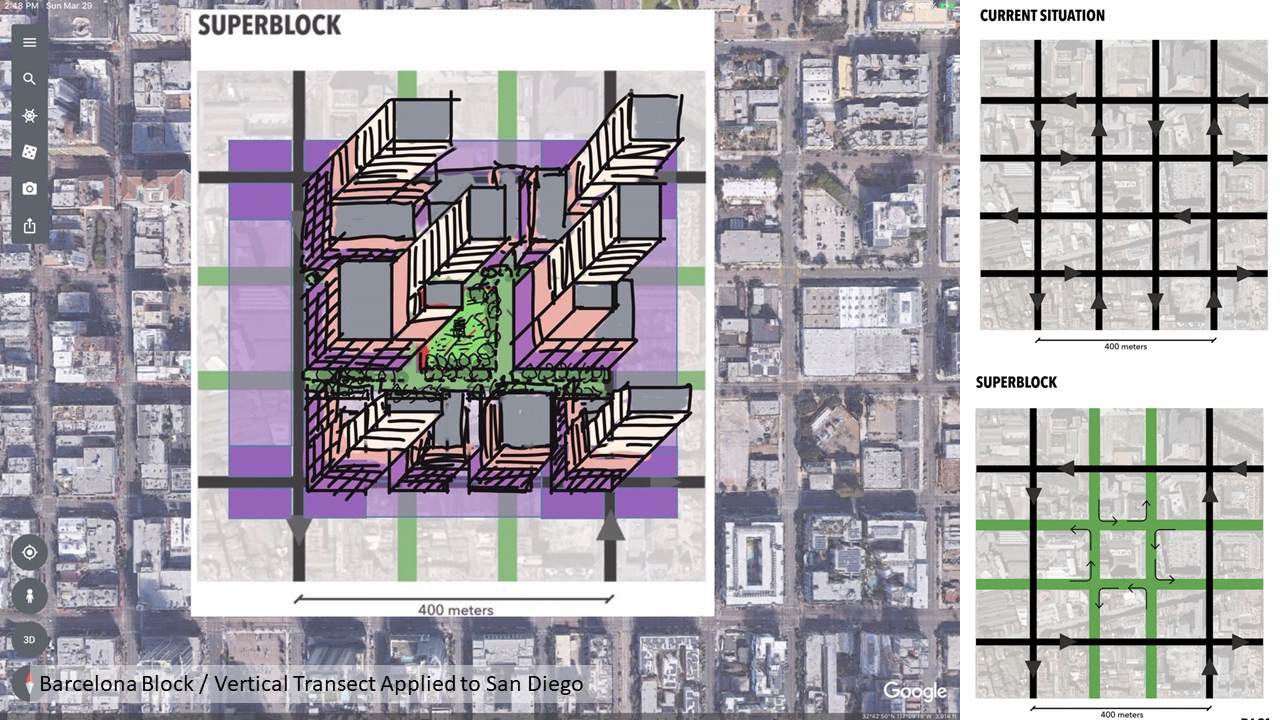
And while in San Diego, he’s come up some of his more recent ideas that he’s published and we continue email debates on topics/issues, such as Corbu/Speer and vertical transects. His design idea for Coronado’s toll booth landing area is brilliant, using different height columns in a circle appear to ‘move’ when driving across the curve of the Coronado Bridge. 3-dimensional thinking. Here and here are a couple of links on his visits to San Diego.

Your City Psychologist is ‘In.’

Leon Krier, Urban Planning

My favorite pop philosopher and psychologist is Alain de Botton, and his School of Life. They share a wide variety of articles and videos on relationships, architectural design, and beyond. I found his work through his 2006 book, The Architecture of Happiness. And what I appreciate about his approach to cities is that it has decidedly shifted from an original modernist perspective (2008), to the above book’s meandering thesis, and then to a clearly more traditional city making approach (2015). As I age in today’s era of great anxiety, I too find my perspectives changing. Some of these changes are attributed to conversations with an insightful therapist.

One of the silly things I use to tell my municipal clients is that I was hired to be their city’s therapist. That I was there to listen, share case studies, analyze patterns, observe behaviors, and interpreting data to make recommendations on how best to build their city. This analogy would usually get chuckle and then I would go about my work that was policies, plans, and programs.

But, like Mr. Botton, my thoughts have shifted with time. As a long-time conventional zoning code reformer, I see today’s municipal zoning trend finally moving towards meaningful reform. My own city of San Diego appears to be in its first steps of recovery from conventional, segregated land uses (commercial uses shall not have residential uses that shall not have industrial uses, and so on). Our Complete Communities and Inclusionary Housing programs waive most of our old zoning rules in exchange for affordable housing with very few zoning rules. This is done with the intent to lower or stablize the cost of housing (the rent).

This waiver approach is a good first step in making amends for the errors of planning’s past. A dramatic shift, from too many rules to not many rules, allows us to move towards learning a new way to build more housing. But an unfortunate by-product of too few rules is rising land values and land speculation. This creates uncertainty as what is going to be built and how new housing will behave in an existing neighborhood context. Under these programs, a new building could propose 6, 14, 24, or 48 units depending on the owner’s intentions and distance from a transit or bus line. That’s a great first step in reforming rules, but without the next step of new parameters uncertainty, anxiety, and the typical fear of the unknown rises. The next steps would be to design new places that behave as intended in context.

For example, a neighborhood center having more things going on on than the neighborhood edge along a canyon or freeway. An extreme example is building a downtown residential tower in an existing streetscape of single-family homes. This dramatic juxtaposition creates disharmony among neighbors (the fronts of people’s buildings adjacent to the backs of others), the marketplace (the first new tower drives up neighboring land values), and breaks expected neighbor boundaries while supplying new housing as intended for our region. This brings up ethical issues of common good versus being a respectful neighbor. The ethics of good community planning is to serve the public’s interest today by balancing social equity with economics and environmental elements to maintain livable and sustainable neighborhoods. I’ve written about such here, and the economics of it here.

In personal and social relationships, the School of Life psychologist’s recommends we, “set boundaries that involves informing those around us of a set of objectively reasonable ‘rules’ that we need them to follow in order to feel respected and happy — while doing so in a way that conveys both warmth and strength.”

Zoning regulations (codes) provides the rules that build the new places we live, work, play, shop, worship, and learn in. Zoning codes set the boundaries for the ways we live our lives.

Citizens live in neighborhoods with the expectation to live a dignified, respectful, and happy life. Citizens tend to convey these experiences with both warmth and strength in regard/defense to the quality of their existing lifestyles, as well as expressing fear and anxiety in regard to unknown outcomes and experiences a new project/building/place proposal will produce. That’s the next step to zoning reform… a new type of land use regulation, Objective Design Standards, that presents explicit development standards for infill development in clear diagrams that show applicants, neighbors, and city staff what is allowed without relying on a decision of a hearing body.

Zoning codes and city planning mediates this balance between today’s experiences and what changes tomorrow will bring to a neighborhood/place. And zoning is therapy because relationships need to be respected in order to maintain civility and happiness. While some want a pound of flesh for past sins, most of us simply want stability, structure, and connections with each other and their homes. As previously written here:

We need to be grounded in that feeling of being around friends and family… Home. Being home is the idea that goes to the heart of what makes food (neighborhoods) great. It is an approach to cooking (zoning codes) that is rooted in respect. Respect for the ingredients (people/places), respect for tradition. It gives the fancy innovations and clever deconstructions a heart and a soul.“ – Anthony Bourdain, 2008 (Spain – No Reservations)

Life is hard. Zoning sets the boundaries we need to live a respectful and stable life. Let’s continue to reform our city’s zoning through the lens of setting boundaries that involves informing those around us of a set of objectively reasonable ‘rules’ that we need them to follow in order to feel respected and happy.

Industrialization (or The Education of Howard Blackson)

Climate Action Plan, Leon Krier, Urban Design, Urban Planning

Industrialization via the internal combustion machine changed the world (or the Dynamo as described in the great autobiography, The Education of Henry Adams) when it created steel that created new industrial scaled building types. The factories, offices, and skyscrapers were invented in the late 19th century. And because this invention happened during our western civilization’s Neoclassical era, this familiar classical architecture was applied and used to ‘humanize’ these new buildings. However, because the building forms were new, the classicism was applied as a façade, and thereby is ornament… or this mismatched scale made classicism more of a style than a building technology.

A New Age Industrial Scale Office Building Expressed in a Classical Architectural Style, 1920
A New Age Skyscraper in the Classical Architectural Style.

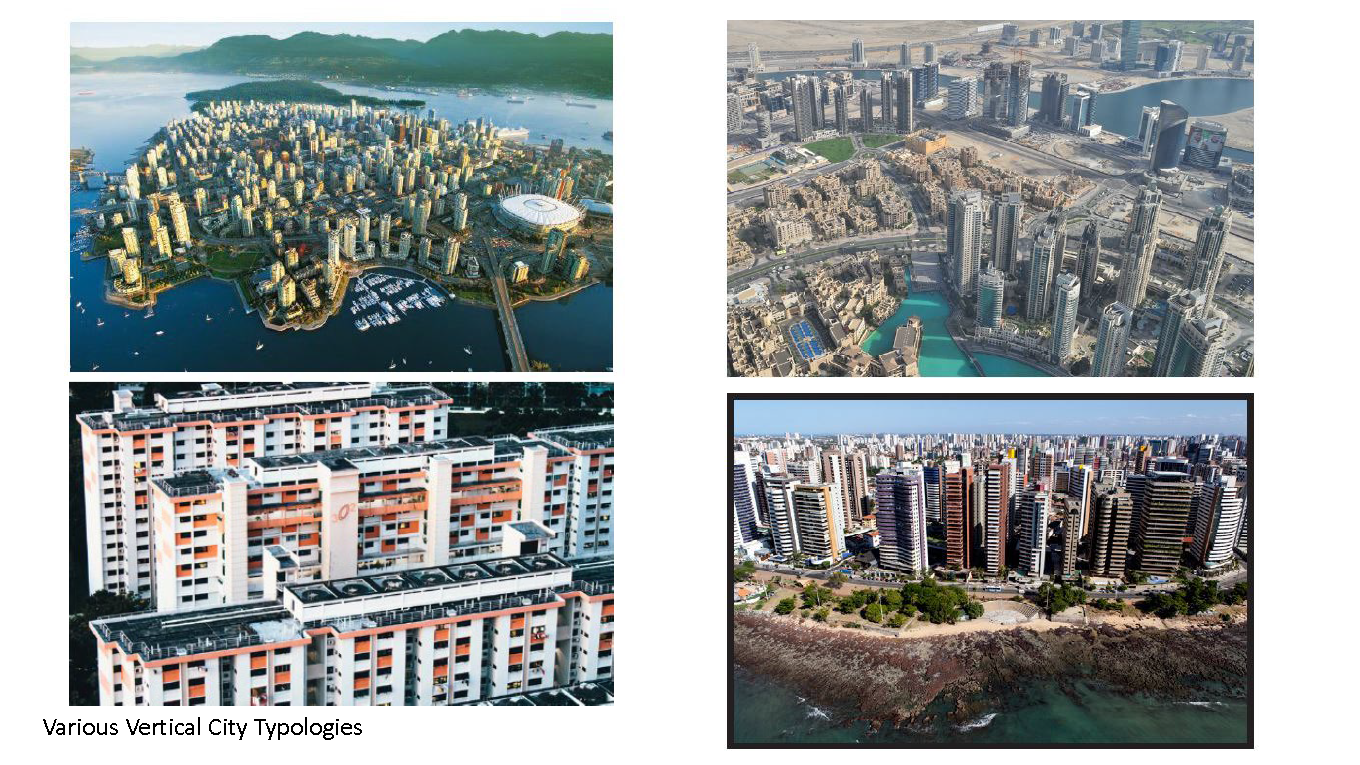
The technology of building at the human scale was obliterated by the modern industrial materials, energy, and resulting scale. Along with these new engines and buildings, new forms of mobility rose as well, trains, streetcars, and then automobiles transformed with the age. The industrial scale of car production created another mismatch in our traditional city environment. Industrialized suburban sprawl was fueled by this auto production.

Leon Krier Alerted us to this in the Early 1970s.

Modern architecture formed in a parallel track. Le Corbusier’s 1923 book, ‘Towards a New Architecture‘ responded to this new scale w/an industrial design aesthetic post WW1. And until post WW2, cities used both classical and international styles on modern scaled buildings and places. And I am writing this next sentence as carefully as possible because it is an extremely volatile subject… it was the WW2 fascist Axis power’s adoption of classicism as an authoritarian tool at an industrial scale that shamed the use of classicism almost out of existence for generations in both academia and society’s elite. For such, classicism was rightfully deemed a failure. Leaving us limited to only one architectural tool, the untested International Style/modernism, to integrate industrialization into our cities over time. And it eventually failed too.

Industrial Scaled Buildings Expressed with International Style Architecture.

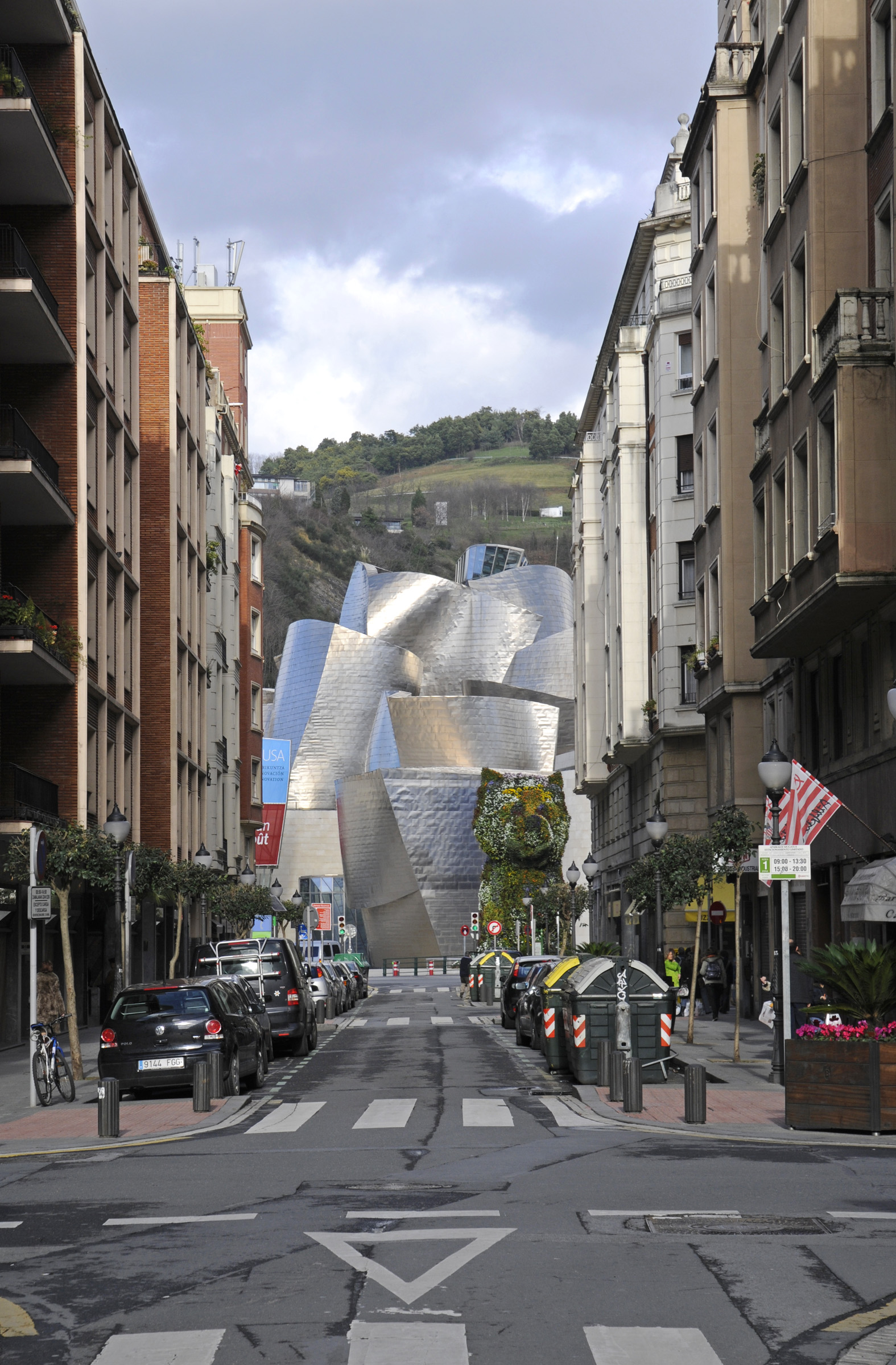
Classical style failed us architecturally at the industrial scale. It had worked fine for thousands of years pre-industrial age and scale. And the International Style failed us urbanistically when applied to the pre-Industrial city. And I dare say the Industrial scaled city (suburban sprawl) has failed use urbanistically as well. This was a lesson Frank Gehry’s ‘Bilbao Effect’ taught us. That the traditional city works great and modernist architecture fits in it well in juxtaposition to it and its classical architecture… adding complexity and excitement to the same old classical buildings set in the same old traditional streetscapes.

Bilbao’s Big Idea Wasn’t, “Hire a Starchitect!” It Was the Architectural Tuning of Place to Create Complexity!

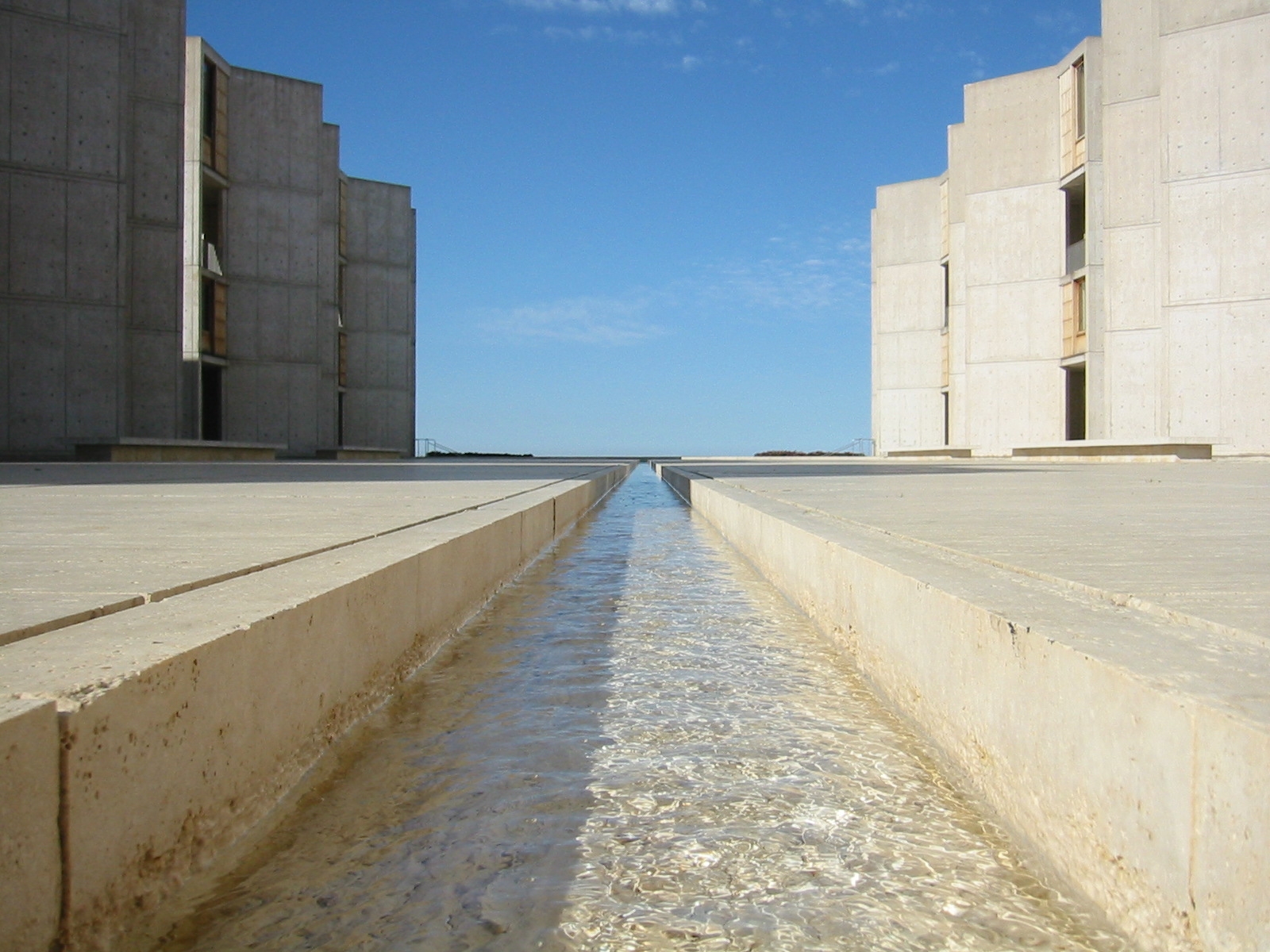
The following are general lessons learned. Modern architecture works fine above the traditional city as long as it doesn’t meet the street/ground. And, classical/traditional architecture works well at the human scale when it touches the ground, but it has to be at the small block and up to mid-rise scale (not at an industrialized size). The traditional city pattern works best to make urbanism. Modern architecture works well when set in natural spaces.

The Salk

Using all of these tools today allows us to build better cities, places, and experiences. A century and change later, we no longer need to censor one while villainizing the other. They both work fine in certain situations and not so well in others. These are just tools that can work together if we understand how to use them.

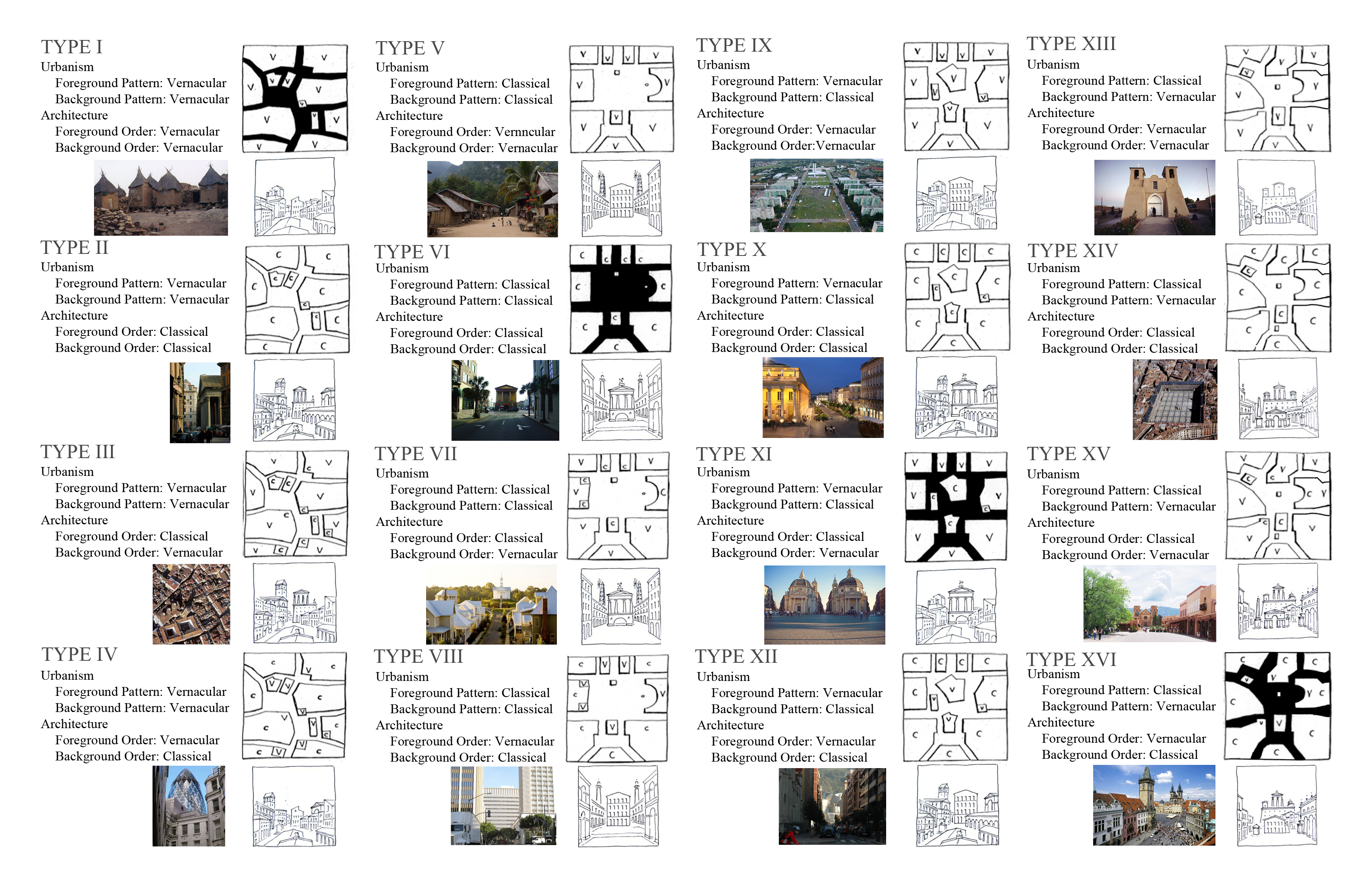
Expanding on Leon Krier’s Tuning of Architectural Settlements with Classical and Non-Classical Buildings Creating a Variety of Place Types.

We are unfortunately in a new climatic calamity era and are thereby fortunately free of the surly bonds of mid-20th century style wars. I find it maddening that designers and urbanist still argue over style when industrialization is the root cause of our current climate/social calamity! We industrialized work and segregated our society. We industrialized our food and have put our health at risk. We used industrialized machines to emit coal and oil carbon particles into our atmosphere and are heating up our finite planet. We industrialized our health care and extended our lives and increased our population, so it has its merits too. What we need to address is that most people still see industrialization as the only tool to fix what originally caused these calamities… truly, a modern day Aesop’s fable.

In our new 21st century post-industrial/climate calamity era, we are now able to use every tool available to us to build more sustainable cities and places that range from More Industrial to Less Industrial / More Traditional to Less Traditional depending on its context.

Finally Free to Design Using all of our Tools in the Toolkit!

Leon Krier and our Cayala Conversations

Leon Krier, Urban Design

I am fortunate to have a relationship with my urban design hero, Leon Krier. In 2003, while working for the County of San Diego’s General Plan 2020 update, I was denied a vacation request to work on a charrette in Chico, California led by Leon Krier. So, I quit my job, drove to Chico, and sat right across the ’table from the Leon (and my eventual life partner, Geoff Dyer) for a week and walked away from the experience a more inspired and humbled designer.

Over the years,  we met at New Urbanism Congresses, and he visited San Diego a couple of times. We drove in a convertible across the desert, gave a riveting lecture to a packed house in Balboa Park’s Museum of Photographic Art theater. And, I’ve watched him formulated the ‘Tuning of Architectural Settlements,’ (Chico), the ‘San Diego Quartet’ (American Four Corners),  and the Coronado Gates (different column heights would appear to ‘turn’ as you drive across the curved Coronado Bridge and land in its ceremonial entrance). Fortunate.

During this Covid-19 spring 2020 shut down, a young University of Texas student, Adam Bell, and I sat down with Leon and recorded a series of conversations on a wide variety of topics while he was stranded in his new urban district in Cayala, Guatemala. So, these are the #CayalaConversations, that we’ll continue until Spain reopens and he can go home… Watch them here:

With more to follow…

Love vs Hope

Leon Krier, Public Space, San Diego, Urban Design, Urban Planning

In the middle of reading Dan Solomon’s new book, Love versus Hope, and think he’s beautifully addressing the issues of how to build a more socially inclusive city.

He posits that cities based on Love are a ‘continuous city’ that is manifested in terms of timeless traditions as well as buildings conjoined to form streets/squares. This traditional city has a far better track record at building cities than those based on Hope, which he calls the ‘ruptured city’ that is designed for revolution derived from naive modernist optimism that has destroyed urbanism/cities to implement their hopeful vision of the future that is greener, safer, accessible, whatever.

That said, the ‘walled city’ is a continuous city in an exaggerated/extreme form that moves away from being socially inclusive and just and towards being based on fear to some extent. This leads to a vision of Yoda whispering about how fear leads to anger, and anger leads to hate, and hate leads to suffering.

This also leads us to Leon Krier’s Albert Speer conundrum… for it is possible to be insanely scared and criminal towards others while designing great cities/buildings and being very civil to your own tribe? These are questions about the ambiguity of humankind. And of our ethical responsibilities to build cities civilization (towards a less suffering society).
San Diego was mostly built in the ruptured city model. We are moving towards a more continuous city. And as a major border city, today I am proud of San Diego’s leadership because we  haven’t succumbed to the fear and loathing espoused by our immoral federal leadership intended to anger us this holiday weekend. Thank you San Diego Mayor, City Council, State Assemblyman Gloria, State Senator Atkins, Congressman Peters and Congresswoman Davis, for endeavoring to keep us from being an even more walled off city as we close 2018.