Whatever...

One Size Fits One… (and it’s the worst one)

Transit, Urban Design, Urban Planning, walkability

The ubiquitous space, shape, but highly volatile speed of the car is much larger and faster than the universal space, shape, and speed of a human. Yet we continue, since post WW2, design and build everything and everywhere for space, shape, and volatile speed of the car. Streets widen, ground floors are parking lots, people are pushed towards the edges, and cars dominate our landscape. This is what ruins downtowns and isolates small towns. Cars are a suburban mobility tool.

That’s not say we need to ban cars. They do somethings great, such as get lumber, while not as good at others, such as exercising. The fact is that cars are best served for disparate suburban expanses. Walking, transit/buses, and bicycles work best in more urban areas. Cars work great in shorter-commutes and throughout suburbia. Trains, airplanes, and ships work best for long commutes.

The New Urbanism was new because it worked to humanize the car in cities, small towns, and new towns. We’re now moving into the Next Urbanism (and I write about this throughout this blog and speak about on podcasts, such as Kevin Klinkenberg’s Messy City). And as humans, we should be designing and building everything everywhere to accommodate for humans first, letting the right mobility serve us throughout the spectrum of urban to rural contexts.

Downtowns (regional centers) are marginalized by our 1.5 cars per person maxim (Spend 5-minutes walking around Downtown San Diego). Small towns are isolated by freeway by-passes, which need both regionally accessible cars and local people to be economically viable (think Ramona, Julian, and Jacumba, if in San Diego). The industrial era invention of cars and suburban sprawl go hand-in-hand, the built each other. Unfortunately, both cars and suburbs are inhumane and detrimental to our economy, environment, and cultural cohesion (See Sabre Springs).

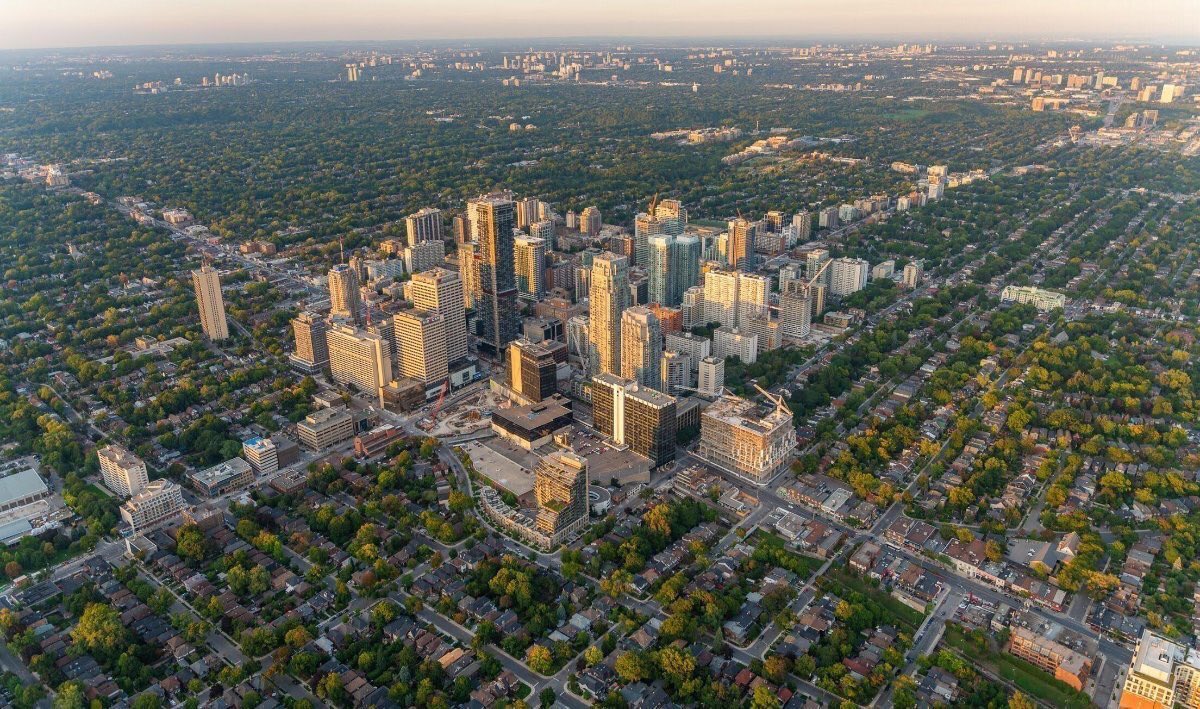
The next urbanism means making downtowns less car-oriented, small-towns car-supported, and car-happy suburbia having sub-regional centers that are more urban/humane. This place, a small district in Tempe, AZ, Cul-de-Sac, is an example of the Next Urbanism… building more urban, sub-regional centers in the vast sprawl of suburbs surrounding downtown’s regional center. And, by the way, Opticos Design, Inc. is one our best architecture and coding companies.

Only as Rapid as the Traffic it's stuck with.

A Faster Transit System is a More Equitable System.

Social Justice, Transit

An October, 2022 Circulate San Diego report, “Fast Bus! How San Diego Can Make Progress by Speeding Up the Bus,” identifies bus riders as essential people as hospital workers, grocery store employees, janitors, social services workers, maids, students, retirees, and much more. They are disproportionately people of color and low-income. These valuable members of our community often rely on bus trips that take far longer than they would in a car, but less expensive than owning, insuring, and fueling a car.

In the 2015, San Diego Community Survey Data report, by our Metropolitan Transportation System (MTS), citizens responded with “Service Not Frequent Enough” as the biggest challenge to using transit (“Takes too Long” wss #2), and “Not Enough Parking” as the least challenging issue (“Too expensive” was #2).

Campaigns from transit advocates across the county agree that fast, reliable service is, “a matter of racial justice and transit equity.”(1) The same holds true for San Diego as MTS riders are disproportionately people of color and low-income.(2) Fast, reliable buses are critical to riders’ ability to access jobs, schools, and services. And transit works best for riders between home, work, schools, and regional destinations, such as downtowns, waterfronts, airports/rail stations, hospitals, and regional-scale recreational parks. This is due to the longer amount of time spent at each destination, as transit is not effective for short-trips such as shopping.

And speed is the most obvious factor in bus travel time, which is the time between each stop/destination. Increasing bus speed depends on allowing buses to bypass local traffic. Improvements that increase bus speed include:

– Bus-Only Lanes

– Transit-Signal Priority

– Freeway Bus Priority Lanes

[As an aside, the issue I have with SANDAG’s county-wide approach to transit is that it uses a one-size-fits-all focus on transit. North County suburbia, with it being mostly built over the past 60 years, is not the same as urbanized San Diego and South Bay, which has been mostly built over the past 120 years. To get our transit funding passed, they must know how to use different mobility tools in different contexts.]

Dedicated bus lanes, in place of on-street parking or a travel lane is a fair trade in the building a of an equitable civilization… despite our nation voting yesterday to going back to a less civilized time.

Housing for 1 Million New New Yorkers

Social Justice, Transit, Urban Design, Urban Planning

Last week, Vishaan Chakrabarti, founder of PAU, unveiled his firm’s housing analysis via The New York Times. The PAU founder says there is space for up to 520,245 homes in the city on roughly 1,700 acres of unused land. Most of it would be enacted above existing single-story commercial spaces.”

The article I read about the proposal, here, said they used, “available data on vacant lots, flood-prone areas, and the location of subway stations and other mass transit options.”

Uhm, well, okay… As stated in my previous two posts, that after 30+ years of illustrating the benefits of mixed-use, walkable, infill, transit-supported design, planning, architecture, and building, why are we still trying to sell the obvious? The NYT article references how infill is still controversial… based on Boomer NIMBY-ism. Or the lack of political courage to do what is right over the long-term.

Today it is an incredibly hard lift to get short-term politicians to address long-term issues against perceived short-term public interests, such as homeless on the streets (regional issue), interest rate fluctuations (national issue), and gas prices (international issues).

California’s housing crisis became a political crisis due to the technological advancement of social media to organize and coordinate a series of disparate Bay Area groups into one large YIMBY movement.  ‘Yes in My Backyard,’ led by Sonja Trauss, shifted San Francisco’s political approach to its acute housing and homelessness crisis to make these issues the city’s number one issues, beyond potholes and loss of parking spaces. The political structure of San Francisco, Oakland, San Jose, Sacramento, Los Angeles, Seattle, Portland, and San Diego followed in suit.

Social justice is today’s environmental movement of the 60s/70s, and economics in the 80s-00s. The third element of sustainability, we are learning how to build a more accessible and socially equitable city, which is why bicycles, walkability, shared mobility, complete streets, and transit-orientation are the focus of city making today. This housing crisis is a linchpin of the equity issue and I believe social equity/justice is a political crisis leaders must address. State laws are providing political cover for elected officials to pass new rules necessary to build more housing.

Lessons learned from SF’s YIMBYs to create a political crisis that makes change are:

– Organize various groups into one single-purpose, general issue group (with a catchy name)

    – Use new technology (social media expanded during their rise)

      – Put a charismatic leader with excellent public-speaking skills in front of the organization.

      – Provide political cover for our risk-adverse Mayor(s) to approve controversial housing projects.

      – Find and maintain the support of philanthropist.

      – Find and support like-minded candidates running for office on this project.

      – Sponsored policies dedicated to housing.

      – Educate citizens via various media to show how plans can turn into better projects. Provide reasonable tradeoff scenarios to educate everyday citizens. 

      To make this more citizen specific, this aligns with 5 Reasons People Accept Change (borrowed from reasons why people buy retail products):

      – Solves my pain – Homelessness is San Diego’s greatest pain.

      – This connects me to community – Everybody loves San Diego.

      – This makes my life easier – Able to conveniently access and enjoy beautiful spaces and places

      – This feels luxurious – San Diego is as beautiful as any place in the world, accessible to everyone.

      – This will make me more money – Our city can attract the World who’ll spend their money here.

      The following are ways to shift our cultural expectations necessary to change status quo, which takes time:

      Forces Within your Society: Homelessness is first. And then there are local advocacy groups or local connector/influencer people to collaborate with and an opportunity for coalition and capital building.

      Forces Between Societies: Regarding housing, State Law is the agent of change.

      Changes in our Natural Environment: Increased housing creates the need for high-quality amenity spaces. And climate change with longer, hotter, drier summers and wildfires are the low hanging fruit and take change out of our hands.

      Invention/Stimulus Diffusion: The new-new is faster smartphone technology, which is changing how we get around our cities with shared mobility and on-demand. Millennial culture ideas are making changes via smartphone technology inventions.

      Agents of Change. The best singular agents of change, are people who are culturally allowed to propose, advocate for, and succeed in making change are the following:

      Students/Faculty: Schools are teaching the future and past, but not status quo.

      Attorneys: Their job is manipulating the law and regulations.

      Designers/Artists: All projects are new and therefore represent change.

      Wealthy: Philanthropists are champions.

      Advocacy Groups: But they lack any authority.

      Long-Term Politicians: We have few in San Diego.

      Not Agents of Change. The least acceptable, singular agents of change, people not in the cultural expectations position to propose such and will eventually be your foil are:

      Chamber business interest/developers: Constituency groups that are risk adverse to change.

      Government Departments/Staff: They’re trying to equitable to all citizens, as change = winners/losers, and they’re not paid to make change.

      Churches / Religions: Maintain status quo.

      Community/Preservation Groups: Maintain status quo.

      Impoverished: Don’t experiment on the poor, they don’t have the resources to sustain failure.

      Short-Term Politicians: Our city council, Mayor, and County Supervisors.

      Politicians need that city-wide vision/principles/image to assist them in navigating the dichotomy of individual/small group fears versus larger city/common interests that this singular new project brings the city. And infill that builds mixed-use, walkable, transit-supported urbanism is our best sustainability tool.

      The Next New Urbanism

      Transit, Urban Design, Urban Planning

      This Covid year has accelerated development patterns that have been shifting over the past decade, and as originally formulated by New Urbanists 20 years before. Do you support transit-oriented development? Participating in charrettes? Reforming your zoning with form-based codes? Then thank a New Urbanist. There are many prominent patterns emerging right now, including less commuting; more home/work balance; less industry expansion; and more technology-based business growth in a post-industrial economy.

      Detroit Shifting Towards Industrialization Patterns in the 20th Century.

      These shifts are changing the way we work, just like the industrial revolution changed our world 130 years ago by creating new building types and city-making technology with the invention of steel. In response to that revolution, our cities were reconfigured with skyscrapers, blocks of offices/factories, highways, and cars.

      Many cities were reconfigured during that time, but Detroit is our nation’s most dramatic shift to and from industrialization patterns in the 20th century.

      Now, as we shift into our post-industrial age—and deeper into the age of climate calamity—we are able to measure both its successes and failures. For example, classicism works best at the human scale, but it failed us at the industrial scale when it became an ornament/style and a fascist/authoritarian tool. The international style failed us at the human scale but is ubiquitous because it’s faster, easier, and cheaper to build. And modernism was a disaster at every scale (Google Léon Krier; he was right).

      We are once again entering a brave new era with the opportunity to create a balanced approach to architecture, building types, and city-making techniques that are intended to civilize and modify the best and worst of our industrial advances with the best of our human-scaled buildings and places. By using a full spectrum of 21st century placemaking tools, the Next New Urbanism is able to advance the human condition toward a more sustainable future.

      .

      Pre-Industrial and Post-Industrial Urbanism… in search of Equilibrium.

      Only as Rapid as the Traffic it's stuck with.

      A Better Transit Network in San Diego

      Climate Action Plan, San Diego, Transit, Urban Design

      (Original Post: https://sandiego.urbdezine.com/2019/01/26/walkable-transit-san-diego/)

      At last week’s State of the City address, San Diego Mayor Kevin Faulconer enthusiastically stated, “I want to radically overhaul the system itself. The bureaucracy has been set up to empower anti-housing forces that delay or deny projects at every tum… We need to build more housing near employment centers and transit.”

      This is a rejection of our long-standing, auto-oriented, one-size-fits-all approach to city making. Fortunately, in 2008, our City of Villages plan began to shift the standards of new construction of private development from single-family, single-use land use outcomes towards more mixed-use buildings and blocks filled with offices, shops, affordable housing, and market-rate homes. This proclamation officially transitions San Diego from focusing on suburban outcomes, as we have for the past 60+ years, to building within our urban neighborhoods.

      Now it’s time to do the same for our transit services.

      With the Mayor’s emphasis on using transit to connect our employment centers to new housing construction, it is time to shift our transit modes from its one-size-fits-all, over-reliance on Light Rail Transit (LRT – The Trolley) to a mix of transit modes. The problem today is that our Trolley acts like Commuter Rail by linking downtown to Santee and the border, as well as acting like a Streetcar by linking downtown’s Little Italy to Gaslamp. No matter where it is in the city, the trolley stops every 15 minutes at over 56 stations. Plus, it is limited in its ability to climb hillsides to access and serve the neighborhoods and districts located on our mesas.

      With its one-size-fits-all use, our Trolley does not really perform to its fullest LRT function, nor is it capable of being a true Bus Rapid Transit (BRT) or Streetcar. LRT is a fixed-rail system intended to serve city-to-city, such as connecting Chula Vista to La Mesa to Santee. BRT is intended to serve community-to-community, such as North Park to City Heights to Rolando. And, Streetcars are intended to serve neighborhood center to neighborhood center within each community, such as from North Park’s 30th street from Adams Avenue to Upas.

      Our city’s new Rapid Bus service is essentially an Express Bus, or BRT-Lite, that flows with traffic, stopping at streetlights, and merging with all traffic on the freeways with 15-minute waits between buses. We do have a short segment of BRT, but it is located on a half-mile stretch on Park Boulevard in Hillcrest. And, we have one historic Streetcar circling a downtown loop on our LRT tracks. These limited modes are our best opportunity to quickly expand access to our city with cheaper and lighter forms of transit.

      We need a mixed-modal, walkable to/from transit network to compete with the auto-oriented infrastructure we’ve built over the past 60+ years. It is easier to drive a car around than to take transit because we purposely designed and invested to do. San Diego needs to add BRT on major corridors and local neighborhood Streetcars to connect our mix of surface street buses and fixed rail trolley network.

      Since 2013, San Diego has been a member city of the National Association of City Transportation Officials (NACTO), who state in their Transit Street Design Guide (Island Press, 2016, page 178)  “Cities with both buses and a dedicated right-of-way rail system (LRT) have historically structured the former (bus) as a feeder service to the latter (LRT). Bus Rapid Transit can be used to upgrade new parts of the network into trunklines… Streetcars and Buses can also form a multi-hub network.” Just last month the City of San Diego’s Development Services Department stated that it, “is allowing the incorporation of NACTO design concepts as presented in the Urban Street Design Guide (Island Press, 2013),” to plan and design projects. These new rules will permit more dedicated BRT and Streetcar lines throughout the city.

      The hierarchy of San Diego’s full-range of public transit service modes are as follows:

      • Heavy Rail (Amtrak) – Connects San Diego to Los Angeles and the nation a few times a day;
      • Commuter Rail (Coaster) – Connects three coastal cities at peak hour times;
      • Light Rail (Trolley + Sprinter) – Connects Santee, San Ysidro to San Diego (with a new line up to University City next year) and Oceanside, San Marcos to Escondido with frequent stops every half-mile or more. Our bus networks feeds into our main LRT lines;
      • Bus Rapid Transit – Easily retrofitted into our wide streets with dedicated bus lanes, separated from traffic, and given priority at intersections to be competitive timewise with local car trips. These connect our canyons (Mission Valley) to our mesas (Clairemont Mesa and Rolando);
      • Express Bus (Rapid & Breeze) – These run faster schedule by not making as many stops as than normal bus services between the same two commuter or destination points on quicker routes;
      • Local Bus – The bulk of our transit service with stops every quarter-mile throughout the city;
      • Streetcars – Modern and historic cars that run on rails that usually flows with traffic on main streets and connects neighborhood to neighborhood;
      • Shuttles (Paratransit, Flex & Lift) – Connects people with daily service and those of us with physical, cognitive, and visual disabilities throughout the city.

      The hierarchy of San Diego’s full-range of private mobility modes are as follows:

      • Shuttles (Airport Shuttles, Van Share) – Connects people with daily service and those of us with physical, cognitive, and visual disabilities throughout the city.
      • Bicycles & Jitney facilities – Connects people up to three to five miles comfortably at a slower speed;
      • Pedestrians & scooter facilities – Connect us up to a quarter to half mile distance at a walkable pace.

      To support our Mayor’s vision for San Diego, we need to build a more sustainable transit network that focuses on connecting job centers to neighborhood centers with BRT and interconnecting Streetcar lines. Our zoning requires our new housing to be constructed as mixed-use and accessible by pedestrians. The new BRT study investment our City Councilmembers, Georgette Gomez and Chris Ward, announced this week is the right start to building the right mix of transit types to connect new housing with job centers.