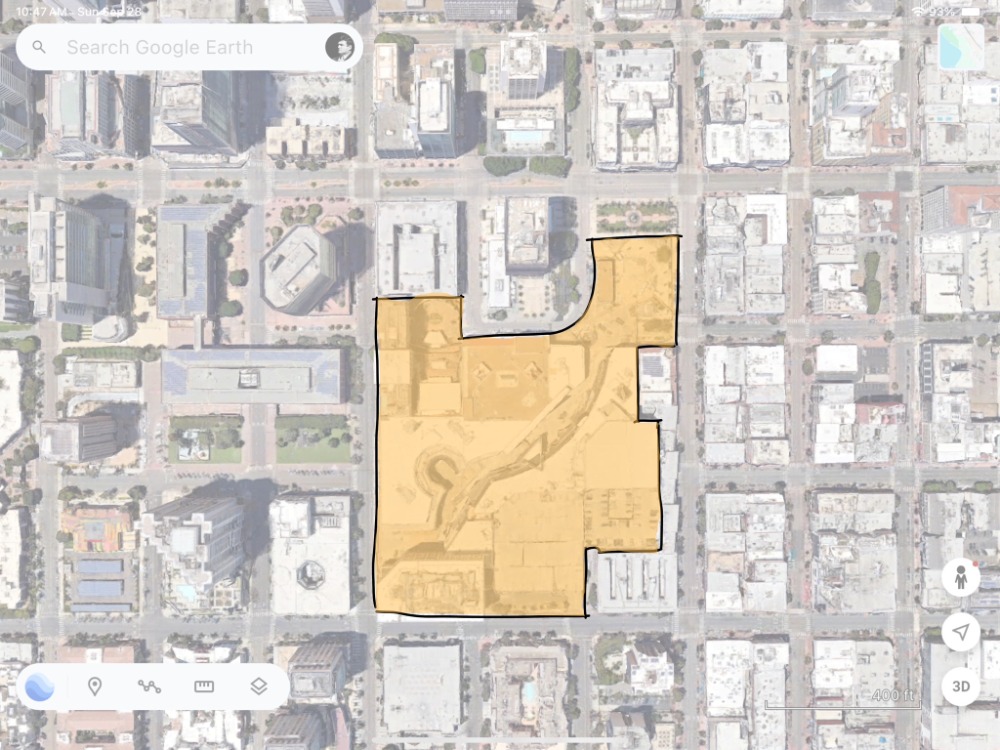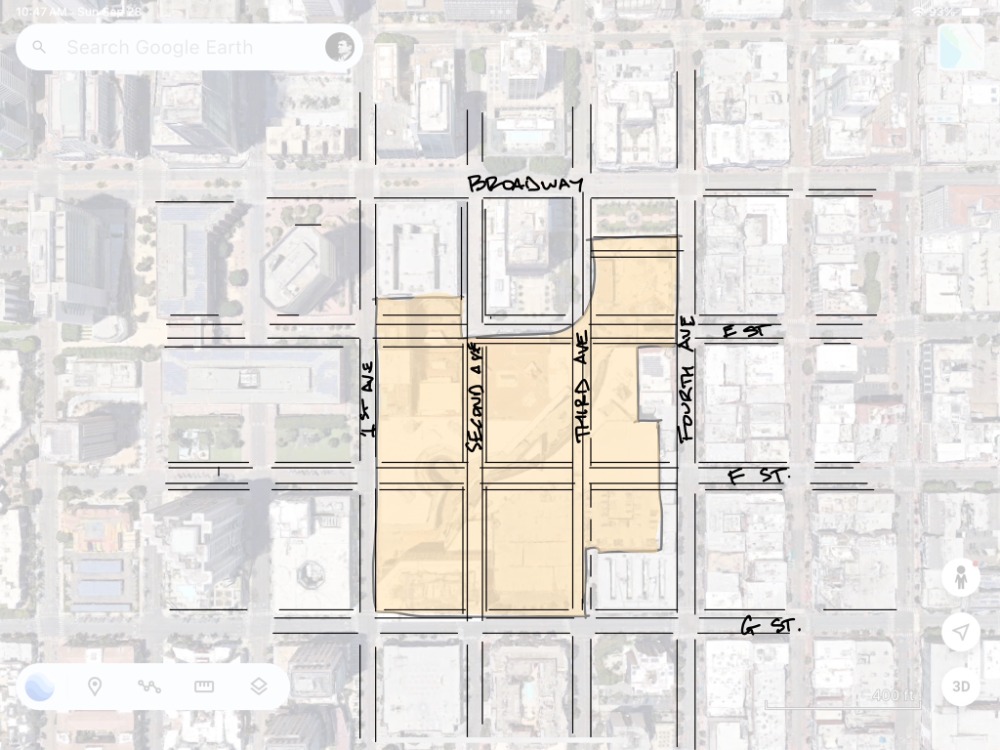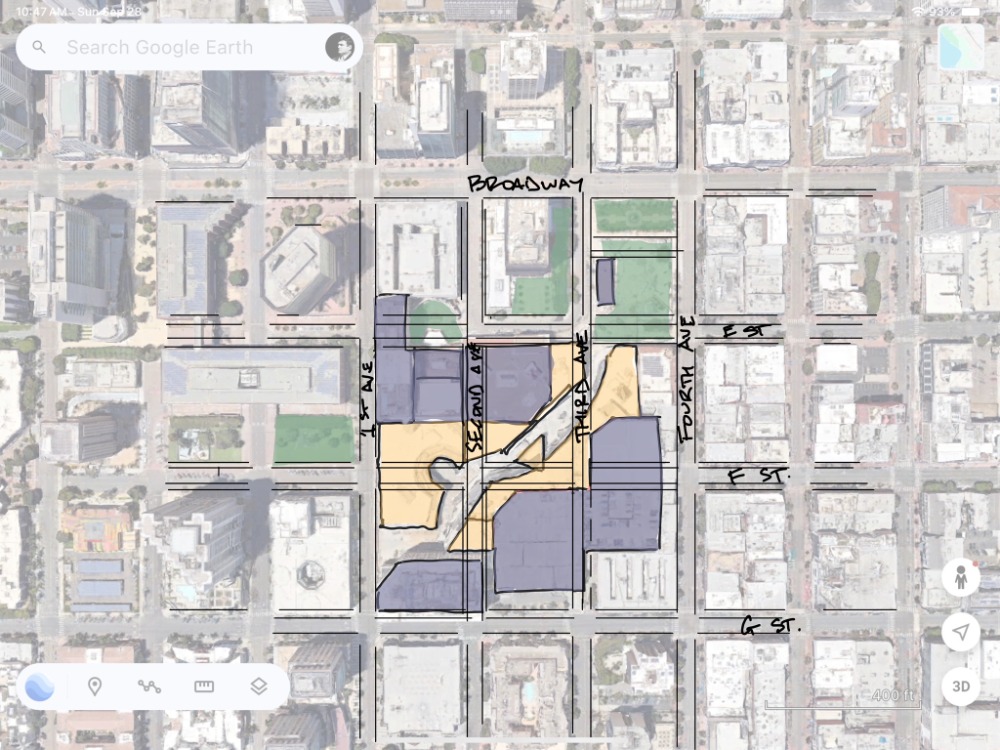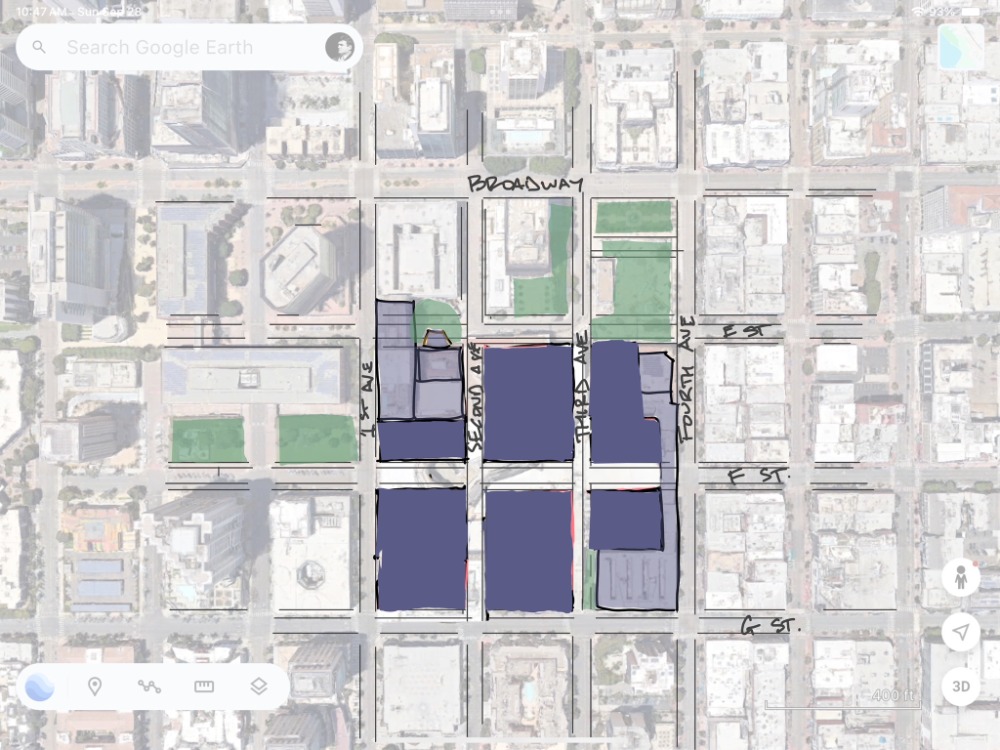
The ubiquitous space, shape, but highly volatile speed of the car is much larger and faster than the universal space, shape, and speed of a human. Yet we continue, since post WW2, design and build everything and everywhere for space, shape, and volatile speed of the car. Streets widen, ground floors are parking lots, people are pushed towards the edges, and cars dominate our landscape. This is what ruins downtowns and isolates small towns. Cars are a suburban mobility tool.
That’s not say we need to ban cars. They do somethings great, such as get lumber, while not as good at others, such as exercising. The fact is that cars are best served for disparate suburban expanses. Walking, transit/buses, and bicycles work best in more urban areas. Cars work great in shorter-commutes and throughout suburbia. Trains, airplanes, and ships work best for long commutes.
The New Urbanism was new because it worked to humanize the car in cities, small towns, and new towns. We’re now moving into the Next Urbanism (and I write about this throughout this blog and speak about on podcasts, such as Kevin Klinkenberg’s Messy City). And as humans, we should be designing and building everything everywhere to accommodate for humans first, letting the right mobility serve us throughout the spectrum of urban to rural contexts.
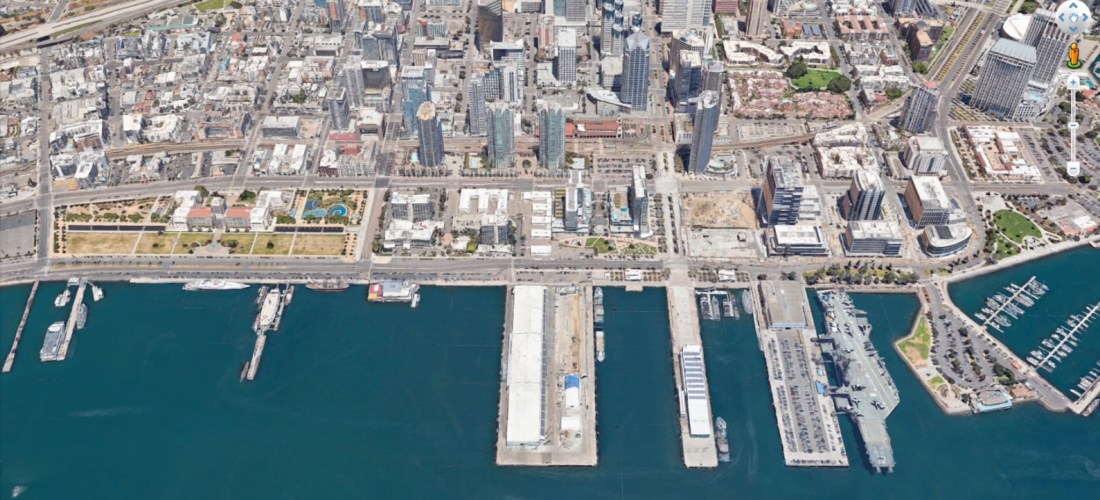
Downtowns (regional centers) are marginalized by our 1.5 cars per person maxim (Spend 5-minutes walking around Downtown San Diego). Small towns are isolated by freeway by-passes, which need both regionally accessible cars and local people to be economically viable (think Ramona, Julian, and Jacumba, if in San Diego). The industrial era invention of cars and suburban sprawl go hand-in-hand, the built each other. Unfortunately, both cars and suburbs are inhumane and detrimental to our economy, environment, and cultural cohesion (See Sabre Springs).
The next urbanism means making downtowns less car-oriented, small-towns car-supported, and car-happy suburbia having sub-regional centers that are more urban/humane. This place, a small district in Tempe, AZ, Cul-de-Sac, is an example of the Next Urbanism… building more urban, sub-regional centers in the vast sprawl of suburbs surrounding downtown’s regional center. And, by the way, Opticos Design, Inc. is one our best architecture and coding companies.
My most significant educational experience was sitting directly across from Leon on a 5-day charrette in Chico, California, 22 years ago. The intense time spent with him changed the trajectory of my professional life… because Leon Krier was right.
“Ye shall know the truth, and the truth shall set you free.” – Jesus
Leon was a man of great character, who was the largest influencer of my education, as far as any single person could have affected it. Another iconic person (of whom I can never repay for their professional generosity and genius), Andres Duany, wrote this loving eulogy that correctly identifies the voracious and tenacious conviction of Krier’s work in contrast to Leon’s gracious, admirable, and courteous lifestyle. His life’s story is well documented. His uniquely lived experience of growing up in Post-WWII reconstruction Luxembourg, combined with his informal education (he learned from mentors and teaching at London’s Architects Association) as processed through his complex character (see Duany’s description above) shaped his incredible creativity.
Leon correctly identified that industrialization had devastated our civilization and its buildings and cities. Krier was the first to challenge the modernist dogma in the 70s as young architect. Because of his lone advocacy turning into a movement, today we have a fuller spectrum of design choices, from self-referential modernism to traditional vernacular to classically ordered tools. Leon Krier was right.
A few years ago, upon picking him up from the airport, I immediately drove Leon to share my disdain of the latest modernist infill project in my turn-of-the-century streetcar neighborhood. It’s a copy of Corbu’s Villa Savoye that had been in Architecture Record. I was fully expecting an affirmation of my disgust when Leon surprising said, “It’s good.” My eyes widened and my hands gesticulated wildly as I explained that the building’s fenestration was backwards, completely ignored its context, and the urbanism only existent in materials and scale. Leon agreed that while all I said was true, for a modernist building it was a very good example.
The lesson being, “If you are going to do modernism (or anything for that matter)… then do it well.”
I had forgotten how difficult it is to get any building or nice place built. My New Urbanist dogma had gotten in the way of this human truth. He said that to build anything in today’s toxic environment (naturally and politically) was laudable and then to build it well was meaningful. Leon Krier was right.
I am fortunate to have spent days and hours talking with Leon while driving across US west deserts, working in San Diego, and online during Covid. While his professional works is polemic and absolute, his personal perspective was equally optimistic and positive. Another grand lesson I learned from Leon on the importance of what we do was that, “The architecture the city and public spaces is a matter of common concern to the same degree as laws and language; they are the foundation of civility and civilization.”
It was a feast to have learned these truths from my genial mentor. Thank you again, Leon.
[This week my lovely daughter in London posted this in front of the Architectural Association]
My treasured colleague and mentor, Bill Fulton, is creating our brave new post-pandemic world’s econ dev model that is a dramatic shift in how we are socializing into the mid-21st century. You can find his writings about his approach on his Substack page. He’s clearly identified and defined the patterns within the urban core/center and general urban areas and I’ve merely added the rural component to complete the ‘transect’ of econ dev place types.
Our state-by-state policy shift towards mixed-use, walkable urbanism is finally complete. Every city across the nation has general or comprehensive plan policy that allows for urban infill development. But this process has taken 30 years and the promised transit to support this new urbanism hasn’t been funded, and now we are in a new socializing era. We didn’t plan for the unintended consequences of a global pandemic… that low-density, auto-oriented, suburban homes would become mixed-use, live-work buildings.
We didn’t plan for urban downtowns to have less work and less shopping after building more housing. We didn’t plan for the cultural backlash of electing a black President and burn down our federal government and defunded our education and the transit infrastructure rather than our police and military state. Oh well… “you get the government we deserve,” said, Andres Duany once.
So here we are again in need of reforming our new urbanist, after-suburban sprawl, 20th century urbanist policies and regulations to be to meet today’s social demands. This zoning reform transitions from noxious industries co-location needs to regulating obnoxious neighbors sharing amenitized downtowns and sub-regional urban centers.
The following are a regional and citywide policy and econ dev framework for lot and block scaled zoning/regulatory reform:
Regional and Sub-Regional Urban Hotel(Transect Zones T6, T5, and T4-Neighborhood Centers) Offers amenitized live, work, and play facilities for hyper-locals (new infill housing), locals (suburban commuters), and visitors (hotel business/pleasure). Dollars are flowing in from these types of citizen consumers.
Private Buildings and Spaces Functions – Retail – Dining and Entertainment, and Shopping – Daily Needs Services – Gym, spa, sundries, bodega, rentals – Office Facilities – Hotels (Long-Stay) Conferencing Facilities – Hotels (Short-Stay) Pools, spas, gyms – Homes – mix of uses (working and living) – Paseos – Access between spaces and buildings – Belvederes – Roof decks and garden terraces – Parking Areas – Access to spaces and buildings
Public Buildings and Spaces Functions – Conference Center – Plazas/Squares – Destination civic space, active and contemplative – Civic Services – Library, Post Office, City Hall, Pool
NGO Buildings and Spaces Functions – Chamber of Commerce / Meeting Rooms and Facilities
Suburban Workshop (T4 General, and T3) Offers live, work, and large-scale play facilities without amenities in existing suburban communities. These are static places with low-growth, and little change the appearance of the pods of housing or commercial or industrial. Auto-oriented but adding work from home and people wanting to walk around for exercise, post-pandemic.
Private Buildings and Spaces Functions – Single-family Detached Homes – Accessory Dwelling Units – Yards
Public Buildings and Spaces Functions – Ballfields
Regional Rural Substructure (T2) A zoning conflict we’re addressing today are the regional infrastructure and utility issues bumping against either the suburbs or smaller, historic towns. Agriculture being the original regional utility/commerce.
Private Buildings and Spaces Functions – Energy – Solar, wind, electrical (Efficiency Issues) – Substations, powerlines (Wildfire Issues) – Data Center Districts (The Next Big Deal to Deal with) – Agriculture lands, Farmsteads, and Farm Worker Housing (Resort Districts)
Public Buildings and Spaces Functions – Freeways, Highways, Corridors – Federal and State Parks
This headline/article was in today’s The Overhead Wire, “Complex urban streets encourage safer driving.” Yeah, when you take the complex river and stuff the water flow into a culvert it reduces the complexity and the energy is drained quicker… adding complexity keeps the energy stored in the system/network/place. This is stated in the 2nd Law of Thermodynamics, as analysed by James Howard Kunstler in his fourth non-fiction book, The Long Emergency: Surviving the Converging Catastrophes of the Twenty-First Century,
“... ordered flows drain entropy at a faster rate than complex disordered flows. Hence, the creation of ever more efficient ordered flows in American society, the removal of constraints, has accelerated the winding down of American potential, which is exactly why a Wal-Mart economy will bring us to grief more rapidly than a national agglomeration of diverse independent small-town economies. Efficiency is the straightest path to hell. (p.191)”
Yes, the more complex a river, a street, an economy, and our lives are, then the more energy we have within them to savor, enjoy, and experience them. It’s when we’re shopping in a Wal*Mart, walking along a box culvert creek, driving on a freeway, and being isolated do we more quickly entropy and lose our energy. Now, that doesn’t mean we thrive in chaos and disorder, we need both. But not just one or the other. In places of great chaos, more order achieves thermodynamic balance. In other places of great order, more chaos helps it achieve its equilibrium. This achieving equilibrium, between complexity and simplicity / chaos and order, is the basis of my economic, environmental, and social equity philosophy.
President of the National Civic Art Society, a non-profit organization headquartered in Washington, D.C. that promotes the classical and humanistic tradition in public art and architecture, Justin Shubow is an architectural enigma to me. Obviously partisan, which I am admittedly too, his appearance on Ben Shapiro’s show demonstrates how his ideas for classical architecture are ascending again in Trump’s 2nd term. However, I see Trump as a criminal. That said, I supported Justin’s approach to the Eisenhower Memorial prior to Trump, so I have to check myself before I say too much, which is not my strongest trait.
As Leon Krier points out in his book on Albert Speer… Even criminals can make great architecture. Krier illustrates how Speer used classical architecture in support of his totalitarian regime by blowing it up to an industrial/modern megalomania scale. Today, the worst developer in NYC can support beautiful architecture despite his criminal intent as President. Right now, Trump is restructuring our government into partisan loyalist, which should be opposed rather than being complicit with. As much as I support classical and traditional architecture, I cannot enable Trump’s evil intentions in exchange for building a better FBI building.
The basis of my criticism is that the FBI building is a one-off anecdotal, microcosm (DC) to the larger macro (USA) issue of how the General Services Administration (GSA) process that eliminates the ability for classical architecture to compete for new projects. Both are a problem. But I believe if we fix the macro problem we can influence how the micro is rebuilt in the future. My perspective is shaped by my membership with the GSA Design Excellence Peer Review Committee, which Trump is already reshaping into his image.
Therefore, I suggest we advocate for our long-standing democratic processes to reform GSA and how we rebuild Federal buildings in the future for all rather than bow to a tyrant to get what we want today. It’s not worth the trade, IMHO.
I subscribe to Arnold Schwarzenegger’s fitness newsletter that provides daily content on health and fitness. There was a deep connection that resonated with me in this morning’s newsletter articles. The first was on this study regarding the early mortality rate of those who are lonely and isolated socially in comparison to those who are socially and physically connected to others in their neighborhood, as well as with family and friends. The second story was about the health value of getting up and walking around every hour so rather than sitting for more than 2 hours straight.
In our suburban nation we sit in our cars to go anywhere. We then sit at our desks to do the majority of our work. And we sit at home and watch tv or doom scroll through the bitter end of social media as we once knew it. We sit and drive to sit a lot. And it isolates us from engaging with people on street corners, in public and private places, and at work (we don’t go to church, or social clubs, or the library, or post office anymore). We have transitioned daily need trips, such as picking up milk, eggs (too expensive!), newspaper (what is that?!), and dry cleaning (we don’t wear hard pants anymore) to online shopping that is delivered.
We’ve isolated ourselves in our homes and it has obviously become bad for our physical and mental health. It’s easy to see that we’re not healthier, happer, or wealthier in our new post-industrial, online lifestyle…
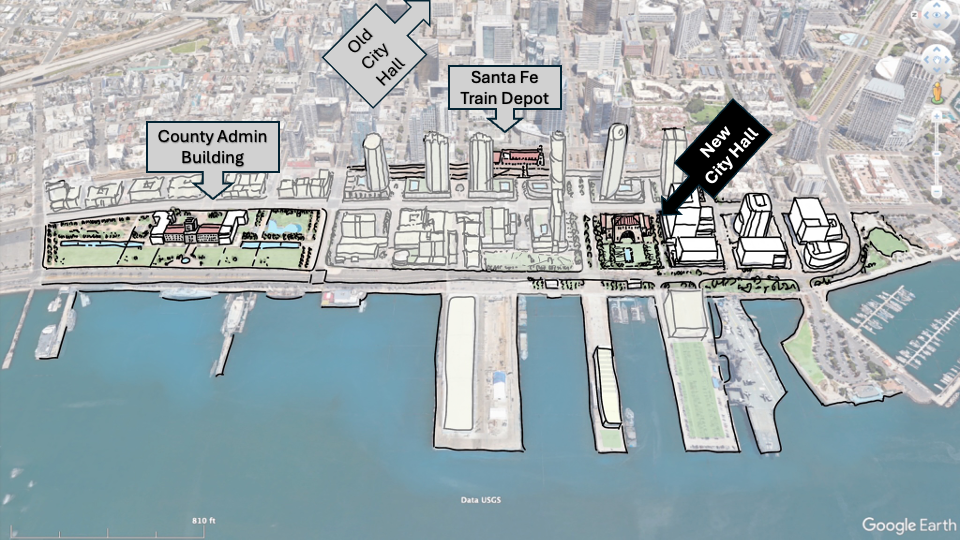
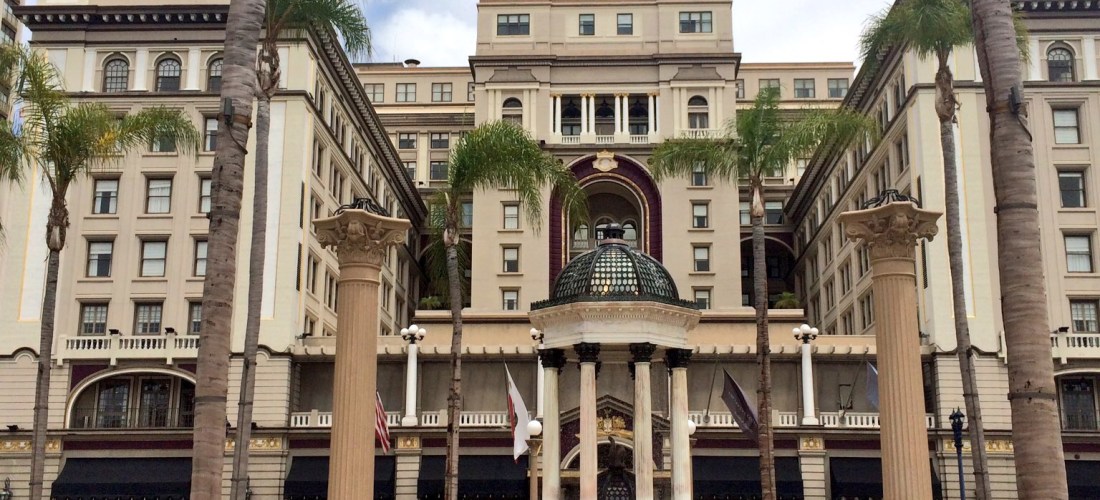
Let’s Rethink City Hall… and put it back on our waterfront! Let’s show our civic pride in reconnecting the city to our great bay! And all of these IQHQ buildings are empty anyway. We can trade Papa Doug Manchester 101 Ash for the Broadway & Harbor block, and build a great and beloved grand City Hall. City can lease the existing buildings for administration/staff offices and everyone, from citizens to staffers, will feel good about going to the bayfront to govern our great city.
San Diego has a history of moving (after burning it down down) city hall, starting in Old Town (burned), then to Market & 5th, Waterfront, and C Street (should be burned), which has never been a beloved place anyway. It too was just a development scheme by C. Arnholt Smith… let’s make it work for us this time.
Our important civic buildings should be located on our best sites, and Broadway & Harbor is that. Use the C Street land sale $$ to build a new Chamber/Hall on our best site. And let’s be proud of how we govern our great city on the bay.
From Rick Cole’s article in Southern Urbanism: “In this sense, the enemy is… placeless sprawl. These are locations that have no distinct character, no history, and no beauty, that typically fulfill just a single function. We park there, we work there, we reside there, we shop there, we drive through there. But beyond those necessary functions, the bleak landscapes of sprawl lack a shared and diverse public realm. Without such a public realm, community dissolves into private space. Shared space gives room for different people engaged in varied activities. That is the physical manifestation of community—and the physical setting for community, too. Community can happen in a park, in and around a neighborhood store, on a crowded sidewalk, or in any other public gathering space. The ties of community can be tight—among neighbors at a farmers’ market, for example. They can also be loose—such as among strangers at a transit stop. Whatever those ties look like, a robust public realm is vital to generating a shared sense of community.
It is precisely this shared sense of community that is breaking down all across North America. Sprawling suburbs and walled-off, self-contained urban “projects” deprive us of a place for community to grow. Evolving technologies accelerate our detachment from real life, happening in real places. Human beings crave belonging, so in the absence of a shared community, we gravitate toward self-selected faux-communities that more resemble tribes. Unlike citizens of a true community, these factions have no commitment to their neighbors or loyalty to the places they happen to occupy. When we are rigidly separated by income, race, and lifestyles, the fragile shared bonds of a democratic society inevitably fray into “us” versus “them.”
And from Jeff Wood’s Overhead Wire: “Of course most stores can’t compete with Amazon or Walmart he said, but what they can do is create a better shopping experience and pleasant environment people want to visit. This redevelopment can’t be just another (strip center, suburban mall, or) office park, it should be a destination in its own right if it is to succeed.”
Places we love and want to spend time are valuable for many reasons… economically, socially, and environmentally, because we care for and maintain those spaces, and fill them with people and trees rather than laying down asphalt and putting up a butler building on that next offramp further outside of town. Therefore, better places are more sustainable than crappy suburban ones.
First, one of the many reasons I owe Mr. Michael J. Stepner, FAIA, FAICP, more than I can ever repay him is because he helped me find my professional path. My career as a planner started in Honolulu and then San Diego. I remember reading in the newspaper about Mr. Stepner being fired by a crude City Manager, Jack McGory, and then hired back by the city council, who overruled Jack, because he was rightfully leading San Diego towards its mixed-use, walkable, transit-supported future. Mike’s story resonated with me and that he had great credibility.
Second, here’s my new urbanist origin story. I was working for an architecture firm in Daegu, South Korea, during the Asian Tiger economic boom from ’93 – 97. And I found myself designing their first retirement communities using my suburban SoCal drive-thru lifestyle design tools. Traditionally, Korean elderly give their inheritance to their children when they moved in with their children’s family and they lived together in their compound housing (totally different from modern Western civilization tradition). And I designed their first car-oriented ‘silver towns’ because the middle class and car ownership was rising and they had money to put their elderly in homes. I met with the owners and looked into the sad eyes of one of the elderly men in the room who was envisioning his life isolated in a retirement box, alone.
I realized I was destroying a culture and that I had power as a designer and with great power comes great responsibility (credit: Stan Lee). So I knew I needed a deeper understanding of my craft and further my education. So I starting searching…
Around that same time, 1997, I took a job in Singapore to master plan port facilities with housing for imported labor… and none of those cheaper laborers imported had a car. These were exclusively walkable neighborhoods for 1,000s of workers. If the port facility was in Malaysia, they brought in Indian workers, if in the India, the brought in Philippine workers, and so on. Going into the interview, I remembered reading about Mike Stepner designing walkable, transit-station areas in San Diego and hiring Peter Calthorpe. So I bought Peter’s book, The Next American Metropolis, read it on the 30+ hour flight, copied his drawings into my notebook that I showed at the interview and got the job.
In Singapore, I found an older Calthorpe and Sim Van der Ryn book (’91), Sustainable Communities, and on the last two pages, they reference Leon Krier as the future guru of planning sustainable communities. Of course Leon is the godfather of the Congress for the New Urbanism because he taught at Yale when Peter, Andres Duany, Liz Plater-Zyberk, Stefanos Polyzoides, and Andrew Malick’s father were students there. And down I went, into the Leon Krier rabbit hole. Amazingly, within my own profession, I found the innately humane power in building walkable places that people loved. And it energized my career.
Unfortunately, in ’98 my father passed away but it left me enough money to go get my Masters in London (Univ. of Westminster, ’00) and put money down on a house in San Diego (’01). I went to London specifically to learn from Leon as I interned with the Prince’s Foundation, but I didn’t get to meet Leon…
Returning to San Diego, I worked on the County of SD General Plan Update and I’m asked by an NU colleague to go on a charrette in Chico, CA (’04), led by Leon Krier! My boss said I couldn’t take the time off to go so I quit the County and went (they hired me back as they didn’t expect me to quit). I purposely watched Leon and immediately sat at the same table as him, along with Geoff Dyer, who’d become my business partner and dearest friend. We sat there, stole scraps of drawings, listened, learned, copied, and soaked in the charrette that was a beautiful mess. Leon knew my London teachers and Princes Foundation colleagues and we became friends.
From there, Leon and I spent time together at New Urbanism’s annual Congresses. And when his book, The Architecture of Community, came out, he came to San Diego to lecture in Balboa Park, and we packed the Photograph Museum theater to the rafters, which was real meaningful to Leon at that time. He came back again a couple other times and together we drove my convertible Porsche across the desert for him to lecture at Univ. of Arizona. A memorable moment at one of his lectures in the NewSchool of Architecture, he asked the audience if anyone in the room had ever designed a tower… and in the front row, only Frank Wolden raised his hand!
We were able to spent a lot of time together then and during Covid, when he was trapped in his Cayala, Guatemala, studio for several months, we recorded these vlogs (and here) to talk about design, history, philosophy, and beyond.
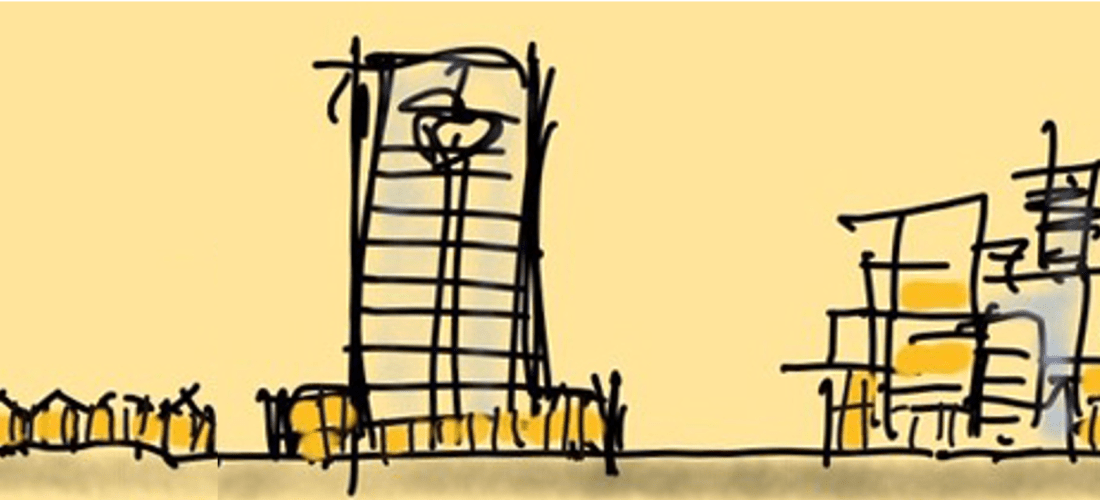
And while in San Diego, he’s come up some of his more recent ideas that he’s published and we continue email debates on topics/issues, such as Corbu/Speer and vertical transects. His design idea for Coronado’s toll booth landing area is brilliant, using different height columns in a circle appear to ‘move’ when driving across the curve of the Coronado Bridge. 3-dimensional thinking. Here and here are a couple of links on his visits to San Diego.
I begin a project by reading and listening to citizens, existing policy-documents, and experts in an area. Learning the issues and background information, or due diligence (now called data gathering), is the first step in generating ideas. My design biases are found in my appreciation for John Cleese’s creativity approach by being open minded with play to envision scenarios and closed minded to then focus on the design product afterwards. As well as my personal design process fitting within the spectrum of life… between life to death, night to day, light to dark, man to woman, formal to informal, yen to yang, etc… as an inherent basis for my design approach. And this third tool is to figure out where the place sits is more urban or more rural spectrum today and where it’s going in the next 5-10 years and then beyond.
Fourth, I begin designing (usually on an iPad/Morpholio Trace program) applying a variety of street, parks, and building types, from most intense to least intense, that explicitly guides new building towards a distinctive “character and sense” of place. See Leon Krier’s idea of how to coding for a specific community character here (note: there are only 16 character types). So using background info, my biases, and multiple street/park/building types tools… I then take an outside-of-the-boxapproach, looking at the surrounding context to identify public and private buildings and space patterns in the project area. These patterns are interdependent and shape the surrounding neighborhood characteristics. Identifying, understanding, and drawing inspiration from these patterns upfront allows me to address common issues raised in the first step.
Then I design within the project area with an inside-of-the-box approach, identifying these surrounding patterns within the design to coordinate the precise location of uses, buildings, spaces, services, and utilities with a focus on long-term social, environmental, and economic outcomes. Using these various patterns to identify a variety of buildings and spaces guides me to making design decisions that are either ‘in tune’ with its surroundings or it ‘stands out’ and accentuates a space or building. The design either blends in and fits harmonious with its surrounding patterns or its disrupts and breaks the patterns.
The combination of these approaches and techniques allow me to quickly make design decisions to create a specific character and sense of place, rather than leaving it up to chance… and the final design produces a new idea for a place that either respectfully fits within or distinguishably stands out from its local setting. With this start, I work again with local citizens, who have a unique understanding and knowledge of their communities, to gauge if their neighboring buildings, parks, and streets should stand out or fit in.
Local identity is a key in creating spaces that nurture community identity, instill pride, and positively energize communities. And I advocate for elevating the role of “good” design to a region’s public agencies, county, cities, advocacy groups, private organizations, and community groups, understanding that well-designed places are a practical and essential way to bring vitality and dignity to city living.
At the human scale, good design makes a difference in our lives by helping us feel safe and comfortable while walking and socializing in our neighborhoods, which helps us feel happier and experience a deeper sense of belonging to places and people.
And, at the city scale, good design makes a difference in enabling cities to attract and retain residents and businesses with inviting public streets, civic spaces, and interesting places more easily.
Ultimately, belonging to a place, and a home, is the idea that goes to the heart of what makes neighborhoods great. It roots our approach to urban design in respect. Respect for people and places, and a respect for tradition. It gives the fancy innovations and clever deconstructions a heart and a soul. An innovation is something new, something novel, maybe even revolutionary. But there’s another truth that’s deeply applicable to design, oftentimes the best innovations are ones in which a twist was put on something that has been done before.