I subscribe to Arnold Schwarzenegger’s fitness newsletter that provides daily content on health and fitness. There was a deep connection that resonated with me in this morning’s newsletter articles. The first was on this study regarding the early mortality rate of those who are lonely and isolated socially in comparison to those who are socially and physically connected to others in their neighborhood, as well as with family and friends. The second story was about the health value of getting up and walking around every hour so rather than sitting for more than 2 hours straight.
In our suburban nation we sit in our cars to go anywhere. We then sit at our desks to do the majority of our work. And we sit at home and watch tv or doom scroll through the bitter end of social media as we once knew it. We sit and drive to sit a lot. And it isolates us from engaging with people on street corners, in public and private places, and at work (we don’t go to church, or social clubs, or the library, or post office anymore). We have transitioned daily need trips, such as picking up milk, eggs (too expensive!), newspaper (what is that?!), and dry cleaning (we don’t wear hard pants anymore) to online shopping that is delivered.
We’ve isolated ourselves in our homes and it has obviously become bad for our physical and mental health. It’s easy to see that we’re not healthier, happer, or wealthier in our new post-industrial, online lifestyle…
An October, 2022 Circulate San Diego report, “Fast Bus! How San Diego Can Make Progress by Speeding Up the Bus,” identifies bus riders as essential people as hospital workers, grocery store employees, janitors, social services workers, maids, students, retirees, and much more. They are disproportionately people of color and low-income. These valuable members of our community often rely on bus trips that take far longer than they would in a car, but less expensive than owning, insuring, and fueling a car.
In the 2015, San Diego Community Survey Data report, by our Metropolitan Transportation System (MTS), citizens responded with “Service Not Frequent Enough” as the biggest challenge to using transit (“Takes too Long” wss #2), and “Not Enough Parking” as the least challenging issue (“Too expensive” was #2).
Campaigns from transit advocates across the county agree that fast, reliable service is, “a matter of racial justice and transit equity.”(1) The same holds true for San Diego as MTS riders are disproportionately people of color and low-income.(2) Fast, reliable buses are critical to riders’ ability to access jobs, schools, and services. And transit works best for riders between home, work, schools, and regional destinations, such as downtowns, waterfronts, airports/rail stations, hospitals, and regional-scale recreational parks. This is due to the longer amount of time spent at each destination, as transit is not effective for short-trips such as shopping.
And speed is the most obvious factor in bus travel time, which is the time between each stop/destination. Increasing bus speed depends on allowing buses to bypass local traffic. Improvements that increase bus speed include:
– Bus-Only Lanes
– Transit-Signal Priority
– Freeway Bus Priority Lanes
[As an aside, the issue I have with SANDAG’s county-wide approach to transit is that it uses a one-size-fits-all focus on transit. North County suburbia, with it being mostly built over the past 60 years, is not the same as urbanized San Diego and South Bay, which has been mostly built over the past 120 years. To get our transit funding passed, they must know how to use different mobility tools in different contexts.]
Dedicated bus lanes, in place of on-street parking or a travel lane is a fair trade in the building a of an equitable civilization… despite our nation voting yesterday to going back to a less civilized time.
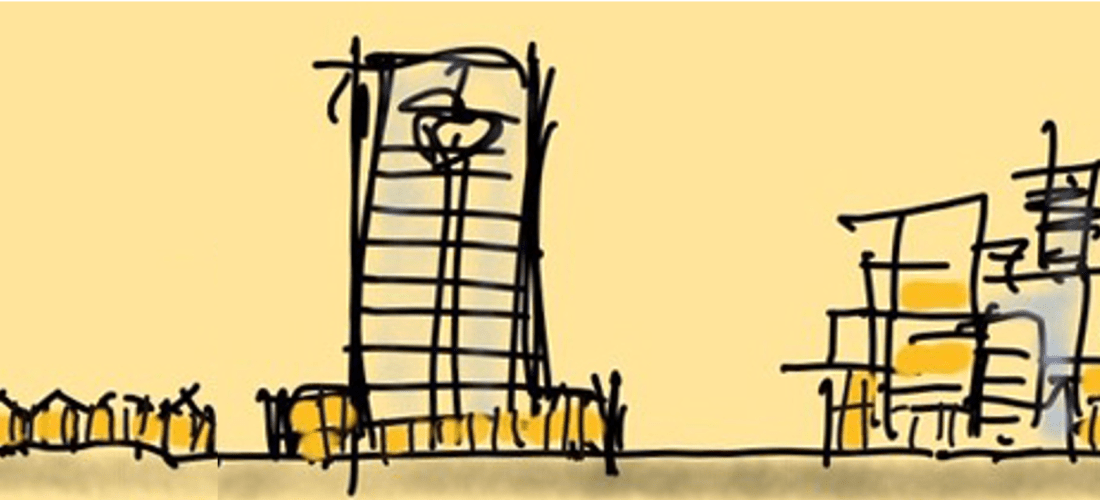
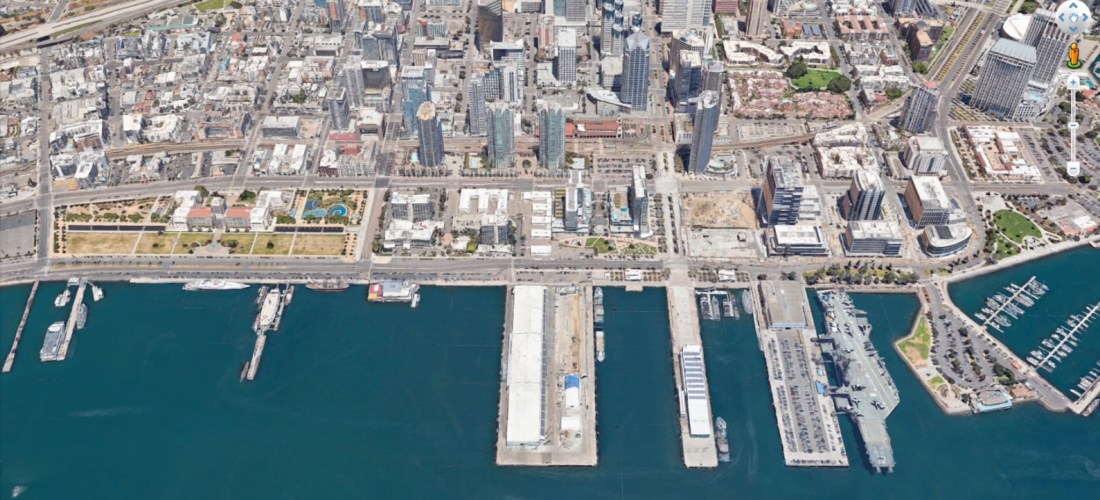
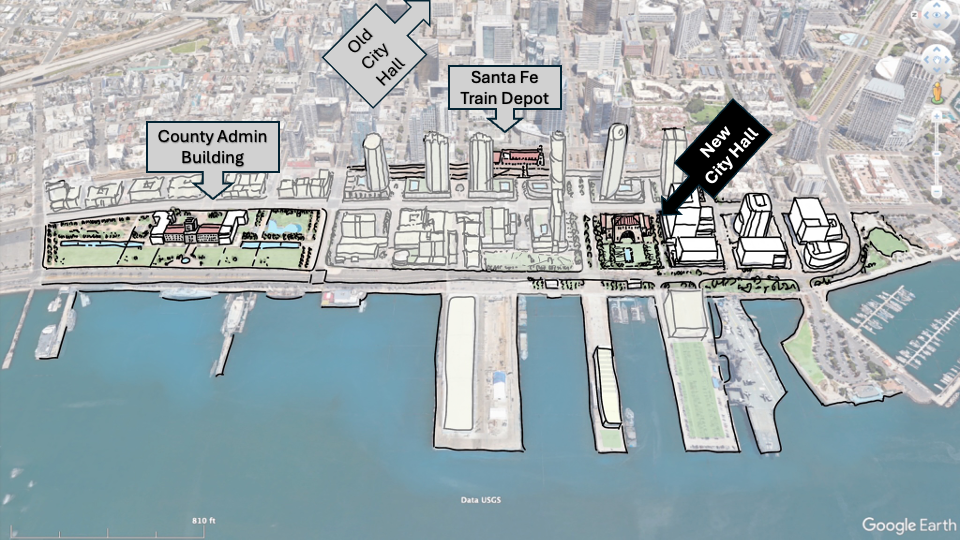
Let’s Rethink City Hall… and put it back on our waterfront! Let’s show our civic pride in reconnecting the city to our great bay! And all of these IQHQ buildings are empty anyway. We can trade Papa Doug Manchester 101 Ash for the Broadway & Harbor block, and build a great and beloved grand City Hall. City can lease the existing buildings for administration/staff offices and everyone, from citizens to staffers, will feel good about going to the bayfront to govern our great city.
San Diego has a history of moving (after burning it down down) city hall, starting in Old Town (burned), then to Market & 5th, Waterfront, and C Street (should be burned), which has never been a beloved place anyway. It too was just a development scheme by C. Arnholt Smith… let’s make it work for us this time.
Our important civic buildings should be located on our best sites, and Broadway & Harbor is that. Use the C Street land sale $$ to build a new Chamber/Hall on our best site. And let’s be proud of how we govern our great city on the bay.
From Rick Cole’s article in Southern Urbanism: “In this sense, the enemy is… placeless sprawl. These are locations that have no distinct character, no history, and no beauty, that typically fulfill just a single function. We park there, we work there, we reside there, we shop there, we drive through there. But beyond those necessary functions, the bleak landscapes of sprawl lack a shared and diverse public realm. Without such a public realm, community dissolves into private space. Shared space gives room for different people engaged in varied activities. That is the physical manifestation of community—and the physical setting for community, too. Community can happen in a park, in and around a neighborhood store, on a crowded sidewalk, or in any other public gathering space. The ties of community can be tight—among neighbors at a farmers’ market, for example. They can also be loose—such as among strangers at a transit stop. Whatever those ties look like, a robust public realm is vital to generating a shared sense of community.
It is precisely this shared sense of community that is breaking down all across North America. Sprawling suburbs and walled-off, self-contained urban “projects” deprive us of a place for community to grow. Evolving technologies accelerate our detachment from real life, happening in real places. Human beings crave belonging, so in the absence of a shared community, we gravitate toward self-selected faux-communities that more resemble tribes. Unlike citizens of a true community, these factions have no commitment to their neighbors or loyalty to the places they happen to occupy. When we are rigidly separated by income, race, and lifestyles, the fragile shared bonds of a democratic society inevitably fray into “us” versus “them.”
And from Jeff Wood’s Overhead Wire: “Of course most stores can’t compete with Amazon or Walmart he said, but what they can do is create a better shopping experience and pleasant environment people want to visit. This redevelopment can’t be just another (strip center, suburban mall, or) office park, it should be a destination in its own right if it is to succeed.”
Places we love and want to spend time are valuable for many reasons… economically, socially, and environmentally, because we care for and maintain those spaces, and fill them with people and trees rather than laying down asphalt and putting up a butler building on that next offramp further outside of town. Therefore, better places are more sustainable than crappy suburban ones.
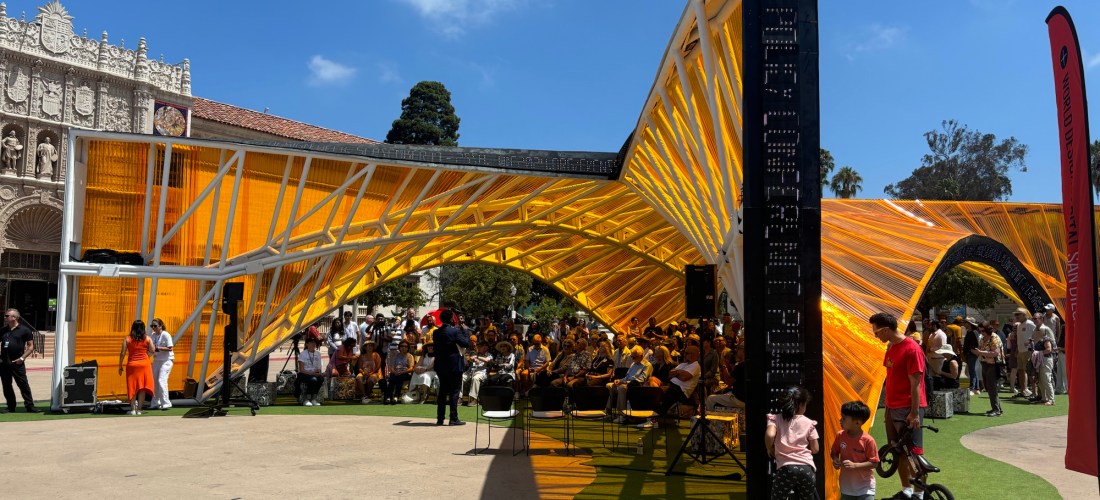
Envision Balboa Park. Time to start the Big Picture update of the 1989 Master Plan. Presentations, Panelist, and Next Steps for 2025. Join us… let’s get our crown jewel to sparkle!
First, one of the many reasons I owe Mr. Michael J. Stepner, FAIA, FAICP, more than I can ever repay him is because he helped me find my professional path. My career as a planner started in Honolulu and then San Diego. I remember reading in the newspaper about Mr. Stepner being fired by a crude City Manager, Jack McGory, and then hired back by the city council, who overruled Jack, because he was rightfully leading San Diego towards its mixed-use, walkable, transit-supported future. Mike’s story resonated with me and that he had great credibility.
Second, here’s my new urbanist origin story. I was working for an architecture firm in Daegu, South Korea, during the Asian Tiger economic boom from ’93 – 97. And I found myself designing their first retirement communities using my suburban SoCal drive-thru lifestyle design tools. Traditionally, Korean elderly give their inheritance to their children when they moved in with their children’s family and they lived together in their compound housing (totally different from modern Western civilization tradition). And I designed their first car-oriented ‘silver towns’ because the middle class and car ownership was rising and they had money to put their elderly in homes. I met with the owners and looked into the sad eyes of one of the elderly men in the room who was envisioning his life isolated in a retirement box, alone.
I realized I was destroying a culture and that I had power as a designer and with great power comes great responsibility (credit: Stan Lee). So I knew I needed a deeper understanding of my craft and further my education. So I starting searching…
Around that same time, 1997, I took a job in Singapore to master plan port facilities with housing for imported labor… and none of those cheaper laborers imported had a car. These were exclusively walkable neighborhoods for 1,000s of workers. If the port facility was in Malaysia, they brought in Indian workers, if in the India, the brought in Philippine workers, and so on. Going into the interview, I remembered reading about Mike Stepner designing walkable, transit-station areas in San Diego and hiring Peter Calthorpe. So I bought Peter’s book, The Next American Metropolis, read it on the 30+ hour flight, copied his drawings into my notebook that I showed at the interview and got the job.
In Singapore, I found an older Calthorpe and Sim Van der Ryn book (’91), Sustainable Communities, and on the last two pages, they reference Leon Krier as the future guru of planning sustainable communities. Of course Leon is the godfather of the Congress for the New Urbanism because he taught at Yale when Peter, Andres Duany, Liz Plater-Zyberk, Stefanos Polyzoides, and Andrew Malick’s father were students there. And down I went, into the Leon Krier rabbit hole. Amazingly, within my own profession, I found the innately humane power in building walkable places that people loved. And it energized my career.
Unfortunately, in ’98 my father passed away but it left me enough money to go get my Masters in London (Univ. of Westminster, ’00) and put money down on a house in San Diego (’01). I went to London specifically to learn from Leon as I interned with the Prince’s Foundation, but I didn’t get to meet Leon…
Returning to San Diego, I worked on the County of SD General Plan Update and I’m asked by an NU colleague to go on a charrette in Chico, CA (’04), led by Leon Krier! My boss said I couldn’t take the time off to go so I quit the County and went (they hired me back as they didn’t expect me to quit). I purposely watched Leon and immediately sat at the same table as him, along with Geoff Dyer, who’d become my business partner and dearest friend. We sat there, stole scraps of drawings, listened, learned, copied, and soaked in the charrette that was a beautiful mess. Leon knew my London teachers and Princes Foundation colleagues and we became friends.
From there, Leon and I spent time together at New Urbanism’s annual Congresses. And when his book, The Architecture of Community, came out, he came to San Diego to lecture in Balboa Park, and we packed the Photograph Museum theater to the rafters, which was real meaningful to Leon at that time. He came back again a couple other times and together we drove my convertible Porsche across the desert for him to lecture at Univ. of Arizona. A memorable moment at one of his lectures in the NewSchool of Architecture, he asked the audience if anyone in the room had ever designed a tower… and in the front row, only Frank Wolden raised his hand!
We were able to spent a lot of time together then and during Covid, when he was trapped in his Cayala, Guatemala, studio for several months, we recorded these vlogs (and here) to talk about design, history, philosophy, and beyond.
And while in San Diego, he’s come up some of his more recent ideas that he’s published and we continue email debates on topics/issues, such as Corbu/Speer and vertical transects. His design idea for Coronado’s toll booth landing area is brilliant, using different height columns in a circle appear to ‘move’ when driving across the curve of the Coronado Bridge. 3-dimensional thinking. Here and here are a couple of links on his visits to San Diego.
EDUCATION MET SCHOOL OF FILM, LONDON Certificate in filmmaking – [Watch Georgia’s Final Project Film here!]
SAN DIEGO HIGH SCHOOL Graduated May 2020
Georgia is a hard-working, budding artist with five years of work experience and proven knowledge of food sanitation, safety, production, and sales. Looking forward to a career in film studies but in the meantime aiming to leverage my abilities to successfully fill this supporting role in your business. Frequently praised and adaptable and highly capable by my supervisors, instructors, and peers, I can be relied upon to help your company achieve its goals.
EXPERIENCE
Waitress – Sammy’s Woodfire Pizza, 12925 El Camino Real, San Diego, CA 92130, Jan 2023 – Sep 2023 [Contact: Front Office, (619)484-4626]
Salesperson – The French Gourmet, 960 Turquoise St, San Diego, CA, Sept 2022 – January 2023 [Contact: Jennifer Slunderlan, (858)488-1725]
Salesperson – Hot Spot, Liberty Station, San Diego, CA, Aug 2021 – Aug 2022 [Contact: Marley Smith, (619)453-6474]
Hostess – The Big Kitchen Cafe, San Diego, CA, Feb 2019- July 2021 [Contact: Judy the Beauty, (619)750-2357]
VOLUNTEER
San Diego Civic Youth Ballet, Dance Instructor – Danika Pramik-Holdaway, Director, (619)233-3060 Student Instructor for “Ballet for Me”, a ballet class for students with a range of disabilities.
Rachel’ House, Roselle Ellison, (619) 279-6379/dirkandroselle.ellison@gmail.com. Volunteer food server at Rachel’s House, a women’s homeless shelter in downtown San Diego.
Self-organized and participated in neighborhood and beach clean-ups throughout San Diego County.
I begin a project by reading and listening to citizens, existing policy-documents, and experts in an area. Learning the issues and background information, or due diligence (now called data gathering), is the first step in generating ideas. My design biases are found in my appreciation for John Cleese’s creativity approach by being open minded with play to envision scenarios and closed minded to then focus on the design product afterwards. As well as my personal design process fitting within the spectrum of life… between life to death, night to day, light to dark, man to woman, formal to informal, yen to yang, etc… as an inherent basis for my design approach. And this third tool is to figure out where the place sits is more urban or more rural spectrum today and where it’s going in the next 5-10 years and then beyond.
Fourth, I begin designing (usually on an iPad/Morpholio Trace program) applying a variety of street, parks, and building types, from most intense to least intense, that explicitly guides new building towards a distinctive “character and sense” of place. See Leon Krier’s idea of how to coding for a specific community character here (note: there are only 16 character types). So using background info, my biases, and multiple street/park/building types tools… I then take an outside-of-the-boxapproach, looking at the surrounding context to identify public and private buildings and space patterns in the project area. These patterns are interdependent and shape the surrounding neighborhood characteristics. Identifying, understanding, and drawing inspiration from these patterns upfront allows me to address common issues raised in the first step.
Then I design within the project area with an inside-of-the-box approach, identifying these surrounding patterns within the design to coordinate the precise location of uses, buildings, spaces, services, and utilities with a focus on long-term social, environmental, and economic outcomes. Using these various patterns to identify a variety of buildings and spaces guides me to making design decisions that are either ‘in tune’ with its surroundings or it ‘stands out’ and accentuates a space or building. The design either blends in and fits harmonious with its surrounding patterns or its disrupts and breaks the patterns.
The combination of these approaches and techniques allow me to quickly make design decisions to create a specific character and sense of place, rather than leaving it up to chance… and the final design produces a new idea for a place that either respectfully fits within or distinguishably stands out from its local setting. With this start, I work again with local citizens, who have a unique understanding and knowledge of their communities, to gauge if their neighboring buildings, parks, and streets should stand out or fit in.
Local identity is a key in creating spaces that nurture community identity, instill pride, and positively energize communities. And I advocate for elevating the role of “good” design to a region’s public agencies, county, cities, advocacy groups, private organizations, and community groups, understanding that well-designed places are a practical and essential way to bring vitality and dignity to city living.
At the human scale, good design makes a difference in our lives by helping us feel safe and comfortable while walking and socializing in our neighborhoods, which helps us feel happier and experience a deeper sense of belonging to places and people.
And, at the city scale, good design makes a difference in enabling cities to attract and retain residents and businesses with inviting public streets, civic spaces, and interesting places more easily.
Ultimately, belonging to a place, and a home, is the idea that goes to the heart of what makes neighborhoods great. It roots our approach to urban design in respect. Respect for people and places, and a respect for tradition. It gives the fancy innovations and clever deconstructions a heart and a soul. An innovation is something new, something novel, maybe even revolutionary. But there’s another truth that’s deeply applicable to design, oftentimes the best innovations are ones in which a twist was put on something that has been done before.
I write, draw, and lament often about how great mixed-use, walkable, transit-supported urbanism is for our civilization. In my part of world, San Diego, one our most civilizing characteristics is the local taco shop(s). Taco shops are ours and we do them best, especially in comparison to LA, ‘Frisco, and Sacramento. And I have a theory… “the best taco shop is the second closest taco shop to your home.”
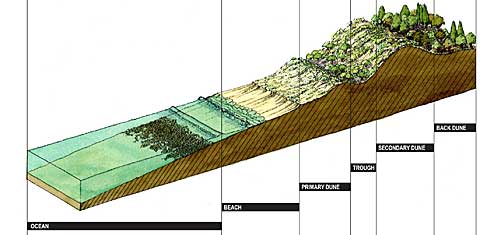
Another theory I subscribe to is the use of the ‘transect’ to design, plan, and build neighborhoods. The transect is an environmental research tool. It is a cut or path through part of the environment showing a range of different habitats. Biologists and ecologists use transects to study the many symbiotic elements that contribute to habitats where certain plants and animals thrive. The urban-to-nature transect outlines our human habitat in a similar fashion. See here: https://transect.org/index.html
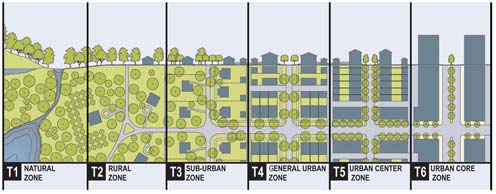
And the Transect Zones (T-zone) range from the most urban, T6, to the most natural, T1. And there are 4 other place types in between. The Transect can be used at the regional scale. For example downtowns are a region’s most urban, thus T-6, and State/Federal parks, T1, are the most natural areas that need to be preserved. Agricultural reserve areas (T2), edge of town suburbia (T3), small town centers (T4), and the middle of towns/cities neighborhoods are mixed-use (T5). And the Transect is best applied at the neighborhood scale.
Each walkable neighborhood, approximately 120-acres, .25 mile distance from center to edge (approximately 1,250 linear feet), and these have at least 3 transect zones within it to provide a mix of uses, places, spaces, and people at different income/life levels. The neighborhood main street center is T5, the neighborhood general area with a few corner stores is T4, and the neighborhood edge is usually T3 that leads to natural corridor or the next neighborhood edge leading to another neighborhood and its main street center.
This my complete, walkable, mixed-use, transit-supported neighborhood with the 5-minute walk from the neighborhood center to edge outlined:
And here are where my local taco shop and trucks are located by Transect-Zone:
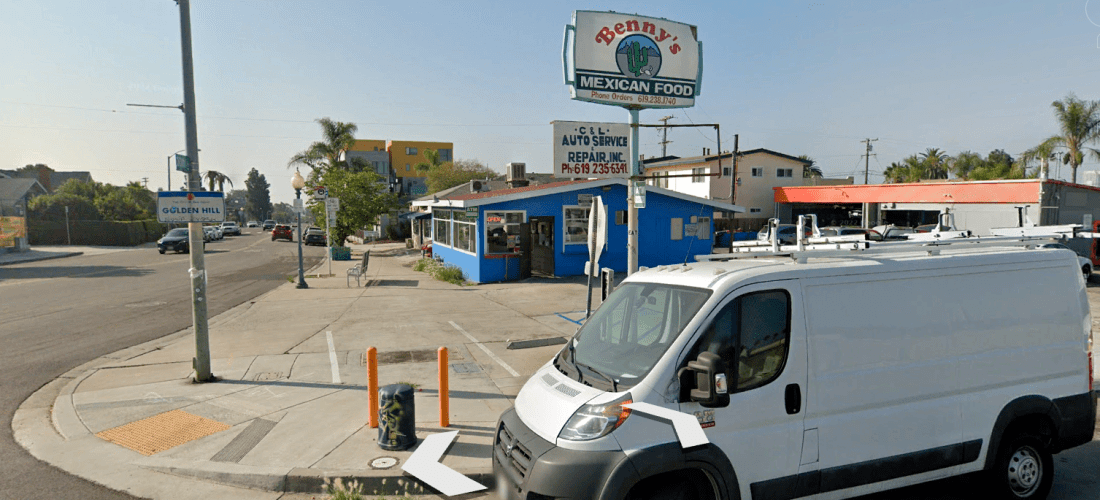
And here is the location of my next and favorite taco shop:
If I took the time, you’d see that my favorite taco shop is on the edge of the next neighborhood to my south. It’s center is located a neighborhood grocery store (Food Bowl, who make great tacos in their deli too). And our older streetcar neighborhoods in San Diego are expertly shaped with neighborhood centers located every 5 to 10-minute walks apart from each other and our #2 Bus stops. And, every neighborhood essentially has a great taco shop located in it. To the north, The Taco Shop is located another half-mile to the north, then another favorite taco shop, open 24-hours, Saguaro’s, is another half-mile from there.
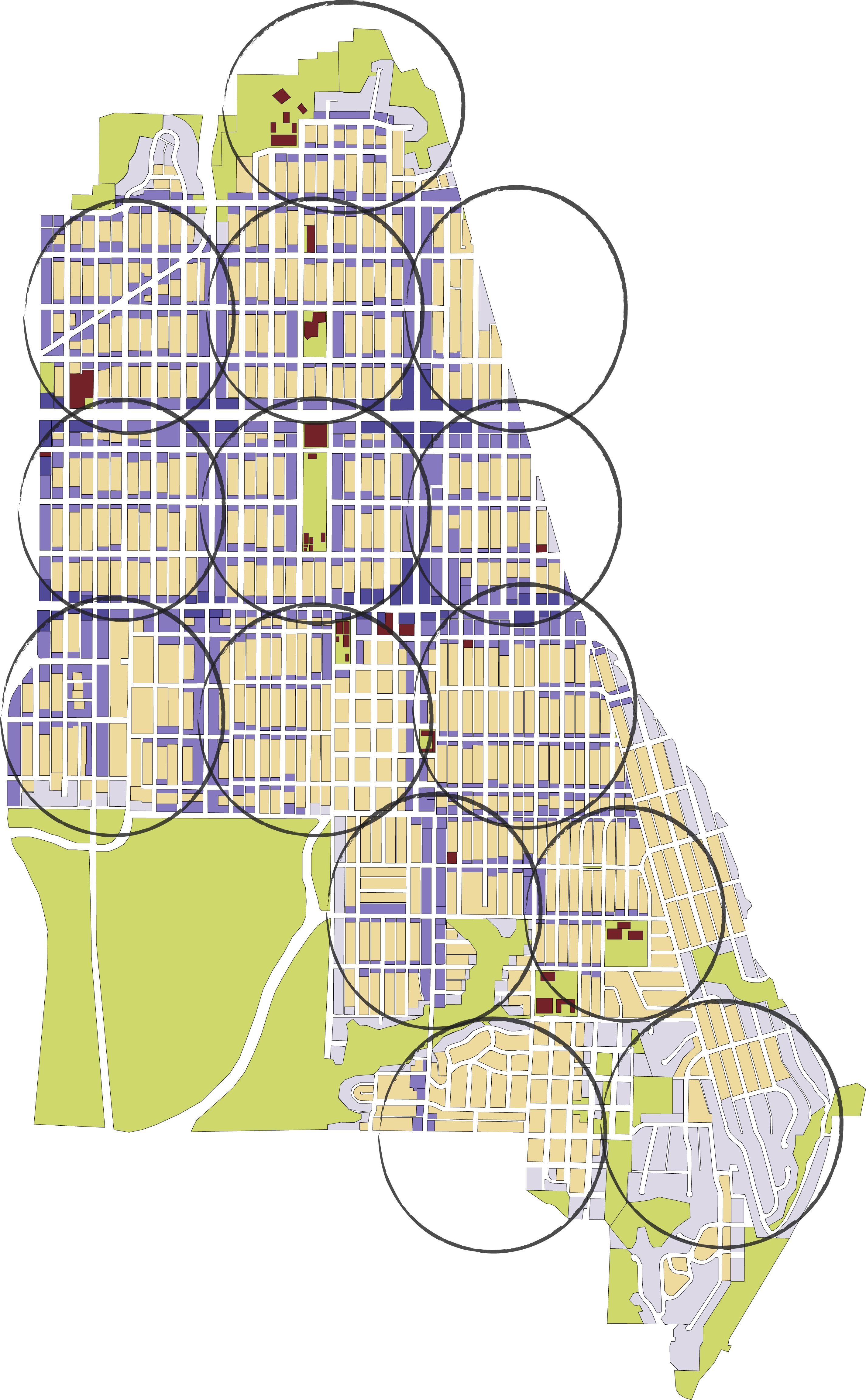
Below is a transect map of the neighborhood’s in the North Park Community Planning Area. My neighborhood is to the furthest south (and half in Greater Golden Hill). The Taco shop is on the edge of the next north neighborhood (see the off-set Upas St intersection). And Saguaro’s is on the edge of the next neighborhood to the north, and so on. Notice they’re all located on 30th Street, the only north/south street connected South Park/Golden Hill to North Park and all of the tacos shops are located on it (and Fern St where it changes names).
One of San Diego’s best cultural elements are our taco shops. When I travel somewhere for more than a few days and return… my first meal home is usually from a taco shop because I need it. And we’re fortunate enough to have a taco shop in most of our urban neighborhoods. I’m thankful for my local, but I eat there too often and it’s staled to my tastes… and it’s too close. A 5-minute walk to/from my house to my local taco shop only burns a few calories compared to the amount of calories served up by my favorite burritos, rolled tacos, and flying saucers.







 Howard Blackson