Leon Krier was Right

Leon Krier, philosophy, Urban Design

My most significant educational experience was sitting directly across from Leon on a 5-day charrette in Chico, California, 22 years ago. The intense time spent with him changed the trajectory of my professional life… because Leon Krier was right.

Ye shall know the truth, and the truth shall set you free.” – Jesus

Leon was a man of great character, who was the largest influencer of my education, as far as any single person could have affected it. Another iconic person (of whom I can never repay for their professional generosity and genius), Andres Duany, wrote this loving eulogy that correctly identifies the voracious and tenacious conviction of Krier’s work in contrast to Leon’s gracious, admirable, and courteous lifestyle. His life’s story is well documented. His uniquely lived experience of growing up in Post-WWII reconstruction Luxembourg, combined with his informal education (he learned from mentors and teaching at London’s Architects Association) as processed through his complex character (see Duany’s description above) shaped his incredible creativity.

Leon correctly identified that industrialization had devastated our civilization and its buildings and cities. Krier was the first to challenge the modernist dogma in the 70s as young architect. Because of his lone advocacy turning into a movement, today we have a fuller spectrum of design choices, from self-referential modernism to traditional vernacular to classically ordered tools. Leon Krier was right.

A few years ago, upon picking him up from the airport, I immediately drove Leon to share my disdain of the latest modernist infill project in my turn-of-the-century streetcar neighborhood. It’s a copy of Corbu’s Villa Savoye that had been in Architecture Record. I was fully expecting an affirmation of my disgust when Leon surprising said, “It’s good.” My eyes widened and my hands gesticulated wildly as I explained that the building’s fenestration was backwards, completely ignored its context, and the urbanism only existent in materials and scale. Leon agreed that while all I said was true, for a modernist building it was a very good example.

The lesson being, “If you are going to do modernism (or anything for that matter)… then do it well.”

I had forgotten how difficult it is to get any building or nice place built. My New Urbanist dogma had gotten in the way of this human truth. He said that to build anything in today’s toxic environment (naturally and politically) was laudable and then to build it well was meaningful. Leon Krier was right.

I am fortunate to have spent days and hours talking with Leon while driving across US west deserts, working in San Diego, and online during Covid. While his professional works is polemic and absolute, his personal perspective was equally optimistic and positive. Another grand lesson I learned from Leon on the importance of what we do was that, “The architecture the city and public spaces is a matter of common concern to the same degree as laws and language; they are the foundation of civility and civilization.

It was a feast to have learned these truths from my genial mentor. Thank you again, Leon.

[This week my lovely daughter in London posted this in front of the Architectural Association]

How I Got Here…

Leon Krier, San Diego, Urban Design

First, one of the many reasons I owe Mr. Michael J. Stepner, FAIA, FAICP, more than I can ever repay him is because he helped me find my professional path. My career as a planner started in Honolulu and then San Diego. I remember reading in the newspaper about Mr. Stepner being fired by a crude City Manager, Jack McGory, and then hired back by the city council, who overruled Jack, because he was rightfully leading San Diego towards its mixed-use, walkable, transit-supported future. Mike’s story resonated with me and that he had great credibility.

Second, here’s my new urbanist origin story. I was working for an architecture firm in Daegu, South Korea, during the Asian Tiger economic boom from ’93 – 97. And I found myself designing their first retirement communities using my suburban SoCal drive-thru lifestyle design tools. Traditionally, Korean elderly give their inheritance to their children when they moved in with their children’s family and they lived together in their compound housing (totally different from modern Western civilization tradition). And I designed their first car-oriented ‘silver towns’ because the middle class and car ownership was rising and they had money to put their elderly in homes. I met with the owners and looked into the sad eyes of one of the elderly men in the room who was envisioning his life isolated in a retirement box, alone.

I realized I was destroying a culture and that I had power as a designer and with great power comes great responsibility (credit: Stan Lee). So I knew I needed a deeper understanding of my craft and further my education. So I starting searching…

Around that same time, 1997, I took a job in Singapore to master plan port facilities with housing for imported labor… and none of those cheaper laborers imported had a car. These were exclusively walkable neighborhoods for 1,000s of workers. If the port facility was in Malaysia, they brought in Indian workers, if in the India, the brought in Philippine workers, and so on. Going into the interview, I remembered reading about Mike Stepner designing walkable, transit-station areas in San Diego and hiring Peter Calthorpe. So I bought Peter’s book, The Next American Metropolis, read it on the 30+ hour flight, copied his drawings into my notebook that I showed at the interview and got the job.

In Singapore, I found an older Calthorpe and Sim Van der Ryn book (’91), Sustainable Communities, and on the last two pages, they reference Leon Krier as the future guru of planning sustainable communities. Of course Leon is the godfather of the Congress for the New Urbanism because he taught at Yale when Peter, Andres Duany, Liz Plater-Zyberk, Stefanos Polyzoides, and Andrew Malick’s father were students there. And down I went, into the Leon Krier rabbit hole. Amazingly, within my own profession, I found the innately humane power in building walkable places that people loved. And it energized my career.

Unfortunately, in ’98 my father passed away but it left me enough money to go get my Masters in London (Univ. of Westminster, ’00) and put money down on a house in San Diego (’01). I went to London specifically to learn from Leon as I interned with the Prince’s Foundation, but I didn’t get to meet Leon…

Returning to San Diego, I worked on the County of SD General Plan Update and I’m asked by an NU colleague to go on a charrette in Chico, CA (’04), led by Leon Krier! My boss said I couldn’t take the time off to go so I quit the County and went (they hired me back as they didn’t expect me to quit). I purposely watched Leon and immediately sat at the same table as him, along with Geoff Dyer, who’d become my business partner and dearest friend. We sat there, stole scraps of drawings, listened, learned, copied, and soaked in the charrette that was a beautiful mess. Leon knew my London teachers and Princes Foundation colleagues and we became friends.

From there, Leon and I spent time together at New Urbanism’s annual Congresses. And when his book, The Architecture of Community, came out, he came to San Diego to lecture in Balboa Park, and we packed the Photograph Museum theater to the rafters, which was real meaningful to Leon at that time. He came back again a couple other times and together we drove my convertible Porsche across the desert for him to lecture at Univ. of Arizona. A memorable moment at one of his lectures in the NewSchool of Architecture, he asked the audience if anyone in the room had ever designed a tower… and in the front row, only Frank Wolden raised his hand!

We were able to spent a lot of time together then and during Covid, when he was trapped in his Cayala, Guatemala, studio for several months, we recorded these vlogs (and here) to talk about design, history, philosophy, and beyond.

And while in San Diego, he’s come up some of his more recent ideas that he’s published and we continue email debates on topics/issues, such as Corbu/Speer and vertical transects. His design idea for Coronado’s toll booth landing area is brilliant, using different height columns in a circle appear to ‘move’ when driving across the curve of the Coronado Bridge. 3-dimensional thinking. Here and here are a couple of links on his visits to San Diego.

“Just Get the Ground Floor Right…” Modernisms Last Stand

Urban Design, Urban Planning

It was Luxembourg’s Leon Krier whose transformative polemic in the 1970’s and 80’s shaped America’s New Urbanism of the 90’s and 00’s and our reformation of traditional mixed-use, walkable, urbanism today. I’ve watched my city take baby steps from outlawed urbanism (’60s single-use zoning), to downtown sub-urbanism (’80s drive-thru Jiffy Lubes), to ‘safer’ Vancouver urbanism (’00s single point towers surrounded by suburban townhouses). And, over these 40 years this one truth has been drummed into our downtown urban design consciousness, “just get the ground floor right” and everything else will be fine.

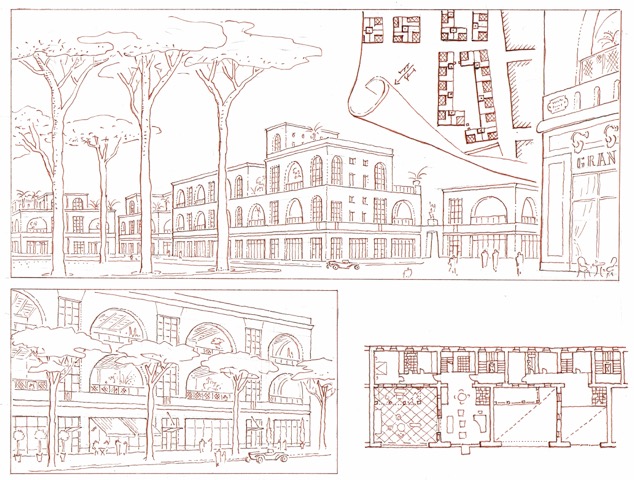
Leon Krier's Studies of Traditional Urban Patterns has Decidedly Influenced our Cities of Today (Image Courtesy of LKrier)

Leon Krier’s Studies of Traditional Urban Patterns has Decidedly Influenced our Cities of Today (Image Courtesy of LKrier)

So, we’ve stopped clipping the traditional, walkable, grid with new freeway off/on ramps. We are returning fast, one-way streets leading to those freeways into more humane, shopping promenades. We’ve added streetcars, jitneys, car and bike share stations, and protected bike lanes to help us get around. Small parks, plazas, and parklets spout up in vacant lots and street corners to slow us down and smell the coffee and craft beer. We are seriously endeavoring to repair our urban street pattern with infill redevelopment projects filling in and firming up our street walls as this interface supports the vitality and exhilaration of being downtown.

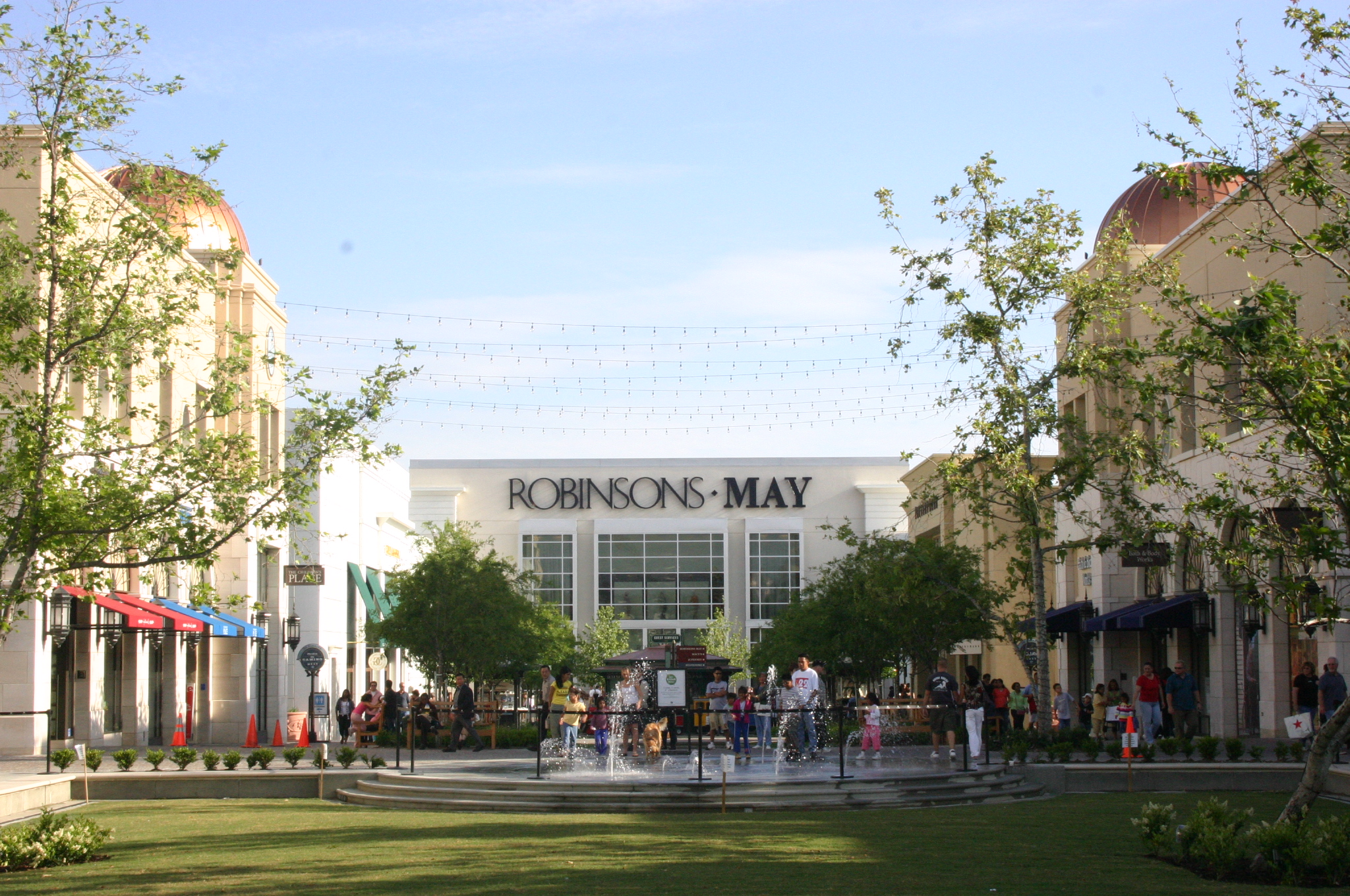
With this 2-dimensional base being well laid, downtown agencies are successfully getting new developers to build their 3-dimensional building’s ground floors in a more humane manner. The market supports this trend and every project’s ground floor has clear window shopfronts, and detailed transoms and awnings have returned with restrained signage, public restrooms, and shops spilling out onto the sidewalk. And nobody dares to dispute getting this first ground floor layer right. The 2D traditional urban street pattern has crept up to shape the 3D base of new architectural design… again, in a more traditional, humane manner.

New Ground Floors that Work (Americana - Rick Caruso)

New Ground Floors that Work (Americana by Rick Caruso)

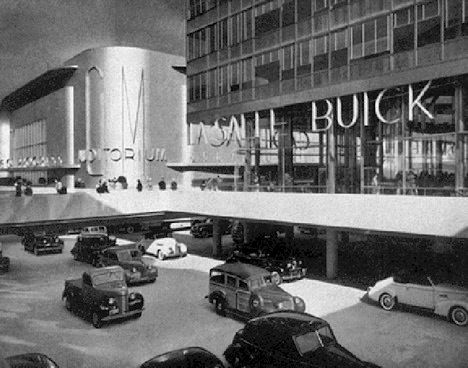
Rebuked Modernist Ground Floor Ideal ('39 Expo Futurama)

Rebuked Modernist Ground Floor Ideal (’39 Expo Futurama – Wikipedia Image)

And, here is where we find the last bastion of of the modernist architecture… fighting for survival in the materials, shapes, forms, and style of the building’s upper floors. Garish, look-at-me architecture still reigns in this narrow 25 to 140 feet range above the ground floor.

Seen This Proposed for Your Downtown Yet?

Seen One of These Proposed for Your Downtown Yet? (Image: LA Streetsblog)

I find it interesting that modernism has evolved from being a very big idea, to its ubiquitous mid-century development standard, to its now marginalized position between the ground floor and roofline. I completely agree with Witold Rybczynski that modernist architecture fits best in a natural setting, as well with Leon when it sits in juxtaposition to traditional architecture and urbanism.

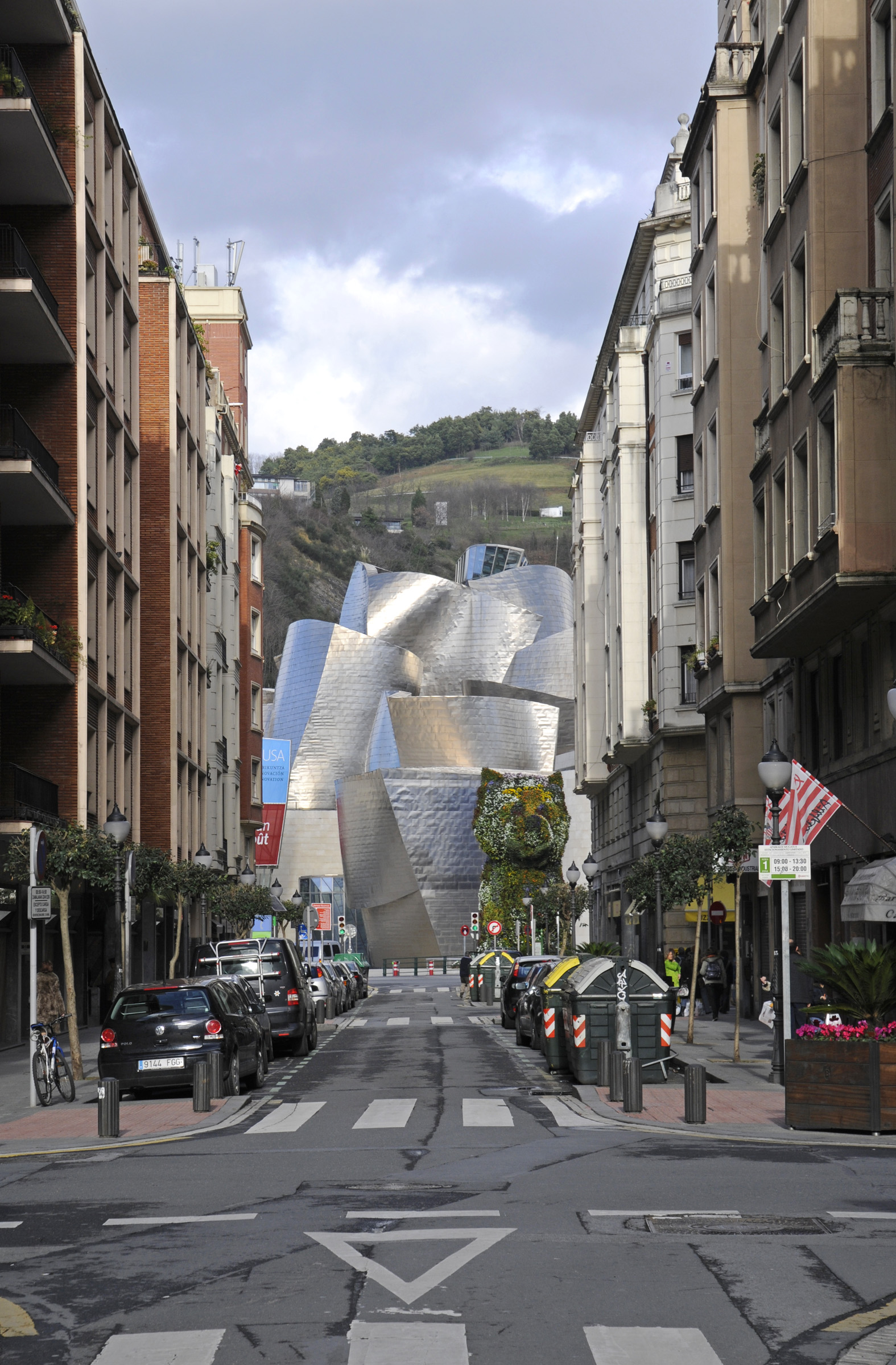
Bilbao's Big Idea Wasn't,

Bilbao’s Big Idea Wasn’t, “Hire a Starchitect!” It was Learning How to Architecturally Tune a Place to Create Visual and Cultural Complexity! (Image Unattributed)

John Nolen, San Diego’s original urban planner, once wrote in 1907 that city planning finds, “A place for everything, with everything in its place.”  Having been tested and vetted over three generations, maybe modernist architecture has finally found its appropriate place in our everyday life… within a very narrow range pushed as far away from people as possible.

Good Riddance! (Image by HBlackson)

Good Riddance! (Image by HBlackson)

Thinking Aloud (and on TEDx and beyond) About San Diego’s Urbanism

Urban Planning

I’ve been fortunate to have been invited twice to speak about my ideas on urbanism at San Diego’s TEDx American’s Finest City events.

The first one was held in 2012 at Scripps Oceanic Institute (Walter Munk is a true American hero) and was on my thoughts on how to code/build towards a local community character in post-redevelopment California. The idea originated from a week Leon Krier spent in San Diego and his approach to creating a ‘there, there.”

Coding for Character TEDxAFC

The second one was held in 2013 at the NewSchool of Architecture + Design. This talk was on my ideas of San Diego’s next urbanism, after the suburban exodus back to downtown. As always, inspired by Leon Krier, I see our culture becoming more secure with urban living. Plus, our cities are built upon trends and urbanism is simply the latest.

http://dai.ly/x2p9o4a or http://dai.ly/x2p9o4a

Other videos of my thoughts are below for your viewing pleasure:

https://www.nbcsandiego.com/news/politics/WEB-POLITCAL-SPEAK-SEG-1-5-3_San-Diego.html