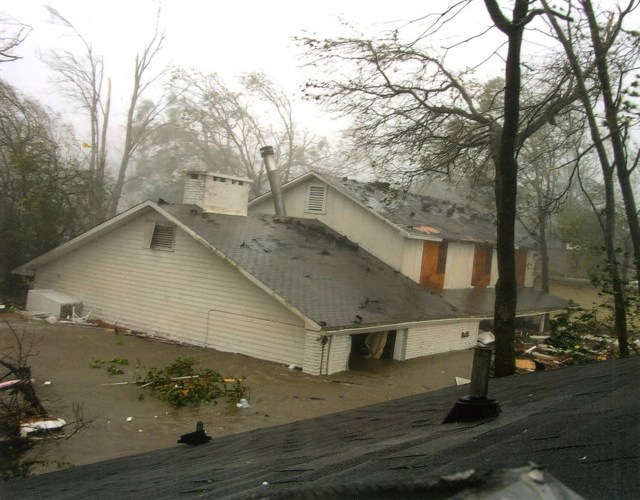
Hurricane Katrina

Climate Adaptation Audits: 10 steps to evaluate risks and adapt to climate calamities

Climate Action Plan, Urban Planning

How can communities plan to become more adaptable and resilient in the face of climate calamities, such as wildfires, hurricanes, drought, heat waves, and floods? One idea is to start with an audit. Using Jeff Speck’s successful 10-part “walkability plan” as a template, I wrote a list of steps that a community could use for a “climate adaptation audit.”

The 10 steps below are grounded in the principles of New Urbanism, which are based on the design of cities and towns that have survived for centuries. Compact, walkable places are more resilient, but they also need to respond to modern conditions and the science of climate change. 

The ten audit points aim to give towns and neighborhoods a chance to make living on earth attractive to a broader range of people. These are all applicable to any location, and a community that checks all of these boxes should be “climate calamity ready.” Using this audit, residents can see what they need to prepare for and how to align resources.

  1. Inform the public of climate adaptation activities, encourage citizens to become involved in the planning process, and engage in broader professional discussions and information at local, national, and international levels. 
  2. Understand your local context’s climate risks to be used as baseline data for a Climate Adaptation plan (use the Place Initiative tools Community Assessment Guide). 
  3. Determine local consensus on a long-term vision, choosing to either permanently retreat, temporarily evacuate, and/or harden against climate calamities. Facilitate cooperation among citizens, public interest groups, non-governmental organizations, and governmental agencies to shepherd plans and policies toward envisioned outcomes (to retreat, evacuate, or harden from/against weather/fire/water/earth). 
  4. Apply New Urbanism’s best practices to determine if new/future development is best directed in the form of infill, town extension, and/or a new town to shape continual development at a human-scale in response to the region’s changing social and economic needs. (Diagramming new urbanist principles, outcomes, and results is needed to improve calamity resiliency).
  5. Enable place-based policies, standards, guidelines, and plans that employ the highest standards of New Urbanism best practices (mixed-use, walkable, transit-supported) urban design and planning to define and advance the local municipality’s interest in long-term social and economic viability. 
  6. Set a by-right approval process in place for projects and applications for approval that are consistent with civic policies and interests (a non-discretionary approval process reduces the power of bad actors to reject projects that address climate resiliency).
  7. Set a straightforward discretionary review process for proposals and applications that are subject to council or supervisor approval to determine whether they are consistent with the civic policies and interests. 
  8. If retreat or evacuation from identified climate calamities is required, determine the type of calamity, its context, emergency routes, destinations (and alternatives), and who is responsible (fire marshal, city manager/mayor). For example, if there is a wildfire in a mountain context, with clear (lighted/reflective) signage for routes to safety (state highways, local roadways), and design the route for this climax condition, such as fire truck access and directional lane adjustments. 
  9. If hardening from climate calamities, identify the type of calamity, its context, types of response (and alternatives), and who is responsible (building and development services manager). For example, if there is a wildfire in a mountainous area, build with fire-safe codes, with overlapping zones of defense around clustered compounds, allowing for firefighting from the roadway. Make space for wildland firefighting (no new sprawl) and structure firefighting in clustered compounds. Do the same for flooding, sea level rise, and extreme weather conditions (See Martin Dreiling’s 2010 Fire Mitigation in the Wildland Urban Interface SmartCode module). 
  10. Choose a capital Improvement Plan that prioritizes the path of least resistance to determine where spending the least money would make the most difference and build from there. For example, fund, maintain, and operate tactical “communication command control centers” to be deployed immediately for disaster recovery.

While communities have been planning for climate resilience for some time, the idea of a step-by-step audit grounded in sound urban principles makes a great deal of sense. Please let me know your thoughts. 

Note: A recent CNU webinar on “Climate-ready communities” discussed state and provincial policies and tools. The author, an attendee, suggested the “climate adaptation audit” tool, and it generated interest.

Climate Adaptation – Wildfire

Climate Action Plan

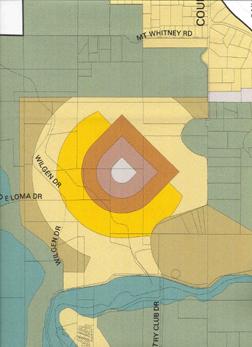
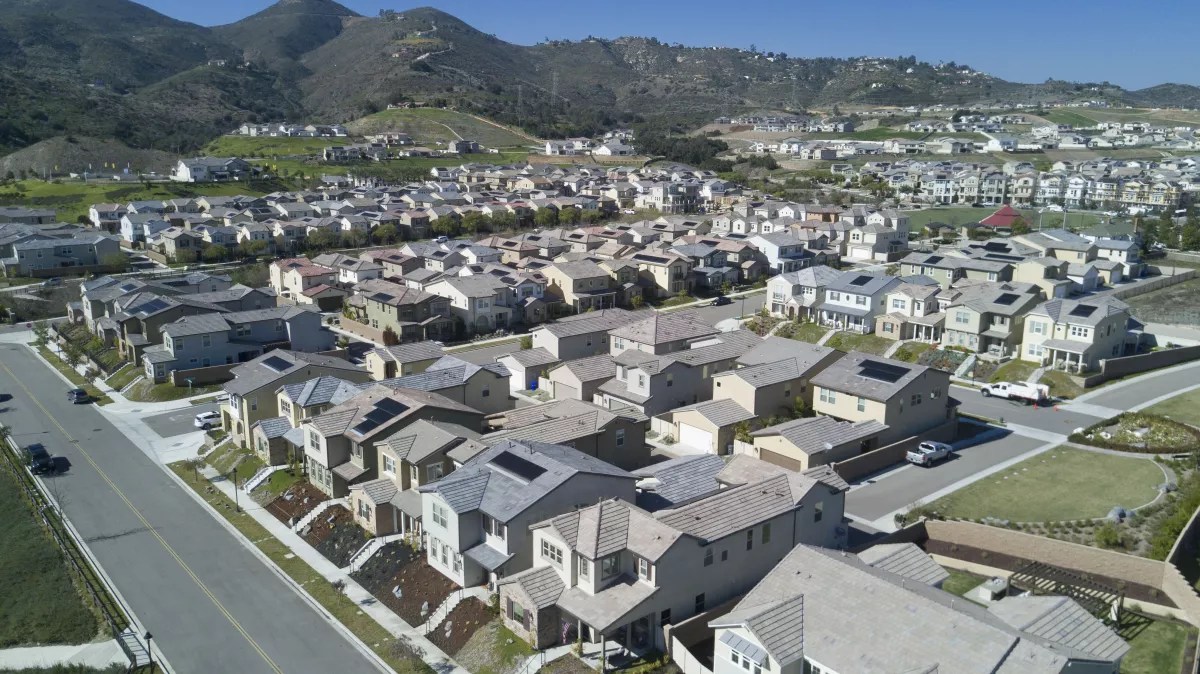
In 2002 – 2003, north county San Diego’s Harmony Grove was a chicken ranch that was closing due to Newcastle disease and would vacate 350-acres on the edges of Escondido and San Marcos. It is highly prone to Santa Ana wildfires traveling up the Elfin Forest’s Escondido Creek valley, from west to east. In 1996, a terrible fire roared up the valley and local residents were willing to trade a new well-connected, compact community, with homes on small lots, parks, and future shops with two roads in/out in case of wildfire, for the vacant chicken ranch. What they opposed was large-lot suburban sprawl on the hillsides that was more susceptible wildfire.

Working as a Project Manager on the General Plan update for the County of San Diego, we designed and entitled a village center, home of a new fire station. And we followed this wildfire adaptation audit process to harden the urban/wildfire edge by building with enhanced fire-safe codes, overlapping zones of defense around clustered compounds, enable firefighting from the roadway. Make space for wildland firefighting (no new sprawl) and structure firefighting in clustered compounds. 

The only step missing is the administrative or by-right development process that fits into the original village plan. The images below are of our initial workshops with the community to envision what should be built and where, the diagrams and plans, and what’s there today, 20+ years later:

(from Fire Mitigation in the Wildland Urban Interface, Martin Dreiling, https://transect.org/modules.html)

Whatever...

One Size Fits One… (and it’s the worst one)

Transit, Urban Design, Urban Planning, walkability

The ubiquitous space, shape, but highly volatile speed of the car is much larger and faster than the universal space, shape, and speed of a human. Yet we continue, since post WW2, design and build everything and everywhere for space, shape, and volatile speed of the car. Streets widen, ground floors are parking lots, people are pushed towards the edges, and cars dominate our landscape. This is what ruins downtowns and isolates small towns. Cars are a suburban mobility tool.

That’s not say we need to ban cars. They do somethings great, such as get lumber, while not as good at others, such as exercising. The fact is that cars are best served for disparate suburban expanses. Walking, transit/buses, and bicycles work best in more urban areas. Cars work great in shorter-commutes and throughout suburbia. Trains, airplanes, and ships work best for long commutes.

The New Urbanism was new because it worked to humanize the car in cities, small towns, and new towns. We’re now moving into the Next Urbanism (and I write about this throughout this blog and speak about on podcasts, such as Kevin Klinkenberg’s Messy City). And as humans, we should be designing and building everything everywhere to accommodate for humans first, letting the right mobility serve us throughout the spectrum of urban to rural contexts.

Downtowns (regional centers) are marginalized by our 1.5 cars per person maxim (Spend 5-minutes walking around Downtown San Diego). Small towns are isolated by freeway by-passes, which need both regionally accessible cars and local people to be economically viable (think Ramona, Julian, and Jacumba, if in San Diego). The industrial era invention of cars and suburban sprawl go hand-in-hand, the built each other. Unfortunately, both cars and suburbs are inhumane and detrimental to our economy, environment, and cultural cohesion (See Sabre Springs).

The next urbanism means making downtowns less car-oriented, small-towns car-supported, and car-happy suburbia having sub-regional centers that are more urban/humane. This place, a small district in Tempe, AZ, Cul-de-Sac, is an example of the Next Urbanism… building more urban, sub-regional centers in the vast sprawl of suburbs surrounding downtown’s regional center. And, by the way, Opticos Design, Inc. is one our best architecture and coding companies.

Leon Krier was Right

Leon Krier, philosophy, Urban Design

My most significant educational experience was sitting directly across from Leon on a 5-day charrette in Chico, California, 22 years ago. The intense time spent with him changed the trajectory of my professional life… because Leon Krier was right.

Ye shall know the truth, and the truth shall set you free.” – Jesus

Leon was a man of great character, who was the largest influencer of my education, as far as any single person could have affected it. Another iconic person (of whom I can never repay for their professional generosity and genius), Andres Duany, wrote this loving eulogy that correctly identifies the voracious and tenacious conviction of Krier’s work in contrast to Leon’s gracious, admirable, and courteous lifestyle. His life’s story is well documented. His uniquely lived experience of growing up in Post-WWII reconstruction Luxembourg, combined with his informal education (he learned from mentors and teaching at London’s Architects Association) as processed through his complex character (see Duany’s description above) shaped his incredible creativity.

Leon correctly identified that industrialization had devastated our civilization and its buildings and cities. Krier was the first to challenge the modernist dogma in the 70s as young architect. Because of his lone advocacy turning into a movement, today we have a fuller spectrum of design choices, from self-referential modernism to traditional vernacular to classically ordered tools. Leon Krier was right.

A few years ago, upon picking him up from the airport, I immediately drove Leon to share my disdain of the latest modernist infill project in my turn-of-the-century streetcar neighborhood. It’s a copy of Corbu’s Villa Savoye that had been in Architecture Record. I was fully expecting an affirmation of my disgust when Leon surprising said, “It’s good.” My eyes widened and my hands gesticulated wildly as I explained that the building’s fenestration was backwards, completely ignored its context, and the urbanism only existent in materials and scale. Leon agreed that while all I said was true, for a modernist building it was a very good example.

The lesson being, “If you are going to do modernism (or anything for that matter)… then do it well.”

I had forgotten how difficult it is to get any building or nice place built. My New Urbanist dogma had gotten in the way of this human truth. He said that to build anything in today’s toxic environment (naturally and politically) was laudable and then to build it well was meaningful. Leon Krier was right.

I am fortunate to have spent days and hours talking with Leon while driving across US west deserts, working in San Diego, and online during Covid. While his professional works is polemic and absolute, his personal perspective was equally optimistic and positive. Another grand lesson I learned from Leon on the importance of what we do was that, “The architecture the city and public spaces is a matter of common concern to the same degree as laws and language; they are the foundation of civility and civilization.

It was a feast to have learned these truths from my genial mentor. Thank you again, Leon.

[This week my lovely daughter in London posted this in front of the Architectural Association]

Social Isolation and Sitting to Work are Connected

Uncategorized, Urban Design, Urban Planning

I subscribe to Arnold Schwarzenegger’s fitness newsletter that provides daily content on health and fitness. There was a deep connection that resonated with me in this morning’s newsletter articles. The first was on this study regarding the early mortality rate of those who are lonely and isolated socially in comparison to those who are socially and physically connected to others in their neighborhood, as well as with family and friends. The second story was about the health value of getting up and walking around every hour so rather than sitting for more than 2 hours straight.

In our suburban nation we sit in our cars to go anywhere. We then sit at our desks to do the majority of our work. And we sit at home and watch tv or doom scroll through the bitter end of social media as we once knew it. We sit and drive to sit a lot. And it isolates us from engaging with people on street corners, in public and private places, and at work (we don’t go to church, or social clubs, or the library, or post office anymore). We have transitioned daily need trips, such as picking up milk, eggs (too expensive!), newspaper (what is that?!), and dry cleaning (we don’t wear hard pants anymore) to online shopping that is delivered.

We’ve isolated ourselves in our homes and it has obviously become bad for our physical and mental health. It’s easy to see that we’re not healthier, happer, or wealthier in our new post-industrial, online lifestyle…

So what can we do about it? I recommend following this manifesto: https://www.cnu.org/who-we-are/charter-new-urbanism

We’ve Lost that Loving Feeling.

Urban Design, Urban Planning

From Rick Cole’s article in Southern Urbanism: “In this sense, the enemy is… placeless sprawl. These are locations that have no distinct character, no history, and no beauty, that typically fulfill just a single function. We park there, we work there, we reside there, we shop there, we drive through there. But beyond those necessary functions, the bleak landscapes of sprawl lack a shared and diverse public realm. Without such a public realm, community dissolves into private space. Shared space gives room for different people engaged in varied activities. That is the physical manifestation of community—and the physical setting for community, too. Community can happen in a park, in and around a neighborhood store, on a crowded sidewalk, or in any other public gathering space. The ties of community can be tight—among neighbors at a farmers’ market, for example. They can also be loose—such as among strangers at a transit stop. Whatever those ties look like, a robust public realm is vital to generating a shared sense of community.

It is precisely this shared sense of community that is breaking down all across North America. Sprawling suburbs and walled-off, self-contained urban “projects” deprive us of a place for community to grow. Evolving technologies accelerate our detachment from real life, happening in real places. Human beings crave belonging, so in the absence of a shared community, we gravitate toward self-selected faux-communities that more resemble tribes. Unlike citizens of a true community, these factions have no commitment to their neighbors or loyalty to the places they happen to occupy. When we are rigidly separated by income, race, and lifestyles, the fragile shared bonds of a democratic society inevitably fray into “us” versus “them.”

And from Jeff Wood’s Overhead Wire: “Of course most stores can’t compete with Amazon or Walmart he said, but what they can do is create a better shopping experience and pleasant environment people want to visit. This redevelopment can’t be just another (strip center, suburban mall, or) office park, it should be a destination in its own right if it is to succeed.”

Places we love and want to spend time are valuable for many reasons… economically, socially, and environmentally, because we care for and maintain those spaces, and fill them with people and trees rather than laying down asphalt and putting up a butler building on that next offramp further outside of town. Therefore, better places are more sustainable than crappy suburban ones.

“Are we there yet?” No… But we’re close.

Economics

I shared this very good 2013 documentary with a potential client in Fresno, California. And he asked after watching it if I thought Fresno was better off today from the ideas and potential presented a decade ago? I know Fresno is better off today than it was 10+ years ago because of its public and private investments highlighted in the movie. And it was a real change to restart the building of urbanism in a decades long suburban culture.

Usually, this is when I self-righteously plow into the value of the New Urbanism and how 30 years ago we restarted and sustained this urban living revolution (with help from the sitcom, Friends). But it’s been 30 years, a full generation. And we should be fully building mixed-use, walkable, transit-supported urbanism at an industrial scale/speed by now, if measure by how long it took for the idea of suburbia to become reality. For example, Corbusier published the City of To-Morrow And Its Planning in 1929 and auto-oriented sprawl was in full bloom by 1959.

Calthorpe, Duany, and Katz all published their groundbreaking books on the New Urbanism in the early 1990s and here we are in 2023. Why aren’t we there yet? We’re most certainly moving in that direction, but too slowly.

That said, every city’s revitalization efforts suffered setbacks from the dramatic changes to how we work and commute due to the Covid shutdown. In California, we’re not building offices, retail is dead, and housing is king, because we’re building so little of it and we’re now working and shopping from home. I think that our Covid reset has to be overcome by all American cities, especially Fresno.

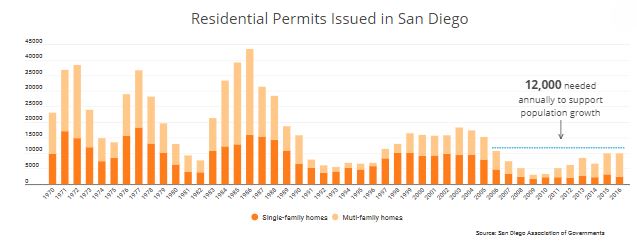
The overall development and construction industry in California appears to be in a static point between the pendulum swings of change, from suburban to urban building. And no major city in California is building enough housing to meet its market demands beyond the few thousand or so built a year on the fringes in master planned communities by the few big home building firms leftover from the 80s.

We have zero national or regional building/construction companies that build urban infill housing types at an industrial scale. We depend on 1,000 small-scale builders in every city to build enough housing to meet market demands, who are all learning and starting from scratch at the same time. Few are trained, prepared, or knows how to build urban infill housing at the scale of 2-3,000 homes annually.  Few city are able to build enough infill housing yet because:

– The Federal Government neither insures/subsidizes its loans/mortgages nor invests in our transit facilities.
– The State neither invests in transit services nor modifies building codes.
– The City neither invests in job training/education nor reforms its entitlement codes (they waive them).

All of these things were being done in the 1950/60’s as the Feds/State/Cities were in alignment to build suburban development at a massive scale. Feds changed its lending practices to subsidize single-family home mortgages. Fed and States built freeways and highways and their interchanges. States and cities built schools and colleges to educate ourselves. Cities created zoning to segregate work from home and enable master planned suburban development. America was a brave, new modern world post WW2. We were flush with cash and power and the world had changed dramatically by the mid-1940s.

Today, we’ve shoveled all of our post WW2 wealth over to the Saudi’s for cheap oil to fuel our autopian suburban landscape. And were breaking ourselves financially to maintain the out-of-date and cheap suburban infrastructure, which is a losing financial scheme. This is all explained much better by Chuck Marohn and Joe Minicozzi.

In short, we’re still not set up for building infill urbanism. And at this moment, California’s new urban infill development shift is being led by the State’s housing requirements and affordable housing incentives forcing city’s to waive their zoning (as opposed to reforming it). The Feds have started changing its policies too. But, these are just two of the six points the feds/state/cities need to be in alignment with in order to build infill housing at an industrial scale.

It’ll take time to get all three aligned, and we’ll get there as we’re well past the suburban experiment… which proved to be the greatest misallocation of resources in the history of civilization (stolen from James Howard Kunstler). Ultimately, when you tug on downtown Fresno you’ll find that it’s connected to the world (stolen from John Muir).

Town Planning, the Basics…

Uncategorized

Town Planning involves processes undertaken by municipal planning departments to visualize, plan for, coordinate, and act on the three-dimensional physical layout of the town. This includes the zoning of different areas for various uses, such as residential, commercial, and office spaces. It also includes the subdivision of public property and the creation of public streets and park spaces. In addition, it takes into consideration the economic, transportation, political, legal, environmental, utility and sanitation infrastructures.

The goal of town planning is to achieve a desired urban form and to ensure that a certain level of accessibility, walkability, adaptability, efficiency, and economy are built in and adapted to over time. The public streets and spaces provide the long-term structure for building a town, and private development provides the day-to-day life within this framework is allowed to change and adapt as needed.

Today, town planning discussion have been dominated by zoning, the regulation of private property. However, this focus on zoning can sometimes overlook the more permanent and important patterns of subdivision, which involve the ordering of public and private property. Therefore, the challenge in town planning is to balance these two domains of zoning and subdivision to create a town that is healthy, safe, and welfare-promoting.

Basic Town Planning Elements Involves:
• Development Patterns – Suburban to Urban Street/Block Types
• Public and Private Spaces and Buildings – Location and Scale
• Planning Types – from the Region to the Lot
• Place Types – from Pristine Nature to the Town Center
• Character – From Memory to Expectations

(yeah, I used The Doug Allen Institute Chatbot to help me write this: https://app.docuchat.io/chat/48e19f7e-4aa5-4148-aed3-4be829e4c241)

The New Town of Whitehall

Urban Design, Urban Planning
[Prologue: Yes, I know this is a bit too aspirational, maybe a touch over the top, but I wrote what I felt so it must be true to some degree… and admittedly, a bit of ego is involved as I had a small hand in the making of what I believe is a great place, The Town of Whitehall. This new Town, and its neighborhoods is being constructed today in New Castle County, Delaware, and is founded by Brian DiSabatino (development manager) and Rich Julian (builder), with the help of my former firm, PlaceMakers, Robert Gibbs, Steve Mouzon, Mike Watkins, and many others.]

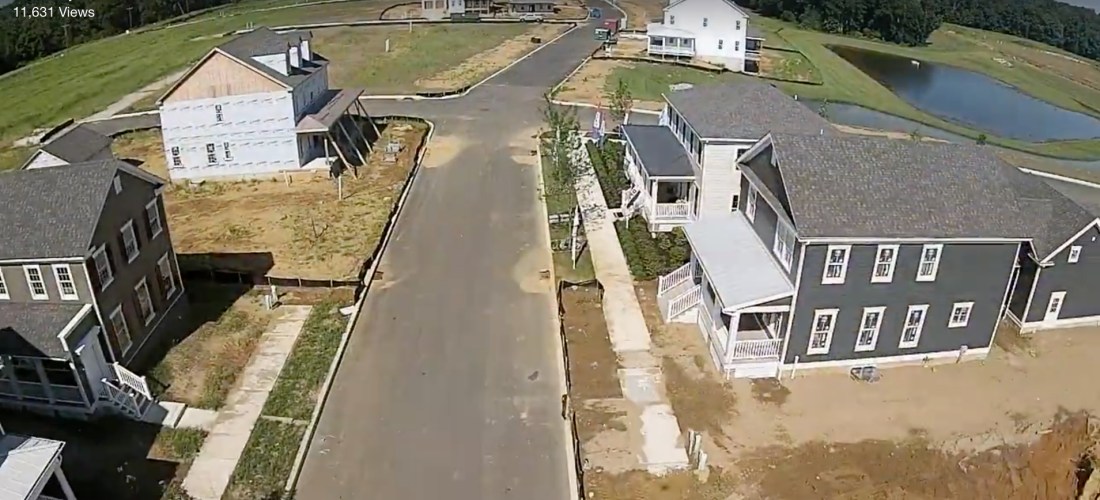
Whitehall was envisioned eight years ago on a 2nd story corner design studio located in a historic brick building in downtown San Diego. It came from a rudimentary understanding that small town culture was dependent upon the conception of balancing nature with our daily needs. Instead of forming a single and isolate subdivision of housing or commercial strip center shops that disregarded the surrounding landscape’s natural setting, Whitehall was organized as a variety of streets, blocks, houses, shops, schools and squares set within the beautifully Delaware’s timbered countryside. The master plan illustrates how streets radiate deep into a neighborhood defined by streams and woodlands that becomes a transcendental experience when the fall colors turn.

(The first idea is on the left; the plan today is on the right)

For this vision to becoming a built reality, New Castle County’s conventional suburban subdivision development policies and zoning regulations were updated to offer an alternative to reflect this long-standing neighborhood-to-nature interdependence upon which the character of each neighborhood is complete. Whitehall’s neighborhoods are being built as a 3-dimensional form of our spiritual and material worth expressed. The town expresses our collective values in how we choose to live our daily lives. It’s dignified, it’s flexible, and it accommodates everyone. This is a choice. To live in a city, town or neighborhood is not an accident, but the result of a coherent vision that built old New Castle, and the newer Kentlands, and King Farm, Maryland.

Conceived in the long-standing tradition of town building as a series of neighborhoods that coalesce into a new town over time, the interactions of neighbors, residents, visitors, and those who are ‘just passing by’ will build both past memories and future expectations that will shape the town’s eventual ‘community character.’ The design team understood that this traditional place making pattern brings people together while also siting lightly on the local landscape. These traditional urban design tools were used in order to build upfront a comfortable ‘sense of place’ to be accentuated over time with specialty and civic buildings as citizens move in, engage, and shape their built environment to their collective values. It also respects the existing neighbors to the east and doesn’t impede on their choices and built expressions, and the new highway will provide access to the region in need of towns, and districts, and forests, and bays.

Yes, Whitehall is personal and it is yours. And it is your choice to live and prosper in close proximity to your neighbors, shops, schools, and nature. Your parents auto-oriented status quo is shifted back to being human-oriented by this purposefully natural living arrangement as we have been expected to just get in our cars and drive to and from our homes, shops, schools, squares and parks without question. This new/old arrangement of streets, squares and buildings within walking, biking, scootering, hop-scotching, strolling and driving questions status quo as you choose to make your home personal, which matters if you care enough to change conventional expectations of how you live your life.

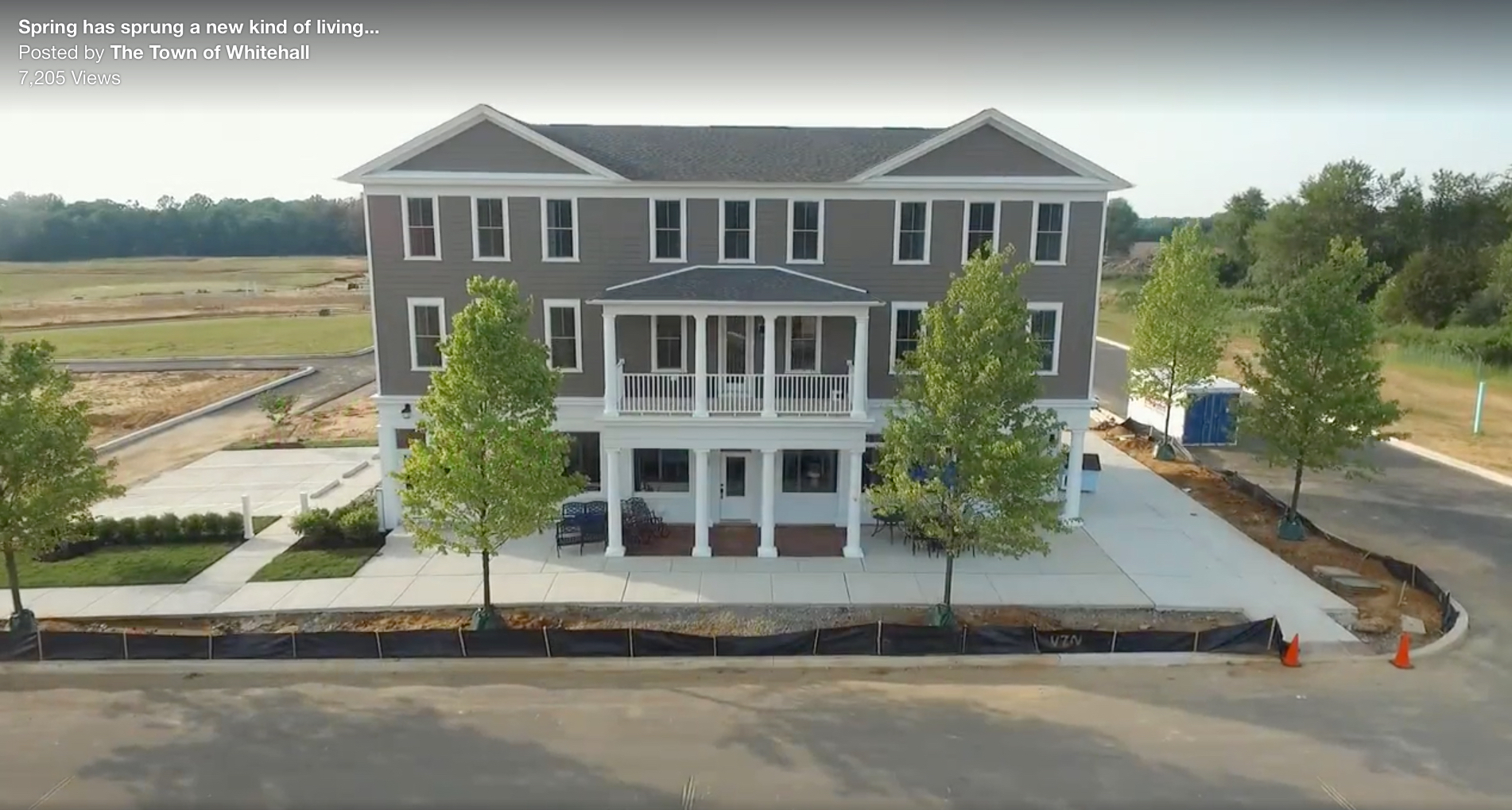
(New Mixed-Use Building, Mike Watkins is the consulting Town Architect)

whitehall_mixed-use-copy

The place we live in, grow up in, remember, and the culture that is cultivated in these sorts of places matter to our lives. As where you choose to spend time, which is all we really have in this world, comes a tremendous cost and forms the heritage we leave behind. Whitehall has purposely turned the chaotic, drive-by, unfulfilling auto-oriented lifestyle around to offer a more connected, comfortable, and convivial neighborhood setting to make with it what you will. You can go to school, or a shop, as well as drift off into the woods. This is a recognizably different set of promises built on the idea that the quality of our lives hinges upon our free choice and not upon the fate of those before us.

And then yet you will find Whitehall.

[Epilog: Ok, I stole that last line from Makaha Sons of Ni’ihau (Mickey Ioane), Hawaii ’78 protest song, which is one of the greatest protest songs ever written about people’s feeling about sacred land. While not beloved yet, as it will take time for citizens to transfer its character from its initial ground breaking. Whitehall is in its essence a protest statement against not being coerced to spend our valuable time and money on things and places that mean nothing to us. Our endless miles of cars, highways, gas stations, parking lots, driveways, turnpikes, 7-11’s, Applebee’s, Olive Garden, Starbucks, drive thru garbage food, etc…]

“Just Get the Ground Floor Right…” Modernisms Last Stand

Urban Design, Urban Planning

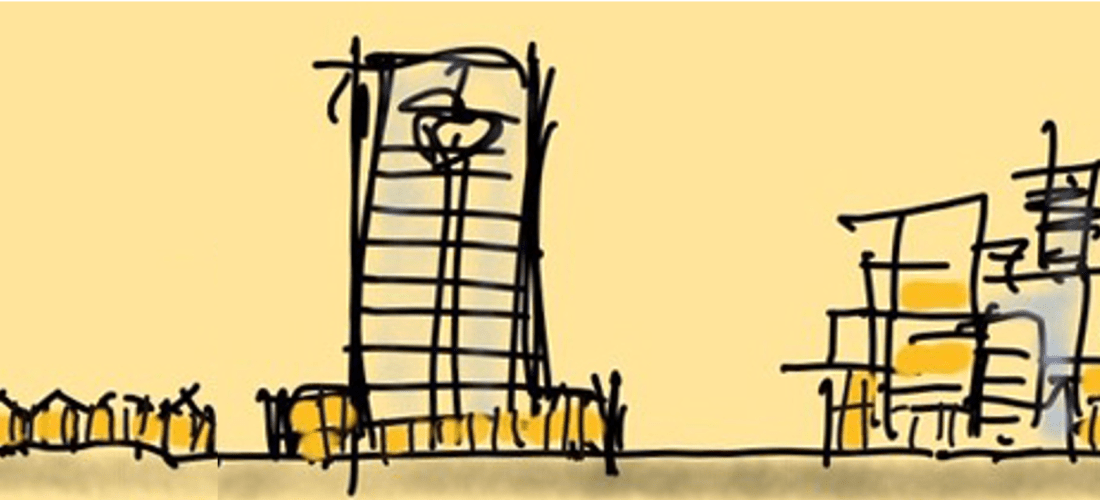
It was Luxembourg’s Leon Krier whose transformative polemic in the 1970’s and 80’s shaped America’s New Urbanism of the 90’s and 00’s and our reformation of traditional mixed-use, walkable, urbanism today. I’ve watched my city take baby steps from outlawed urbanism (’60s single-use zoning), to downtown sub-urbanism (’80s drive-thru Jiffy Lubes), to ‘safer’ Vancouver urbanism (’00s single point towers surrounded by suburban townhouses). And, over these 40 years this one truth has been drummed into our downtown urban design consciousness, “just get the ground floor right” and everything else will be fine.

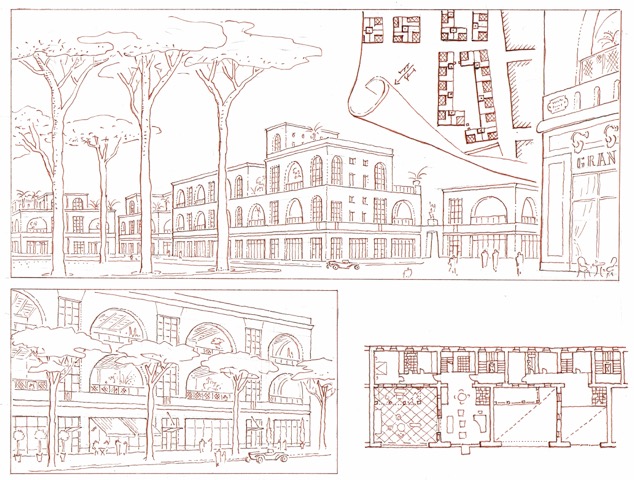
Leon Krier's Studies of Traditional Urban Patterns has Decidedly Influenced our Cities of Today (Image Courtesy of LKrier)

Leon Krier’s Studies of Traditional Urban Patterns has Decidedly Influenced our Cities of Today (Image Courtesy of LKrier)

So, we’ve stopped clipping the traditional, walkable, grid with new freeway off/on ramps. We are returning fast, one-way streets leading to those freeways into more humane, shopping promenades. We’ve added streetcars, jitneys, car and bike share stations, and protected bike lanes to help us get around. Small parks, plazas, and parklets spout up in vacant lots and street corners to slow us down and smell the coffee and craft beer. We are seriously endeavoring to repair our urban street pattern with infill redevelopment projects filling in and firming up our street walls as this interface supports the vitality and exhilaration of being downtown.

With this 2-dimensional base being well laid, downtown agencies are successfully getting new developers to build their 3-dimensional building’s ground floors in a more humane manner. The market supports this trend and every project’s ground floor has clear window shopfronts, and detailed transoms and awnings have returned with restrained signage, public restrooms, and shops spilling out onto the sidewalk. And nobody dares to dispute getting this first ground floor layer right. The 2D traditional urban street pattern has crept up to shape the 3D base of new architectural design… again, in a more traditional, humane manner.

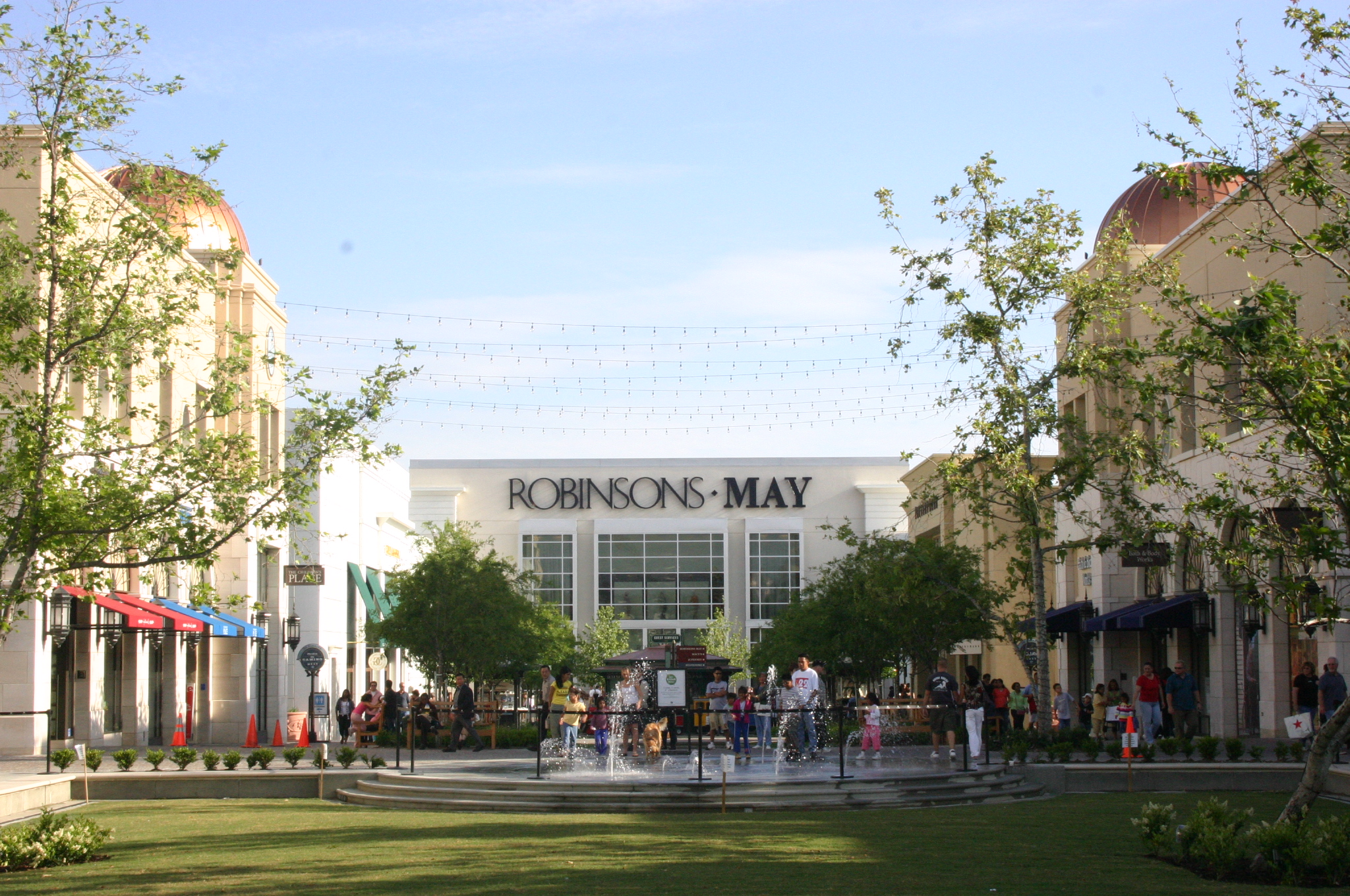
New Ground Floors that Work (Americana - Rick Caruso)

New Ground Floors that Work (Americana by Rick Caruso)

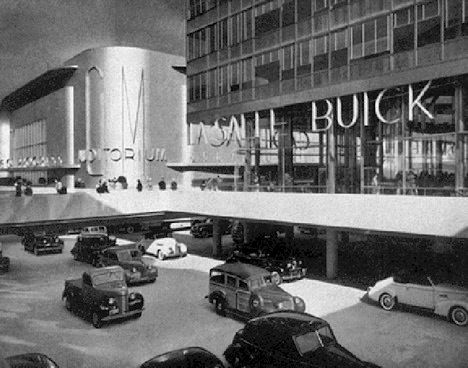
Rebuked Modernist Ground Floor Ideal ('39 Expo Futurama)

Rebuked Modernist Ground Floor Ideal (’39 Expo Futurama – Wikipedia Image)

And, here is where we find the last bastion of of the modernist architecture… fighting for survival in the materials, shapes, forms, and style of the building’s upper floors. Garish, look-at-me architecture still reigns in this narrow 25 to 140 feet range above the ground floor.

Seen This Proposed for Your Downtown Yet?

Seen One of These Proposed for Your Downtown Yet? (Image: LA Streetsblog)

I find it interesting that modernism has evolved from being a very big idea, to its ubiquitous mid-century development standard, to its now marginalized position between the ground floor and roofline. I completely agree with Witold Rybczynski that modernist architecture fits best in a natural setting, as well with Leon when it sits in juxtaposition to traditional architecture and urbanism.

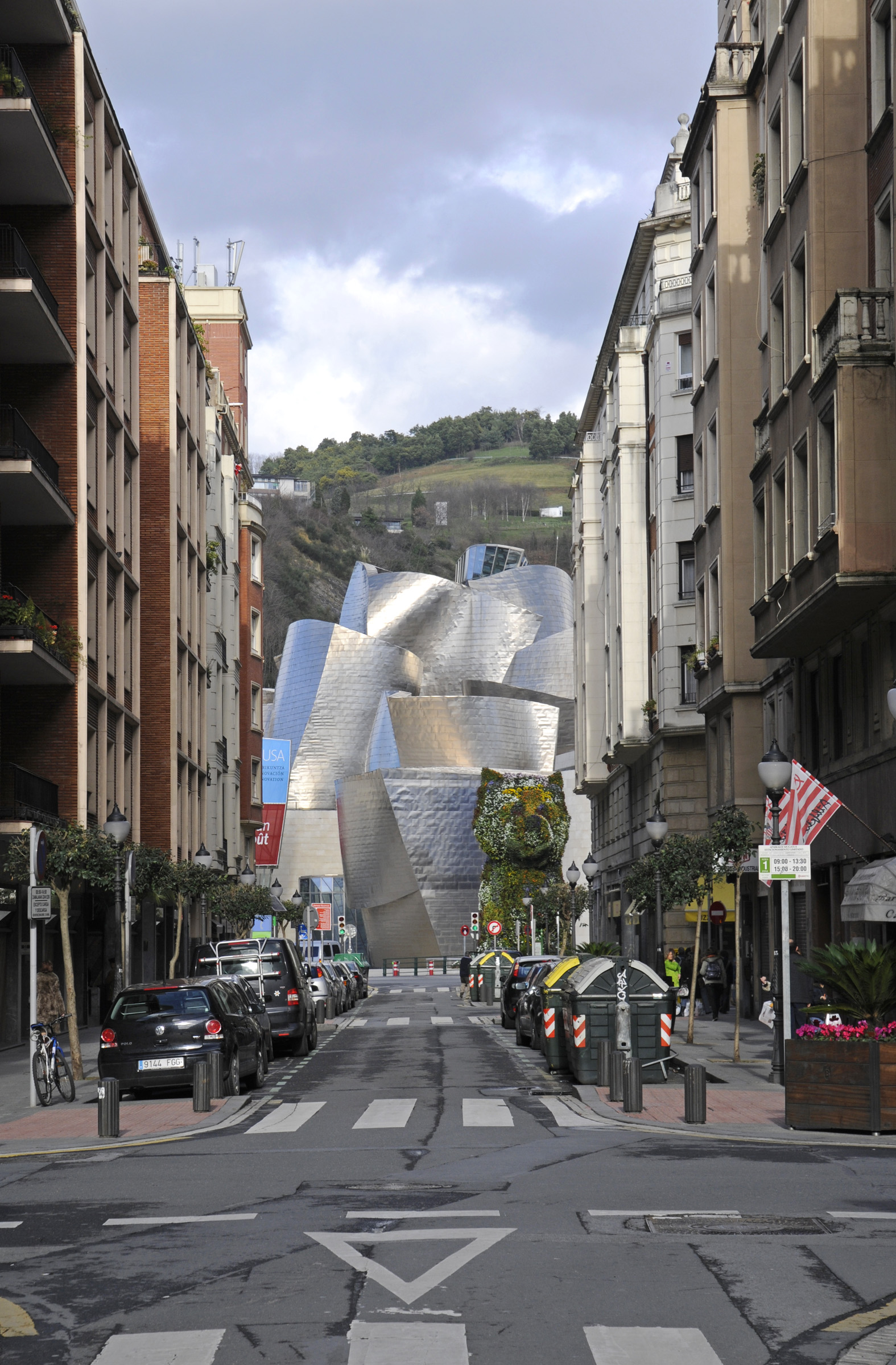
Bilbao's Big Idea Wasn't,

Bilbao’s Big Idea Wasn’t, “Hire a Starchitect!” It was Learning How to Architecturally Tune a Place to Create Visual and Cultural Complexity! (Image Unattributed)

John Nolen, San Diego’s original urban planner, once wrote in 1907 that city planning finds, “A place for everything, with everything in its place.”  Having been tested and vetted over three generations, maybe modernist architecture has finally found its appropriate place in our everyday life… within a very narrow range pushed as far away from people as possible.

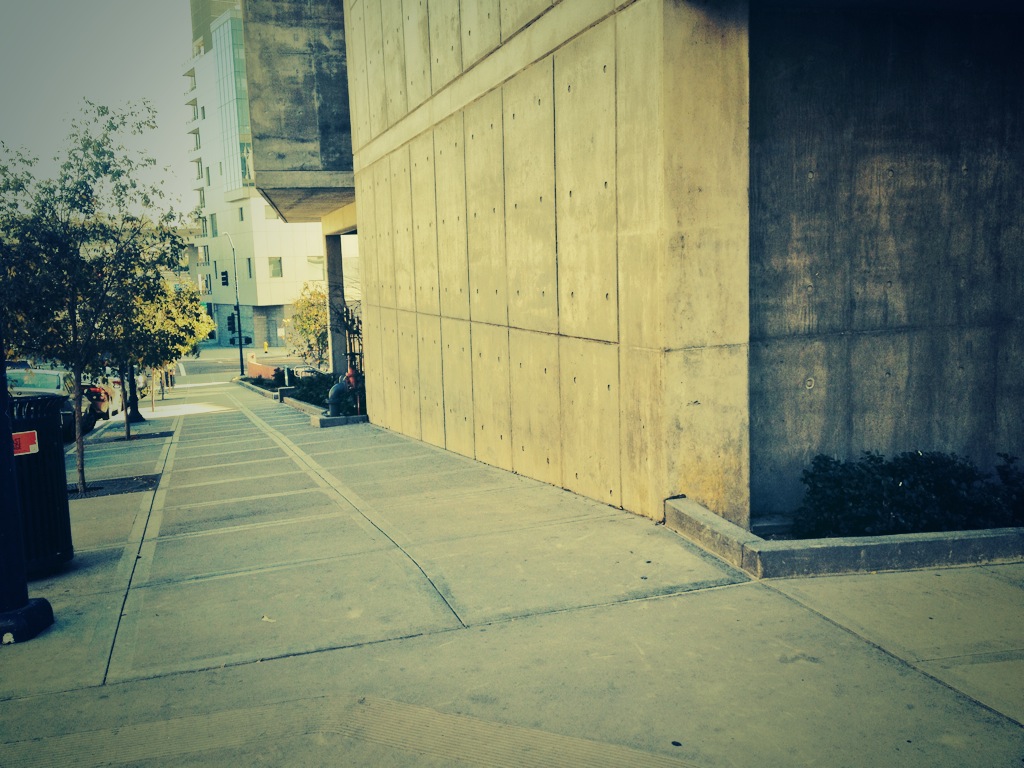
Good Riddance! (Image by HBlackson)

Good Riddance! (Image by HBlackson)