Leonardo Divinci's City Plan, "BE COOL."

The #1 Reason for Zoning Reform: People are Obnoxious

Uncategorized

Missing middle housing, and similar ideas of gentle density and incremental housing, are useful tools for cities allow for new homes to be built in existing neighborhoods. This is especially true for older or historic neighborhoods with predominantly low scale, low density, single-family detached homes. These are measured tools that transition long-standing neighborhoods from no-growth to adding more middle/medium scale housing/density/population. These new apartments/attached buildings adds a variety of people at different socioeconomic points of their lives, which smaller and larger units on the same neighborhood block tend to do. And new infill homes add tax revenues to fix old streets, sidewalks, lights, parks, and other civic infrastructure (in concept).

Fortunately the City San Diego’s planning department is starting to reform its zoning. It recently identified and adopted Transit Priority and Sustainable Development Areas. These allow for new projects that include affordable housing to waive its zoning, such as height, setbacks, and density. This is a very smart understanding that our city’s conventional zoning, the rules that regulate the configuration and orientation of a building, are out-of-date and not aligned with today’s housing-at-all-cost priorities. This is a great first step in recognizing that conventional zoning is broken. And for the past decade our state legislature has been pushing cities to allow for more housing and bypass its long-standing zoning rules, which have been rightfully deemed as being in the way of building cheaper, faster housing.

Born from racism and modernism in response to the industrial age, conventional planning and zoning is just a dumb form of segregation by land use. Residential, commercial, and industrial use separation has wasted our time (too many hearings, decision-makers, and gatekeepers), space (suburbia as far as the eye can see), and money (housing scarcity and prices). It is has been in need of reform for decades, but status quo is difficult to change, as well as messing with people’s inherent land values.

As a New Urbanist, I’ve been advocating for Form-Based Codes as code reform for over 25 years. These emphasize the configuration of buildings and places in context and/or form first, such as Main Street buildings on Main Street and rural buildings in rural areas. The function, or land use, of a building and its surroundings, are of a lower priority in Form-Based Codes as mixed-use, walkable urbanism is more complex than making us drive to a pod of work/home/play/shop/worship suburbanism. It is a proactive, rather than restrictive, approach to zoning regulations. And Form-Based Codes (now Objective Design Standards in California) are reforming zoning across the nation, albeit slowly.

Thankfully, the New Urbanism has won the war against suburbia. New housing is mostly in town or extending the town’s boundary on its edge. Rarely do we build new stand-alone subdivisions out by the wastewater plant, over ancient graves, or adjacent to heavy industrial districts, which is a good thing as those are noxious and dangerous places. Today these noxious districts are regulated by State or Federal rules and not local municipal zoning anymore. However, the new Federal administration is pulling the plug on these regulators, so…

Wiser, I see that new housing isn’t being located near those old toxic/noxious places, such as iron smelting or horse melting to make glue – as those industries are now done in other countries – because new homes are mostly being built next to existing homes. This means new housing problems are how their presence creates friction between both new neighbors and with existing residents. In short, as much as we love people and each other… we also really don’t like each other just as much. We live in a world wanting peace and quiet, and rules to keep it that way (see: every religion).

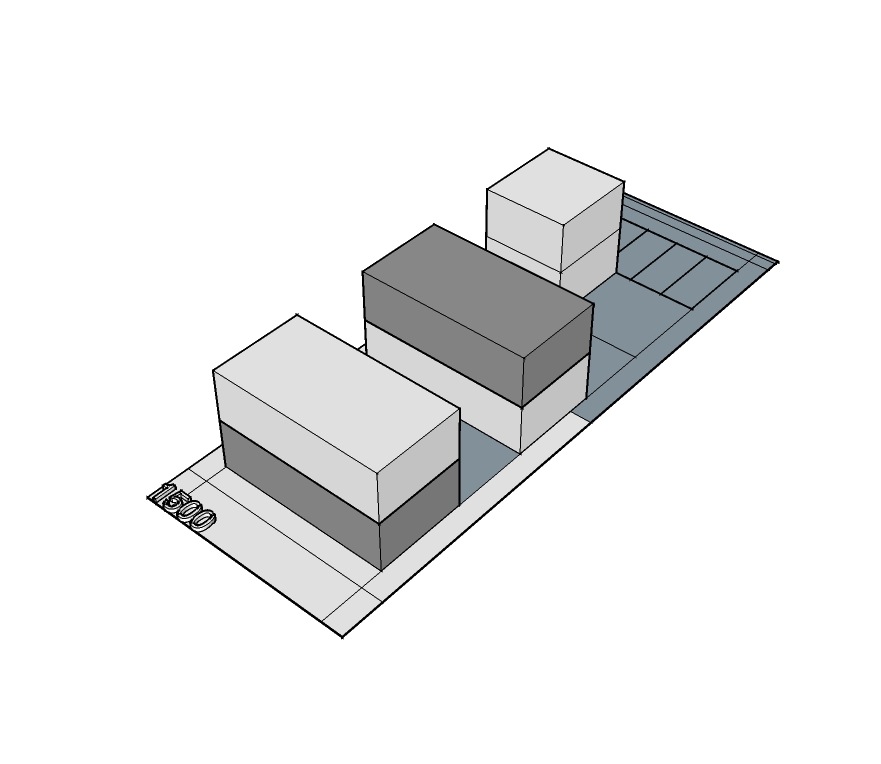
As humans, we understand that we have more public fronts/faces, sides, and more private rears/backyards. We prefer people, that aren’t immediate family, to either face us along a more formal public street or back onto each other with private space/yard or messy service alley. We’re built this way. It is well understood, comfortable, stable, and peaceful. Especially when we respect our western cultural social and physical norms. Bravo’s housewives, “Be cool, don’t be like all uncool,” would probably be a great zoning reform policy.

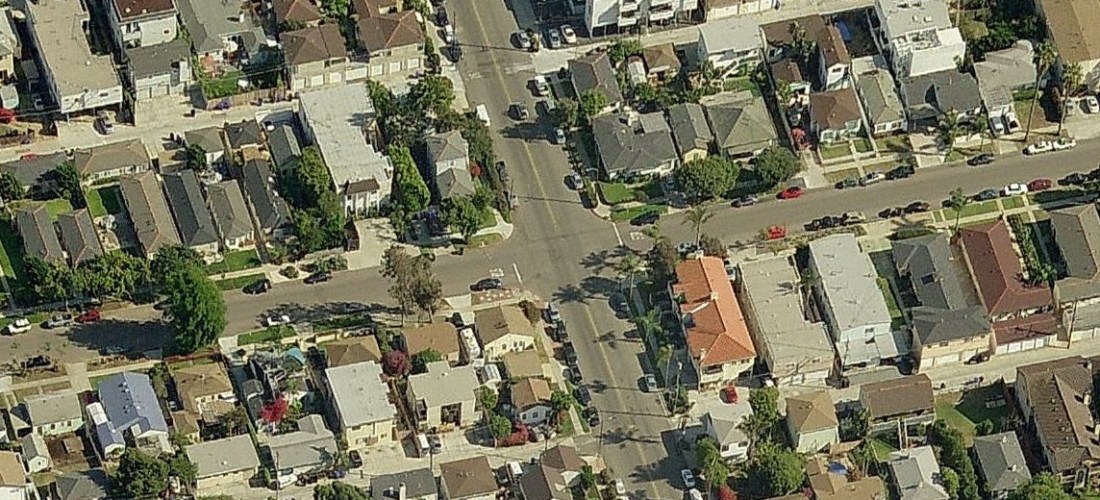
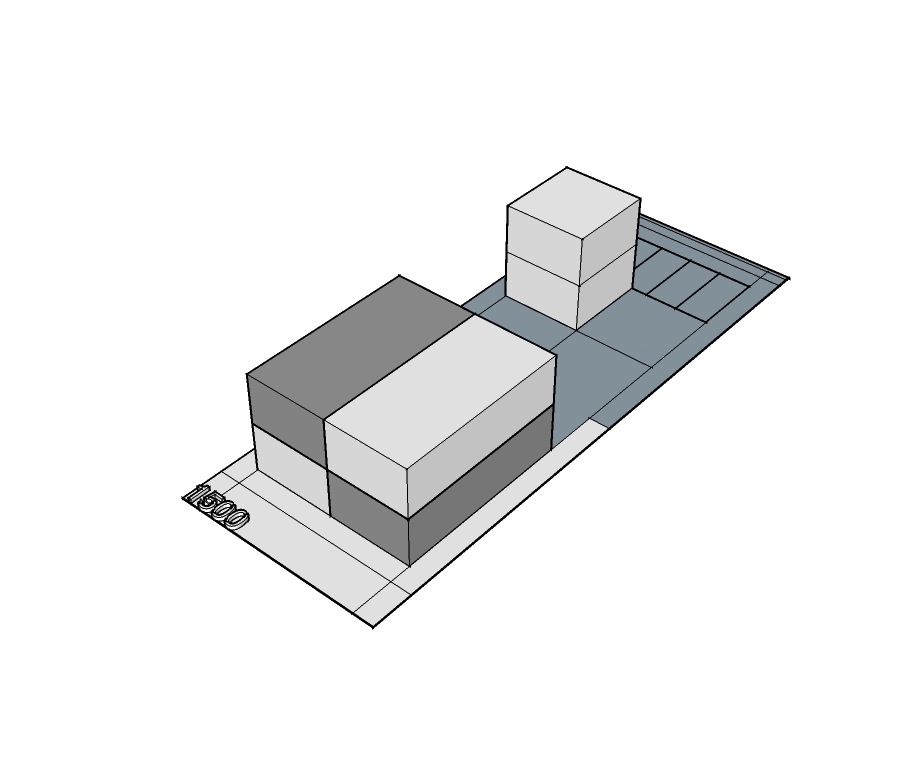
We also want justice. And when someone else appears to be getting ‘more’ than ourselves or others, it creates a sense of injustice. When one neighbor places a 3x taller building next to low-rise homes, it confuses the home’s fronts and backs as well as land values, which are destabilized with extreme building types sitting adjacent to each other. It creates fiction and conflict between people, not the land uses.

Without building zoning standards, public fronts and private backs are confused. Where are we supposed to be loud, welcome guests at the front door, throw our trash, sit quietly, and put screaming kids to play? Being cool is more than a suggestion… it’s in need of new rules.

Zoning today equates to almost exclusively dealing with obnoxiousness between residents, such front doors looming over backyards and quiet places versus public engagement places. These aren’t noxious issues, such as industry pollution spoiling the land, but more offensive social issues that spoil our previously suburban quality of life (more on that in a later blog), as the want for quiet and dogs/pets in downtowns are a “suburban echo,” and a new expectation for living in urban neighborhoods. Zoning reform needs to focus on these very real issues. The absences of rules only creates unintended conflicts between neighbors.

We need to set boundaries on how to live together. Meaning, we need new zoning rules for obnoxious behaviors rather than 1940 rules for noxious conditions. Sociable neighborhoods start with putting the right range of building types on specific street types with specific park types that help our society get along well. Missing middle housing types are better than towers to fill in older neighborhoods. They create less conflicts while adding lighter, faster, and cheaper homes.

These are simple rules that can be monitored by city (public) planning and development departments while it works towards building better public streets, sidewalks, lights, and parks (public entities doing public stuff), while regulating the simple stuff that we know lends itself to obnoxious behaviors between private developments. Following any good planning strategy, zoning reform starts with understanding today’s context, collaborating to generate a common Vision (making policies that relate to our values and priorities today), then generating a plan and/or code (making regulations), and then making them happen through actions and implement is how we implement zoning reform today. Be cool.

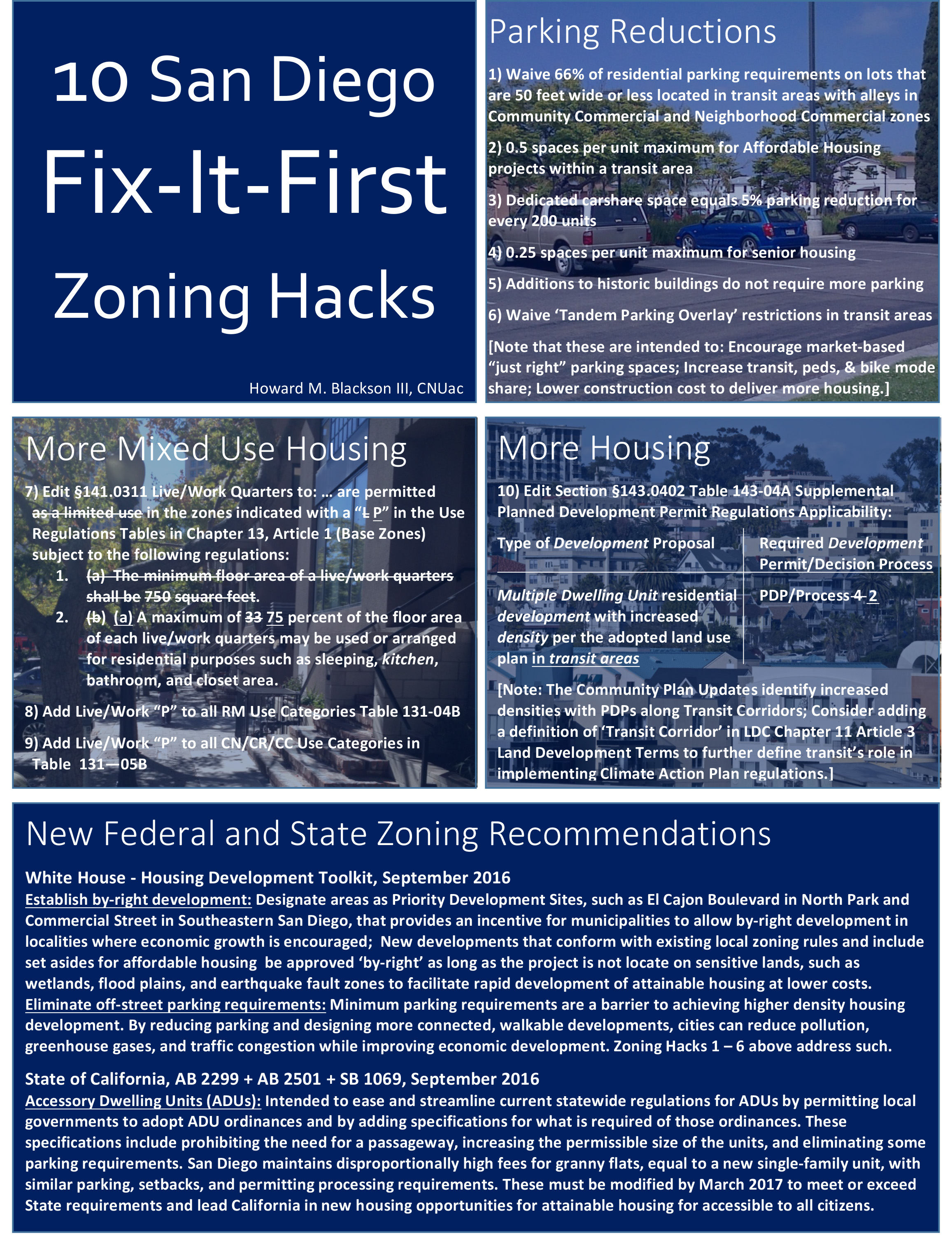
Top 10 Zoning Hacks to Fix San Diego

Climate Action Plan, San Diego, Urban Design, Urban Planning

San Diego has historically struggled with implementing our progressive mixed-use policies found in our General Plan (City of Villages) and Community Plan documents. In 2017, I see San Diego’s most obvious city-building needs as the tremendous need to build new attainable and affordable housing on our transit corridors. And, to focus on initiating the necessary mode shift from auto-centric to people-centric places.

It is well known that San Diego is in desperate need for more easily built by-right housing to alleviate the housing crunch happening today. We know this needs to be located on our strip commercial corridors lacking any housing today, of which we have miles and miles available for relatively easy retrofit. We also know that we need transit, pedestrian, and bicycle facilities to make this new housing fit in our older, more established urban neighborhoods and strip corridors. And we need predictable implementation tools to be coordinated, such as our on-going zoning updates matching funded transit projects, in order to get this new housing built.

For example, in the North Park Community Plan update, the 46% increase in housing ‘programs’ takes an arduous and unpredictable discretionary permit process (appealable to the city council and therefore very political) to be approved. This needs to be fixed immediately as the public weighed in and said, “build on this corridor.” In addition, the public weighed in and said, “We want to address Climate Change.” When these collective voices are expressed, we need to make it so…

In the spirit of getting it done, the following image is a list of my Top 10 Zoning Hacks to get us closer to solving our greatest needs in 2017:

Microsoft Word - Top10Fix-It-First.docx

Beach Density

San Diego, Urban Design, Urban Planning

San Diego’s Missing Middle

The Bay Area’s housing disaster tells San Diegans that our housing crisis will only get worse and doing nothing is not an option. We have to decide whether we want more neighbors or to pay more taxes as we desperately need money to fix our city’s crumbling infrastructure.  The conundrum is that we despise taxes and the mere mention of ‘density’ polarizes any discussion into either demands for no new growth or building tall towers. Fortunately, we have a housing model that fills the ‘missing middle’ that more responsibly grows our city.

San Diego’s beach areas are home to our most vehemently defended neighborhoods. It’s healthy, outdoor-oriented lifestyle, when coupled with parking constraints, begs people to walk and ride bikes year ‘round. Our beach density model is essentially a residence or shop with three (3) to five (5) units on each lot that are no more than two (2) to three (3) stories tall. All of these homes and businesses are mixed together every few blocks or so. While housing prices are very high in the beach areas, this is mostly due to its finite land availability and layers of regulatory constraints, but those are lessons to be learned. Our beach density’s real value to the rest of San Diego is found in its mixed-use walkable urbanism pattern/model that creates more housing and economic development opportunities.

SouthMission

South Mission Beach’s Gentle Density (Image Creative Commons)

The best places to test this middle ground housing model would be any neighborhood in and around our existing Urbanized Areas. Such as, Southeast San Diego, Golden Hill, South Park and along our major corridors, such as El Cajon Boulevard, University Avenue, and Bay Park, City Heights, and the cities of La Mesa, Lemon Grove, and National City.  Hurtles to allowing for this gentle uptick in housing would primarily be our citizen’s natural ‘fear-of-change’ reflex, which is why using a local model makes sense (as opposed to an imported Portland or Vancouver model). This is somewhat due to our quality of life being ‘precariously’ high, as our home values are a major part of our personal wealth. Therefore, we are very leery of any change that may affect any of that value. 

Another issue will be found in unbundling the many layers of inconsistent development rules and regulations. Today’s zoning rules are based on a 1960’s suburbia building model while Pacific, Mission, and Ocean Beach areas were built in the pre-zoning traditional neighborhood era. In addition, outdated traffic calculations are still in use to measure and mitigate for new housing wrongfully giving us suburban infrastructure facilities and financing estimates. Finally, we would need SANDAG to allocate meaningful funding of pedestrian and bicycle facilities to improve our sidewalks, street trees, lighting, bike lanes, cycle tracks, and transit stops.

The benefits of urbanizing ‘elegantly’ are more urban housing choices with healthier lifestyles that lead to less demand for new suburban housing in the back country, and a spreading-of-the-wealth as local land owners will build most of these units, as opposed to international developers, ensuring that rents are recirculated within our economy. With average lot sizes in traditional San Diego neighborhoods ranging from 5,000 to 6,800 square feet, five (5) units on these lots on a typical lot would support regional transit service, neighborhood scale shops, restaurants, and professional office. And, assurances in maintaining the beloved character of mixed-use walkable places will be found in making any deviations from more precise zoning rules impossible.

Our city is in desperate need for ‘attainable’ housing and our beach density model provides the most fitting solution. By allowing every lot in San Diego’s urbanized areas to have up to five (5) units’ by-right, we have the opportunity to solve for our critical housing and infrastructure financing deficiencies without dramatically altering our city’s character. Ultimately, we can all enjoy and benefit from our healthy, outdoor lifestyle the beach model provides us.

4 Square - 3

2.1.2 - 5

2.2.1 - 3

Wide Variety of Design in a Narrow Range to Respect Neighbors Privacy (Images by David Saborio)

UPDATE (12.28.2015): How to Allow for Beach Densities:

  • Eliminate off-street parking minimums (Transit/Bike/Walk);
  • Eliminate minimum lots sizes and minimum lot dimensions;
  • Up-zone any parcel that allows a single family house to 2-5 units;
  • Covert per unit development impact fees to per SF impact fees and eliminate development impact fees in the places where you want development;
  • Take Main Street back from the State DOT. (increased revenues from getting on-street parking back and taming the overly wide arterial will more than cover the increased maintenance costs);
  • Amend your adopted fire code (zero lot line for sideyard setbacks);
  • Adopt City of San Diego endorsed NACTO Street standards;
  • Allow for self-certification by Licensed Architects. Building permit issued by the Architect with required notification of the municipality to keep the assessor’s records current.

“San Diego Urban Planning !”… now go wash your mouth out with soap.

Urban Design, Urban Planning

“A fundamental aspect of planning…is the disjuncture between individual rationality and collective rationality. […] In certain situations, individual preferences aggregated to a societal level produce illogical or undesirable outcomes, including rubber-necking delays on highways and hockey players’ reluctance to wear helmets. In such situations, if the group made a decision as a whole, it would be far different from the sum of the individual decisions of the members. In a market-oriented economy, planning’s reason for being is fundamentally tied to this disjunction between individual rationality and collective rationality.* 

Isn’t that the role of planning in governing our cities, mediating short-term, long-term, and emergency decisions? Having a plan limits and manages risk in the market place by providing the vision, codes, and certainty to the legal entitlement process and economic responses to building the city. City building innovations and managing their risk set the baseline economic value for the market to respond to. Managing these elements is our city’s planning department’s policy and regulatory responsibility.

However, because creating a vision and then coding that vision is an iterative public and political process, the collective preference is usually at odds with the individual… be it the “no-change neighbor” or the “starry-eyed developer.” In the end, the built results illustrate the values of what our ‘group decision.’ We can drive along Harbor Drive to see the results of what San Diego collectively values over time (hotels, convention center, baseball parks, and other economic silver bullets).

I’ve previously written about Urban Design and Planning’s precarious position between a rock and a hard place in the City of San Diego here. After coffee last week with Michael Stepner, FAIA, FAICP, we came to the conclusion that San Diego’s planning history is actually a culture of trying to “get out of the way”. Our city leadership will support planning in good times, but then we are just as supportive of throwing it out in bad times. Mike‘s opinion was formed by seeing several iterations of its rise and demise over his award-winning career.

Stepner Experiencing a Re-Organization of Planning (image: MStepner)

Stepner Experiencing a Re-Organization of Planning (image: MStepner)

My opinion of our planning-as-little-as-possible approach is formed by empirical observation and review of San Diego’s historical planning documents, and their negative connotations. Kevin Lynch and Donald Appleyard gave us, A Temporary Paradise?, with its title illustrating that San Diego is missing its opportunity to take advantage of our cultural and natural assets (canyons, border, bay). Plus, we started planning in 1908 with John Nolen stating upfront, “Notwithstanding its advantages of situation, climate, and scenery, San Diego is to-day neither interesting nor beautiful. Its city plan is not thoughtful, but on the contrary, ignorant and wasteful.” I get it.

We are still having a hard time with planning today as needed Community Plan Updates go through referendums and delays. Transit-Station Areas plans turn into protesting mobs fearful of 60-foot tall ‘towers of terror!’ And, add in the fact that two nationally-recognized urban planning / smart growth gurus, Bill Fulton and Bill Anderson, were un-ceremonially relieved of their planning director’s duties, its time for cultural shift of planning expectations here. That said, I am very fond of local planner, Jeff Murphy, and am pleased he accepted the director position this week.

Canadian planning director rock stars, Brent Toderian (Vancouver) and Jennifer Kasmit (Toronto), both recently stated that “Planning Directors need to be truth tellers.” Telling the truth builds trust, and it is trust that is lacking between San Diego and its professional planners. Our profession has historically been vilified as consultants to evil developers, administrators of wasteful regulations, and stooges for unjust political agendas. I get it. 

Part of our cultural problem with planning is that in good economic times, San Diego historically tends to value planning as a tool to slow or mollify development spikes. For when money is flowing, it floods our city. And, in bad times, we eliminated planning for it then gets in the way of continues to slows any new building, because thats how it had been used before the sudden crash. 

Therefore, we need to learn how to use planning as tool to guide our city buildings, and providing public services as well as limit private investment risks, in both good times and bad. This change will take a cultural shift, and it takes time cultivate culture. The following points are how I think we can start this shift:

REALLY LEARN FROM DOWNTOWN

No, I do not mean scatter downtown’s high-design residential towers across the city (we tried that 40 years ago and it got us the 30-foot height limit along the coast). I mean review the tools that changed its culture from a 9-to-5 business district into mixed-use, more walkable urbanity. The tools were a carefully localized zoning tool (its PDO), a defensible environmental document, and a predictable permitting process.

Throughout the rest of San Diego, we have a problem with implementing our big policy documents (General Plan, Community Plans, TOD Guidelines, Climate Action Plan) because we then treat everything at zoning/regulation level with a one-size-fits-all approach. One of downtown’s best lessons is the value of detailed plans and planning at the neighborhood scale. As a matter of fact, today’s Community Plan updates are replacing local PDOs that need to be updated for new city-wide zoning. Downtown should teach us to avoid this approach and try to localize our rules to better limit conflicts between neighbors over details such as how new buildings face onto the street and backs up its neighbor, and the character of that street, from Main Streets to quiet residential streets.

Streets are for cars, people, bikes, shops, homes...

Streets are for cars, people, bikes, shops, homes…

LEADERSHIP NEEDS TO KNOW BEST PLANNING PRACTICES

We need our leadership to discuss where we are going with our city planned. It doesn’t happen in a vacuum. Today, we rely too much on our short-term political leadership to move projects from idea to building permit. And, without enough capacity to equitably provide the same attention to everyone, only a few get this excellent service.

Mr. Stepner reminded me that former Mayoral icon, Pete Wilson, set broad goals and used his professional staff to do their best duty of care to make the right decisions. These decisions use to be based on best practices and national models modified to the local context. Somehow we’ve lost that trust. I recommend our local professional and advocacy groups shift from preaching the choir to directly engaging local political leadership in lectures, workshops, and presentations on best practices from around the world (but don’t lose your 501c3 status).

PLANNING NEEDS TO KNOW BEST PLANNING PRACTICES

Ok, San Diego, we’ve got 1980 suburbia down… We know how to designated the use of a building, disclose its impacts on the environment, measure its Average Daily Trips, calculate the financing needed to build a new traffic signal at the intersection down the street these new trips will drive through, and collect Development Impact Fees for a future park that is expensive to build. While this system works well in a new residential pod out in Rancho del Rancho, it is impossible to use in our older, urban neighborhoods. This partially why our new policy goals mentioned above are difficult to implement. We’re using 20th century tools, such as land-use based zoning, to build a 21st century city. There are 21st century planning tools, such as context-sensitive, form-based, and place-based zoning tools and street typologies, available to make connections between policy and getting the places we want built. 

In our market-oriented economy, we must shift our reluctance to plan towards being a tool that bridges our city’s ongoing disjunction between an individual’s wants and our collective needs.

*National ACIP Examination Preparation Course Guidebook, 2000

Photo: Mario Covic

Stop Talking about Density and Start Talking about Place.

Urban Planning

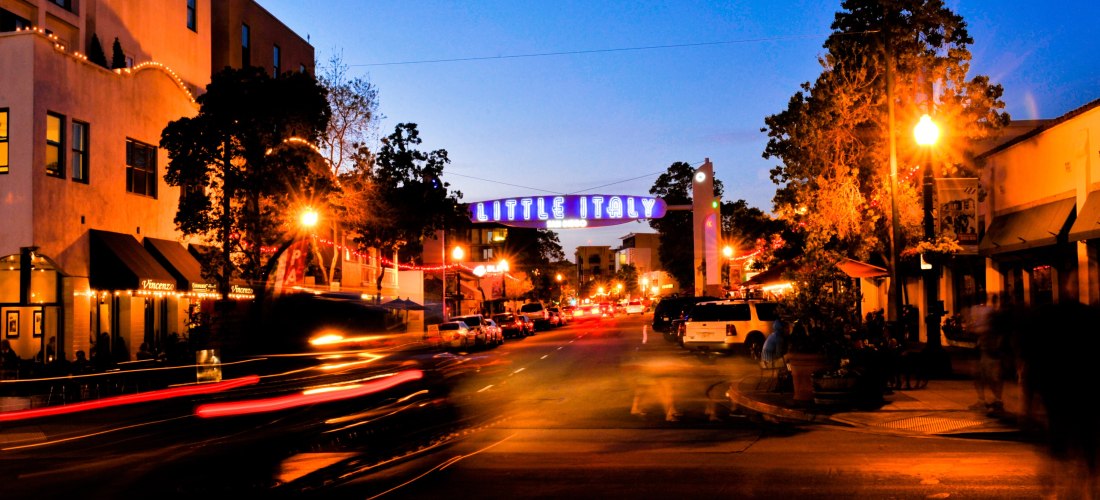
When I say, “density,” I picture a place like Little Italy. It’s a mix of townhouses, walk-up flats, small shops, churches, markets and restaurants. I can walk and bike around or drive my car when I want. I envision bumping into friends, enjoying our new Waterfront Park, drinking craft beer and eating from a variety of restaurants with a smile on my face. 

But, when I say “density” to my mom, who lives in the a country ranch house and rides horses, she pictures downtown towers filled with people, an outright oppression of her outdoor lifestyle. And to my granny, “density” means the Huffman six-packs looming over her North Park neighborhood bungalow. These are the hastily built six-or-so apartment unit complexes on single-family lots throughout San Diego’s Mid-City. Granny’s still bitter.

You can measure the density of all of those things, because that’s all density is: a measurement of how many homes fit within an acre of land. That’s all. An that’s all it should be.

My mom’s ranchettes could be between one home per 20 acres or four homes per acre. My granny’s bungalow is between eight and 14 homes per acre, depending on whether she builds a secondary apartment or “granny flat” in her backyard. The townhouses and condos in Little Italy are between 20 and 60 acres per acre, and downtown’s towers are 80 or more homes per acre. 

That’s how we use “density” to measure different types of homes.

But “density” cannot do more than that. It doesn’t tell us what we need to know to make decisions about the places we want to live, and it misinforms the development discussions we have about our future. We see this in our city needing all of sorts of other restrictions, aside from density, to create different places, such as suburban Sabre Springs, more urban North Park, Little Italy or downtown. We have to add in restrictions for height, setbacks, parking ratios and how the property can be used. These many other requirements are what makes a zoning ordinance an unwiedly tome, perfect for bedtime reading.

San Diego is now open for business and dreams of being a corporate business hub, but housing for middle management is hard to find an build. And, focusing on density alone skews the market for building homes we know we need and the market will build.

Community groups will demand the city’s planning department to keep densities artificially low in the hopes that it will keep new housing away. These lower densities intended to stop growth actually push developers towards building just enough very expensive homes to make their profits. These larger, more expensive units aren’t appropriate for our older streetcar neighborhoods. This creates an unintended consequence: introduction of a different building type that conflicts with a community’s character, or skips a step in transitioning from less urban to more urban.

And, high density itself does not make for better development. Density doesn’t tell us anything about context, such as being in located in the center of a neighborhood, or its edge. Neighborhood-scaled, modest, well-designed density is almost impossible to achieve because of all of those other restrictions mentioned above being out of sync with its context. 

Instead of addressing the issue head on – creating new codes and regulations that would allow the market to build a variety of housing types – we continue to rely on density measurements and conventional Land-Use Based zoning and hope for the best. So far that’s produced luxury towers, Huffman six-packs and large tracks of bland apartments in Kearny Mesa and Mira Mesa. The 50-year history of doing it this way has led to our collective mistrust in our neighborhoods between developers, locals, City Hall, and planning professionals. 

Density and land use zoning were borne of conflicts with the industrial revolution and propagated by old insurance companies’ discriminatory “redlining” practices against minorities in the 1930s. These companies outlined certain areas in red on maps and homes within these areas couldn’t buy insurance, which then became the neighborhoods where marginalized minorities were allowed to live. Having insurance allowed homes to become larger and more expensive, which came to mean lower densities in those neighborhoods. While these discriminatory policies have stopped, our current zoning and density maps reflect and continue old redlining practices to this day.

We need better tools to discuss how we build anything new in San Diego. 

I have long advocated for development regulations called “place-based codes” or “form-based codes” to replace the outdated zoning codes we use today. As seen in Denver, Austin, and Miami, they work better because they are built to help us understand that the type of places we want matters more than arbitrary measurements or ratios. 

We should allow the market to set how much retail, residential or office spaces there is on a given street. We should protect our valuable historic neighborhoods. We should control how buildings transition from new to old. We should understand how to transition between different types of buildings to maintain and cultivate a community’s character. It is clear that our long-held conventional approach isn’t achieving these goals, and we have new development tools that can do these things.

But focussing a conversation on “density” can’t. Remember, it is just a number.

(Thank you Andy Keatts for editing help. First published by Voice of San Diego here)